
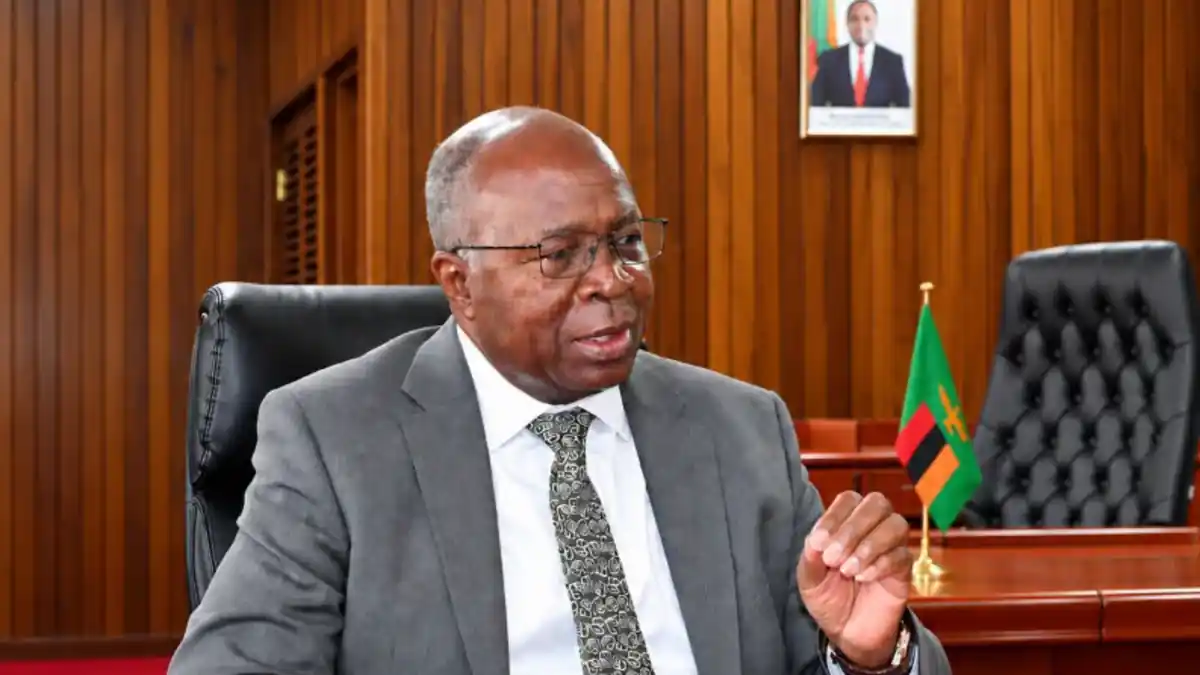
Finance Minister Dr Situmbeko Musokotwane has told the Government’s ICT professionals that their work is now measured in money collected and journeys saved, and has set them a tougher test under the Grow Zambia Agenda.
KEY TAKEAWAYS
- Musokotwane says 572 public services are now online, more than 1.17 million customers have been served, over 6.66 million bills have been generated and K9.78 billion has been collected.
- He links the numbers to practical gains for citizens: shorter queues, fewer journeys, lower costs, faster service and more transparency.
- Under the Grow Zambia Agenda, he expects ICT to raise productivity, strengthen revenue collection, cut the cost of doing business and attract investment.
- In July, the Ministry of Finance reported K8.8 billion collected through the Government’s digital payment platforms across more than 400 services, which suggests steady growth since then.
- His challenge to the ICT community: “innovate boldly, integrate intelligently, and continue to serve relentlessly.”
A message framed around results
In a message addressed to ICT professionals across the Government, Finance and National Planning Minister Dr Situmbeko Musokotwane said their role goes beyond keeping systems running. He described them as people shaping how citizens experience public services, and he backed that with numbers.
“Today, 572 public services are online, more than 1.17 million customers have been served, over 6.66 million bills generated, and K9.78 billion collected,” the Minister said. “These figures are ultimately translating into shorter queues, fewer journeys, lower costs, faster services and greater transparency for our people.”
What the numbers mean
Each of those figures stands for something that used to require a trip to a government office. A passport application, a road tax payment or a council bill that can be settled online is one less day off work, one less bus fare and one less queue.
The revenue figure matters for a different reason. Payments made through a digital channel leave a record, go straight into government accounts and are harder to divert. For a Treasury trying to raise more domestic revenue without raising tax rates, closing leaks in collection is one of the cheaper options available.
The trend is also moving in the right direction. In July, Ministry of Finance Principal Accountant Daniel Mwewa reported that K8.8 billion had been collected through the Government Service Bus and the electronic payment gateway, with more than 400 services onboarded. The Minister’s latest figures point to roughly 170 more services and close to K1 billion in additional collections since then, although the two sets of numbers may not be measured on exactly the same basis.
ICT inside the Grow Zambia Agenda
Musokotwane placed digital government firmly inside the Government’s economic plan. Under the Grow Zambia Agenda, he said, ICT should raise productivity, strengthen revenue mobilisation, lower the cost of doing business, attract investment and bring the Government closer to every citizen.
He then set three standards for the work. “Every service digitized must make life easier, every system integrated must remove delay and duplication, and every payment secured must protect public resources.”
That is a useful test because it moves the measure of success away from the number of systems launched and towards what happens for the user. A service that is online but still requires a paper form, a signature and a visit to an office has not removed much cost.
The harder part: integration
The Minister’s emphasis on integration points to where much of the remaining gain lies. Citizens and businesses often deal with several agencies for one transaction, and each agency may hold its own records. When those systems talk to each other, a business registering, paying tax and applying for a licence does not have to submit the same documents three times.
Integration also supports revenue. When tax, licensing and payment systems share data, it becomes harder for activity to stay outside the tax net. That links directly to the Government’s revenue strategy, which relies heavily on better compliance rather than higher rates.
The challenge
Musokotwane closed with a direct appeal to the ICT community. “I challenge you: innovate boldly, integrate intelligently, and continue to serve relentlessly,” he said, adding that technology should become “the bridge to opportunity, dignity, growth, and prosperity for every Zambian.”
The next measure of progress will be how many local authorities and agencies come onto the shared platforms, and whether rural users, not only those in Lusaka and the Copperbelt, see the same reduction in queues and travel.
Related: Musokotwane Pivots Zambia Toward Export-Led Growth as Jobs and Investment Take Centre Stage.
Related: Zambia’s Revenue Strategy: The Four Pillars and the Gap They Have to Close.
Related: ZRA Smart Invoice: Why Your Supplier’s Compliance Is Now Your Problem.
Related: Airtel’s K1.22bn Profit: A Signal of Zambia’s Digital Economy Taking Off.
WARNING! All rights reserved. This material and all other digital content on this website may not be reproduced, published, broadcast, rewritten, or redistributed, in whole or in part, without the prior express permission of The Zambian Economist. Where permission is granted, the content must be clearly credited to “The Zambian Economist,” with “www.zambianeconomist.com” prominently displayed.
WhatsApp: +260775574228 | Email: info@zambianeconomist.com
© 2026 The Zambian Economist.