Cabinet Office has set out how Zambia will mark 62 years of independence on Saturday, 24 October. The theme talks about growth. The instructions talk about spending carefully: Independence Week is to run on available resources and whatever communities and stakeholders can raise.
KEY TAKEAWAYS
- Zambia marks its 62nd Independence Anniversary on Saturday, 24 October 2026, under the theme “Zambia@62: Our Journey, Our Growth, Our Future”, according to Cabinet Office Circular Minute No. 29 of 2026.
- Independence Week runs from 17 to 23 October and centres on cleaning schools, markets and health and correctional facilities, donating food, clothes and books, and planting trees.
- The circular directs that these activities be carried out “within the available resources and those raised in collaboration with the local community and stakeholders”, in line with the Treasury’s call to do more with less in the 2027 Budget.
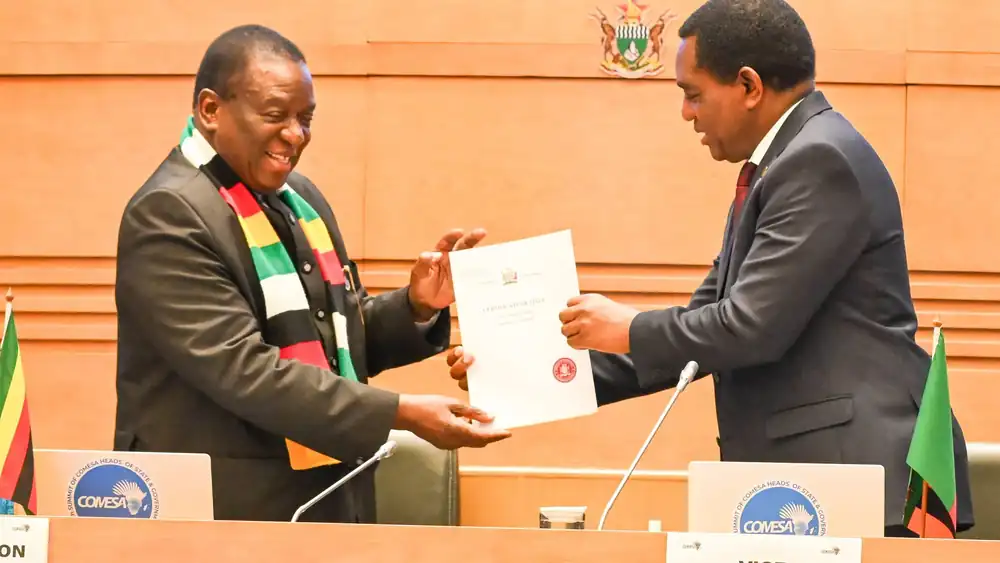
- President Hakainde Hichilema addresses the nation on 23 October and leads the wreath laying at the Freedom Statue in Lusaka on 24 October. Vice-President Mutale Nalumango hoists the flag at the Lusaka Showgrounds on Independence Eve.
- The economy reaches 62 with inflation at 6.1 percent, its lowest since 2018, but with a weaker kwacha, higher fuel prices and a new IMF programme still awaiting Board approval.
Zambia will commemorate 62 years of independence on Saturday, 24 October 2026, with a week of community service rather than large state spending. Cabinet Office Circular Minute No. 29 of 2026, dated 24 September and signed by Secretary to the Cabinet Mr Patrick Kangwa, sets the national, provincial and district programme and the approved theme: “Zambia@62: Our Journey, Our Growth, Our Future”.
The circular went to all Permanent Secretaries, the service commissions, the Judiciary, the National Assembly, the Anti-Corruption Commission, the Drug Enforcement Commission, the Electoral Commission and other public bodies, with instructions to bring it to the attention of their staff.
When is Zambia’s Independence Day in 2026?
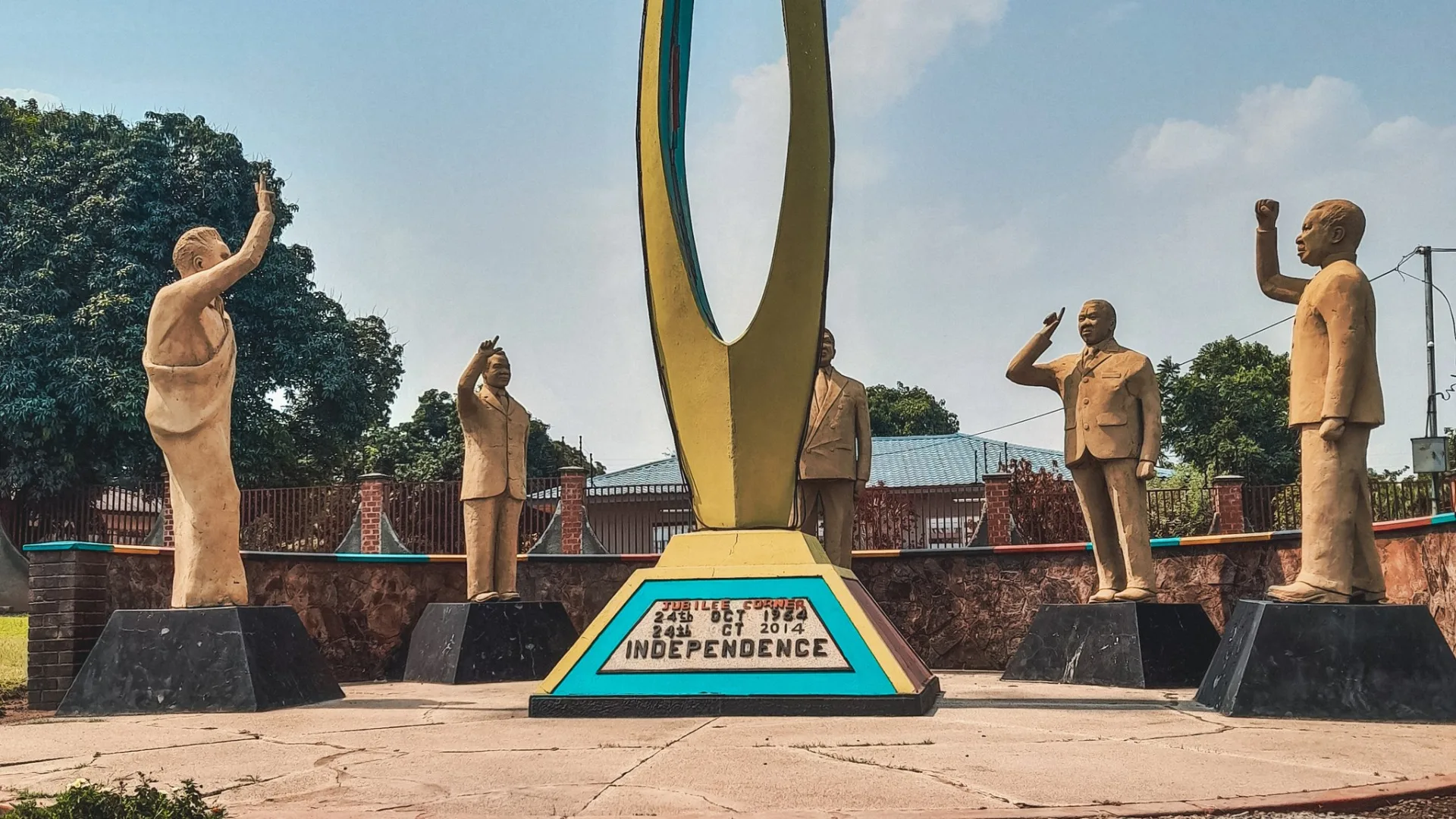
Independence Day falls on Saturday, 24 October 2026, the 62nd anniversary of Zambia’s independence from Britain on 24 October 1964. The commemorations open earlier. A designated government official will launch Independence Week on ZNBC Television and Radio on the evening of Friday, 16 October.
| Date | Activity | Venue |
|---|---|---|
| Friday, 16 October | Launch of Independence Week by a designated government official | ZNBC Television and Radio |
| 17 to 23 October | Independence Week: cleaning, donations and tree planting by public institutions and communities | National, provincial and district levels |
| Friday, 23 October | President Hichilema’s address to the nation on Independence Eve | ZNBC Television and Radio |
| Friday, 23 October | Hoisting of the National Flag, with Vice-President Mutale Nalumango as Guest of Honour | Lusaka Showgrounds, and designated local venues |
| Saturday, 24 October | Wreath laying led by the President with the Service Chiefs and the Diplomatic Corps | Freedom Statue, Lusaka, and designated local venues |
| Saturday, 24 October | Independence Day Investiture Ceremony | State House, Lusaka |
Source: Cabinet Office Circular Minute No. 29 of 2026.
What is the theme for Zambia’s 62nd Independence Anniversary?
The approved theme is “Zambia@62: Our Journey, Our Growth, Our Future”. The circular asks Provincial and District Administrations to draft the speeches for their Guests of Honour around it, so the same message should be heard from Chipata to Solwezi.
The word “growth” was not chosen at random. Government has spent the past month selling the Grow Zambia Agenda, its plan to more than double the size of the economy by 2031 through eight production targets, from 3 million tonnes of copper a year to 10 million tonnes of maize. President Hichilema repeated those targets when he opened Parliament on 9 October. The Independence Eve address on 23 October will be his next national platform to make the case.
What happens during Independence Week?
All ministries, provinces and spending agencies have been told to take part in three approved activities between 17 and 23 October:
- cleaning public institutions and places, including schools, markets, health facilities and correctional facilities;
- donating groceries, foodstuffs, clothes and books to orphanages, homes for the aged, schools, and health and correctional facilities; and
- planting trees in public institutions and communities.
Provinces and districts will also hold their own flag hoisting on the evening of 23 October and wreath laying ceremonies at designated local venues on Independence Day.
A celebration on a tight budget
One line in the circular deserves attention from anyone who follows public finance. All Independence Week activities “must be undertaken within the available resources and those raised in collaboration with the local community and stakeholders.”
In plain terms, there is no new money for the anniversary. Ministries and councils will fund cleaning drives and donations from budgets they already have, topped up by what local businesses, churches and residents contribute.
That fits the message from the Treasury. Opening the 2027 Budget Hearings, Secretary to the Treasury Mr Felix Nkulukusa told spending institutions to stay within their ceilings. “We must do more with less,” he said. Zambia expects about K271.9 billion in resources for 2027, but after arrears, social cash transfers, the Constituency Development Fund, free education and school feeding are paid for, only about K6.9 billion is left for every other programme.
For district administrations, the practical effect is that the size of Independence Week in each town will depend partly on how much local support they can raise.
The economy Zambia brings to 62
The anniversary arrives at a mixed moment. Several numbers have improved this year, while others have moved the wrong way since mid-year.
| Indicator | Latest reading |
|---|---|
| Annual inflation (September 2026) | 6.1%, lowest since February 2018 |
| Bank of Zambia target band | 6% to 8% |
| Bank of Zambia policy rate | 10.75% |
| Kwacha per US dollar | About K19.9 in early October, from K17.87 in June |
| Pump prices (October) | K31.46 petrol, K33.27 diesel per litre |
| Copper output (2025) | 890,346 tonnes, against a 3 million tonne target for 2031 |
| Projected GDP growth | 5.3% in 2026; about 7% a year for 2027 to 2029 |
Sources: Zambia Statistics Agency, Bank of Zambia, Energy Regulation Board, Ministry of Finance and National Planning, as reported by The Zambian Economist.
Inflation is the clearest gain. At 6.1 percent in September, prices are rising at the slowest pace in more than eight years, which has helped protect the K700 salary increase public servants received in January.
The kwacha is the main worry. It strengthened about 12 percent in the first half of the year, then gave back most of that gain as fuel and other import bills outran the arrival of copper dollars. We explained the timing problem in The Kwacha’s October Slide. A weaker currency feeds into pump prices and transport fares, which is why the inflation figure may not hold where it is.
On external finance, Zambia reached a staff-level agreement with the IMF on 9 October for a new three-year Extended Credit Facility of about US$1.47 billion. It still needs IMF Management and Executive Board approval before money flows. The Economics Association of Zambia has backed the deal as cheap finance that could ease government borrowing at home.
Sixty-two years on, copper still pays the bills
Copper earned most of Zambia’s foreign exchange in 1964, and it still does. That continuity is the longest thread in the country’s economic story, and it explains why the Grow Zambia Agenda pairs a tripling of copper output with targets for maize, soya, wheat, sugar, beef, tourism and power. The aim is to keep earning from the mines while building other sources of dollars and jobs.
Finance Minister Dr Situmbeko Musokotwane has framed the test in terms ordinary Zambians will recognise: whether growth turns into jobs and household income, not just tonnage. That is a fair measure for the “Our Growth” part of this year’s theme.
What it means for businesses and households
For businesses, expect district and provincial offices to approach local firms for support with Independence Week donations and cleaning drives. Retailers, wholesalers, millers and transporters are the most likely to be asked. Companies that want to take part should contact their District Commissioner’s office early, keep any contribution properly documented and treat it as part of their community investment.
For workers, 24 October falls on a Saturday this year, so the holiday does not take a weekday out of the working calendar. The circular does not declare any additional day off.
For households, the anniversary will be judged against prices at the till. Lower inflation helps, but a weaker kwacha and higher fuel prices since 1 October are already pushing the other way.
What to watch
The President’s Independence Eve address on 23 October is the main event to follow. Listen for any update on the IMF programme, on fuel and the kwacha, and on how the Grow Zambia targets will be paid for in the 2027 Budget, which Parliament will debate in the weeks that follow.
At 62, Zambia has a theme about growth and a circular about restraint. Both reflect where the public finances stand this October.
Related: Grow Zambia Agenda: The Eight Numbers Behind the Plan to Double Zambia’s Economy.
Related: Hichilema Opens Zambia’s Largest Parliament Today. Here Is What the Economy Needs to Hear.
Related: Zambia’s 2027 Budget: K271.9 Billion to Spend, but Only K6.9 Billion Left for Other Programmes.
Related: The Kwacha’s October Slide: Why Copper Dollars Are Not Enough.
Related: The K700 Question: Is Zambia’s Salary Increase Making a Difference?
Hub: Zambia Economy 2026.
WARNING! All rights reserved. This material and all other digital content on this website may not be reproduced, published, broadcast, rewritten, or redistributed, in whole or in part, without the prior express permission of The Zambian Economist. Where permission is granted, the content must be clearly credited to “The Zambian Economist,” with “www.zambianeconomist.com” prominently displayed.
WhatsApp: +260775574228 | Email: info@zambianeconomist.com
© 2026 The Zambian Economist.