
By Zambian Economist Analyst
This is youth entrepreneurship Zambia style, running on charcoal, timing and nerve, long before most offices open for the day.
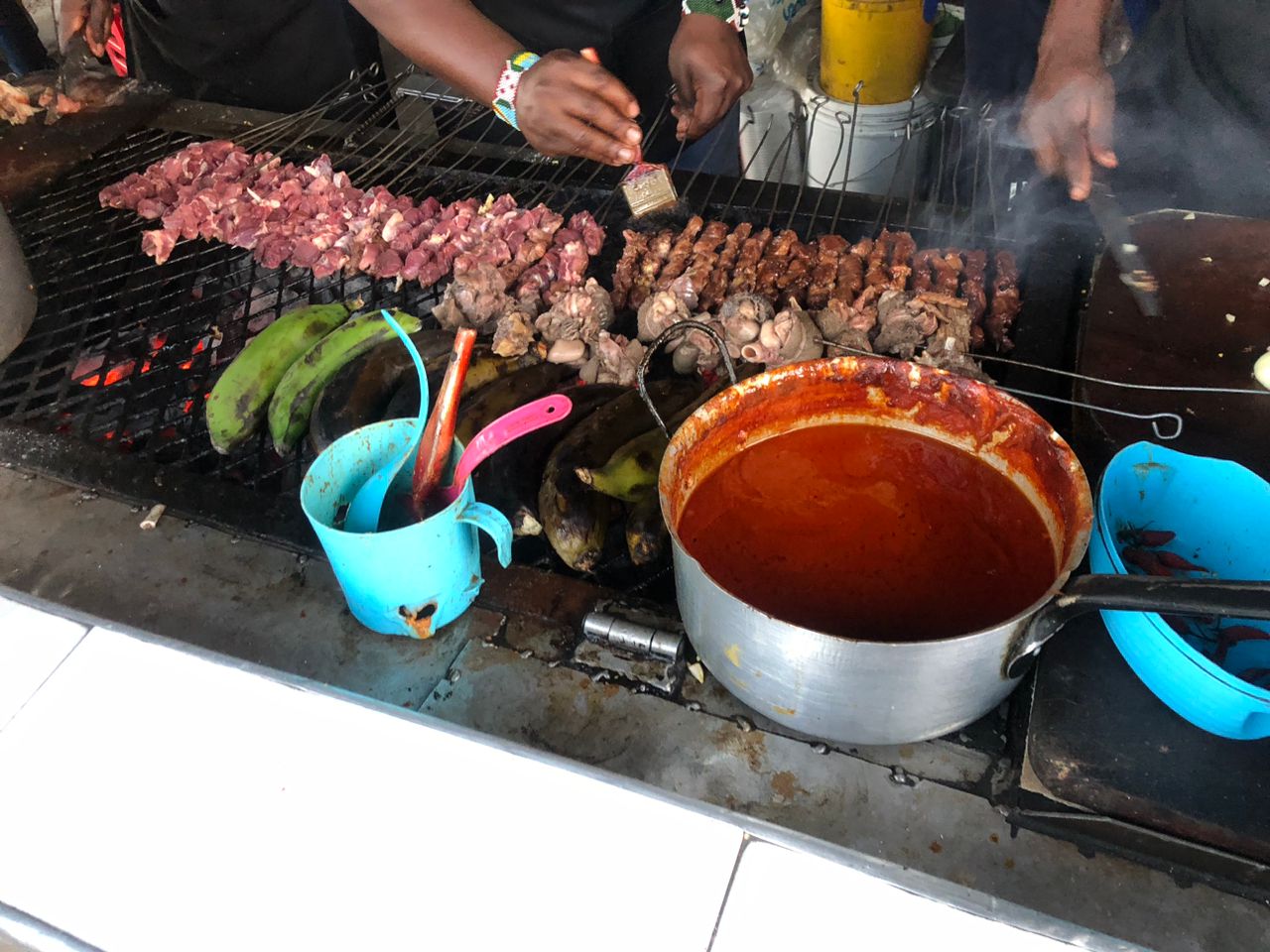
The smoke starts early at Desire, a grill spot in Nyumba Yanga that has become a landmark in its own right. By mid morning the charcoal is glowing, a wire grill is loaded end to end with skewers of goat meat, tripe and offal, and a battered aluminium pot of deep red sauce sits warming at the edge of the fire. A young man leans over the grill with a basting brush, working quickly and without wasted movement. Behind him, more hands are already prepping the next batch. This is not a hobby. It is a business, and it is being run by young people who have turned an old Zambian tradition, the roadside braai, into a daily source of income.
A Simple Product, A Real Business
What is happening at Desire is easy to miss if you only see the smoke and the crowd. Look closer and the business fundamentals are all there. There is a defined product line: cubed goat meat, offal, and roasted plantains, each cooked differently and served with a signature basted sauce that customers clearly come back for. There is division of labour, with different people handling the fire, the basting, the serving and the cash. There is a recognisable brand, strong enough that the place is simply known by name across the area. And there is repeat, cash paying demand every single day, which is more than many registered small businesses in Zambia can say.
None of this happened by accident. Getting the char right on goat meat, balancing a sauce that keeps customers loyal, managing a hot charcoal grill safely for hours at a time and keeping a queue of hungry customers moving all require skill that was learned, practised and refined. It is the kind of practical, hands on entrepreneurship that rarely makes it into a business plan template, yet it is exactly how a large share of young Zambians actually earn a living.
Youth Entrepreneurship Zambia: Why This Matters for Employment
Zambia’s youth make up the majority of the population, and formal employment has never come close to absorbing them all. The 2023 Labour Force Survey put youth unemployment at 26.4 percent nationally, rising to 33 percent in urban areas, the kind of compound economy that Nyumba Yanga belongs to. Every year thousands leave school or college into a job market that simply does not have enough salaried positions to go round. Against that backdrop, informal food vending is not a fallback option or a sign of failure. It is one of the most accessible entry points into self employment that exists, requiring a grill, some capital for meat and charcoal, and the willingness to stand over a fire from morning until the last customer is served.
Spots like Desire also multiply opportunity beyond the person holding the basting brush. Butchers supply the meat. Charcoal traders supply the fuel. Plantain sellers, tomato and onion vendors, and the makers of the tin cups and skewers used on the grill all get a share of the income this stall generates. A single well run food stall in a compound like Nyumba Yanga can quietly support several small livelihoods at once, long before anyone calls it a supply chain.
The Gap Between Hustle and Growth
The honest challenge is that very few businesses like this ever grow beyond the single grill they started with. Working capital is tight and usually comes from personal savings or family, not from a bank. Most operate without formal registration, which limits access to the kind of support, credit and protection that comes with being a recognised business. For young entrepreneurs who want to take a stall like Desire and turn it into a proper brand, perhaps with a second site, packaged products, or a delivery arm, the practical next steps are things like registering the business formally and understanding requirements such as the tax clearance certificate that increasingly gates access to licences and loans.
Support structures matter here too. Affordable working capital, basic food hygiene training, better grilling equipment and organised market space would let stalls like this scale without losing what makes them work in the first place. Councils and cooperating partners that run youth empowerment programmes often look for young people with an idea to fund. In compounds across Lusaka, the idea is already running, already profitable, and already feeding people every day. It simply needs a path to grow.
Entrepreneurship Does Not Always Wear a Suit
It is easy for entrepreneurship coverage to gravitate toward tech founders and pitch decks. But across Lusaka’s compounds, a different and much larger story of youth enterprise is playing out over open flame every day. The young people grilling goat meat at Desire are not waiting for a job to be created for them. They have built one, and in doing so they are feeding their community, employing their peers, and keeping money moving through a local economy that needs it. That is entrepreneurship in its most literal sense, and it deserves to be recognised as such.
For another early look at how Lusaka gets moving each day, see Rise and Shine, Lusaka.
Related: Youths in Politics: Imanga Wamunyima Jr and Nalolo’s Test of a Generational Promise
Related: Does Alma Mater Matter? Rethinking Prestige in Zambia’s Higher Education Conversation