By Zambian Economist Analyst
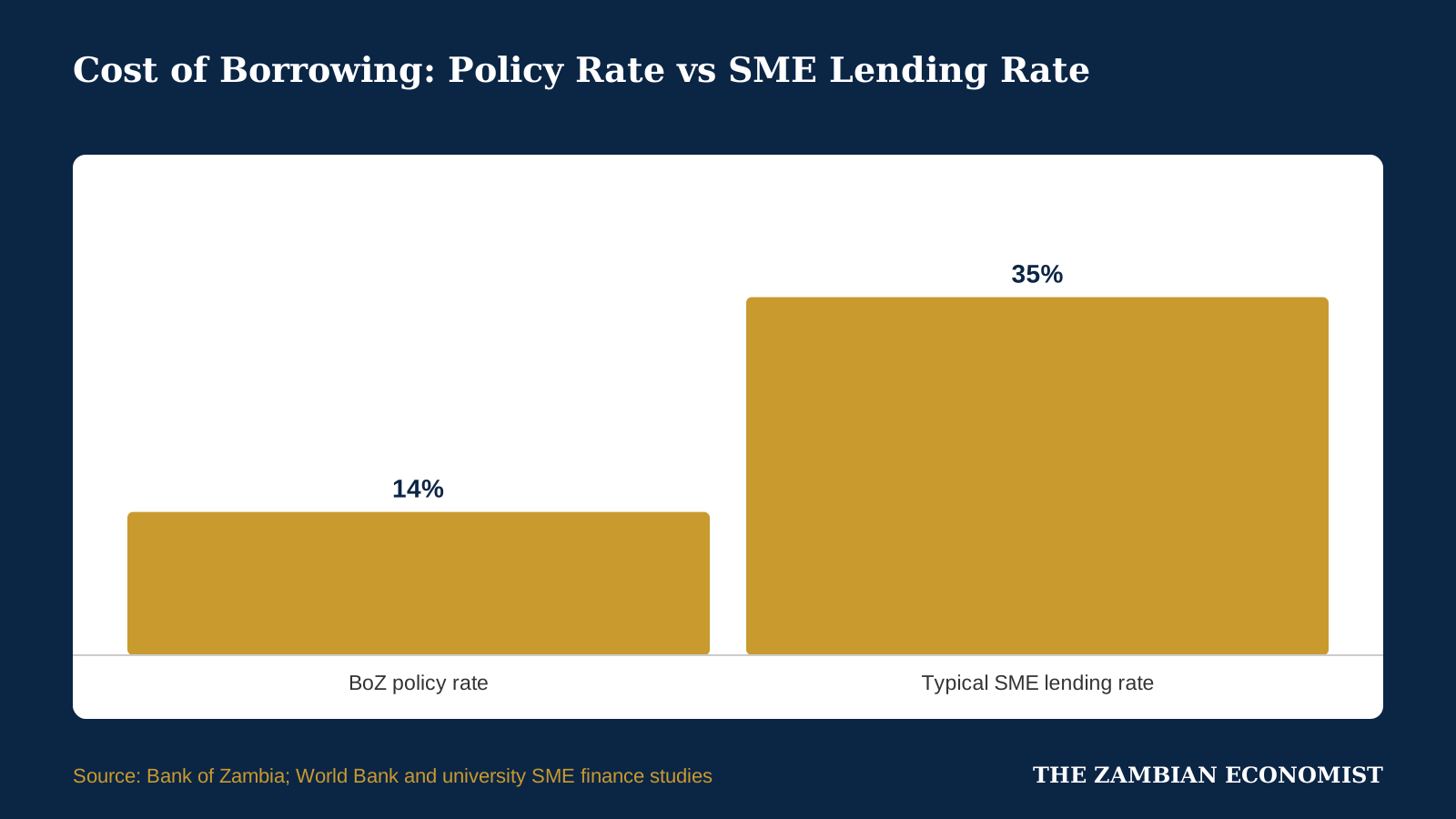
The central bank’s policy rate is 14%. Zambian small businesses routinely pay double or triple that. Here is why the gap persists, and what it means for anyone trying to grow a business without an asset to pledge.
A Wide, Persistent Gap
The Bank of Zambia’s benchmark policy rate stands at 14%. Small and medium enterprises rarely borrow anywhere close to that. Studies of Zambia’s SME lending market have repeatedly found average bank interest rates on SME loans in the low-to-mid 30s percent, with microfinance institutions charging substantially more, and women-led SMEs facing collateral rejection rates as high as 47% when they do apply.
Why the Spread Is So Wide
Zambian banks price SME risk conservatively for reasons that are structural rather than arbitrary: thin credit histories, informal or incomplete financial statements, and a strong preference among lenders for immovable property as collateral, which many small business owners, particularly women, do not hold in their own name. Government borrowing has also, at times, crowded out private lending, since banks can earn a comparatively safe return holding government paper instead of underwriting a small trading business.
What It Means for Business Formation
Access to finance is consistently cited as the single biggest obstacle facing Zambian SMEs, ahead of infrastructure, regulation or market access. The practical effect is that many businesses fund themselves from retained earnings, or from family and friends, rather than through formal credit. That limits how fast a viable business can scale, and it filters out entrepreneurs who lack an existing asset base even when the underlying business idea is sound.
| Financing metric | Approximate level |
|---|---|
| Bank of Zambia policy rate | 14% |
| Average bank SME lending rate | Low-to-mid 30s% |
| Microfinance institution rates | Above 40%, sometimes above 80% |
| Loan applications rejected for lack of collateral | Up to 47% (women-led SMEs) |
Business Implications
For SME owners, the practical takeaway is that formal bank debt is rarely the cheapest or fastest route to working capital. Supplier credit, group-lending schemes and equipment leasing are worth exploring before a conventional bank loan, particularly for businesses without title deeds to pledge as security.
Policy Implications
Credit guarantee schemes, which let government or development partners absorb part of the default risk on SME loans, are among the more direct tools policymakers have to narrow the spread. Zambia’s local-content push in mining, which requires large miners to source more from domestic suppliers, will only translate into new SME growth if those suppliers can actually finance the working capital to fulfil bigger orders.
Key Takeaways
- The Bank of Zambia’s policy rate is 14%, but SMEs typically pay rates in the low-to-mid 30s percent or higher.
- Collateral requirements, thin credit histories and government borrowing all widen the spread.
- Access to finance remains the most cited constraint on SME growth in Zambia.
Related reading: What the Bank of Zambia Policy Rate Means for Your Loan and Inside Statutory Instrument 68: Zambia’s New Local-Content Rules for Miners
Related: How the same financing gap is reshaping Zambia’s construction sector.
Related: Zambia Holds Its Breath: What the Wait for a Presidential Declaration Means for Business
Related: Hichilema’s Second Term: What It Means for Zambia’s Economy, Markets and Diplomacy
Related: Kamwala Fire Destroys 20 Trading Structures as Police Point to a Brazier
Related: From Economic Stabilisation to a Broad-Based Economy: The Role of MSMEs in the Next Five Years
Related: Mobile Money Has Expanded Financial Inclusion, But What Has It Changed for Users?