The Independent Broadcasting Authority has told Zambian broadcasters to avoid speculative election results and rely on official Electoral Commission of Zambia announcements while maintaining fair coverage of parties and candidates.
By The Zambian Economist Analyst
The Independent Broadcasting Authority (IBA) has cautioned radio and television stations to put accuracy ahead of speed when reporting Zambia’s election results.
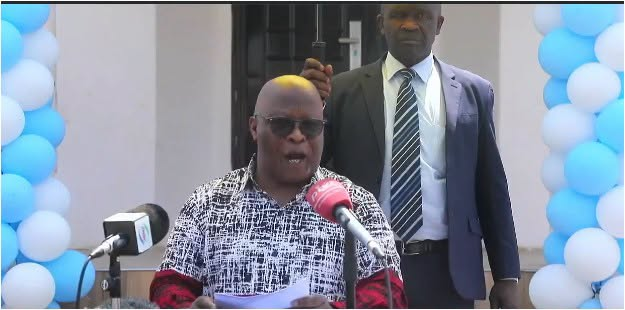
IBA Director General Webster Malido said broadcasters may update audiences on voting, counting and tallying, but should not announce results that are speculative, projected or unverified. He spoke during a press briefing in Lusaka.
What the IBA told broadcasters
Mr Malido said election results should be broadcast only after they have been officially announced through the Electoral Commission of Zambia (ECZ). The instruction forms part of the regulator’s push for responsible election coverage before Zambia’s 13 August 2026 general election.
- Report voting, counting and tallying updates accurately and with clear attribution.
- Do not present projections, rumours or partial figures as official results.
- Wait for results announced through the ECZ’s authorised process.
- Give political parties and candidates fair and equitable coverage.
- Maintain impartiality in interviews and news reports.
Why official results matter
The ECZ’s published results process assigns different responsibilities at polling stations, constituency totalling centres and the National Results Centre, which the ECZ formally launched on 12 August,. Presiding officers announce polling-station results, returning officers handle constituency totals and declarations for parliamentary and local government races, and the ECZ chairperson declares the presidential result.
That sequence makes the source and status of each figure important. A number from one polling stream, station or unofficial tally is not the same as a declared national outcome. The ECZ has previously warned that unofficial figures shared through social media should not be treated as official results.
The IBA’s 2026 Election Coverage Guidelines require election information to be accurate, balanced, fair and equitable. They also call for verified reporting and reasonable access to airtime for parties and candidates.
Fair coverage remains part of the test
Mr Malido also urged broadcasters to provide fair and equitable coverage to all political parties and candidates. He said impartiality should apply to interviews as well as day-to-day news reporting.
For station managers and editors, the warning means election-night procedures should identify who is authorised to verify a result, how figures are labelled on air and when corrections are issued. Speed without verification can expose a broadcaster to regulatory action and damage audience trust.
What this means for businesses, investors and voters
Broadcasters and advertisers
Media houses need clear approval chains for live updates, on-screen graphics and social posts. Advertisers also have a reputational interest in ensuring their brands do not appear beside false or inflammatory election claims.
Businesses and investors
Companies and investors use credible election coverage to assess operational continuity and political risk. Unverified results can distort that assessment before the lawful process is complete. Readers tracking the wider economic stakes can consult our pillar guide, The Economics of Zambia’s 2026 Election.
The public
Voters should check whether a result has been attributed to the ECZ and whether it refers to a polling station, constituency or national tally. Screenshots and forwarded messages without a verifiable source should be treated with caution.
Key takeaways
- Broadcasters may report on the progress of voting, counting and tallying.
- Speculative, projected and unverified results should not be announced.
- Official ECZ announcements remain the benchmark for verified results.
- Parties and candidates should receive fair and equitable coverage.
Related reading
- ECZ briefs parties, candidates and observers ahead of the 2026 election
- What every Zambian voter should know before 13 August 2026
- Zambia faces a temporary political risk premium
For timely election and economic updates, subscribe to The Ledger and view upcoming events.
Sources: Independent Broadcasting Authority; Electoral Commission of Zambia. Photo credit: IBA.
© 2026 The Zambian Economist.
Related: ECZ Revokes Binwell Mpundu’s Accreditation to National Results Centre, which the ECZ formally launched on 12 August, Over Threat Video.
Independent monitoring is being reinforced from another direction too, with civil society deploying over 600 election monitors nationwide ahead of Thursday’s vote.
Related: Mundubile Says National Reconciliation Will Be NRPUP’s First 100-Day Priority
nRelated: ECZ Chairperson to Address the Nation Today Amid Zambia’s Election Results Process
nnnWARNING! All rights reserved. This material and all other digital content on this website may not be reproduced, published, broadcast, rewritten, or redistributed, in whole or in part, without the prior express permission of The Zambian Economist. Where permission is granted, the content must be clearly credited to “The Zambian Economist,” with “www.zambianeconomist.com” prominently displayed.
WhatsApp: +260775574228 | Email: info@zambianeconomist.com
© 2026 The Zambian Economist.
Work With The Zambian Economist
Update: The ECZ has since suspended counting and the announcement of results nationwide following reports of violence in some districts.
Read more: LAZ Challenges Legality of ECZ’s Nationwide Vote-Counting Suspension.
Related: Hichilema’s Second Term: What It Means for Zambia’s Economy, Markets and Diplomacy
Related: ZNBC Defends Its Election Coverage Standards After Public Criticism
Related: ZNBC has since confirmed the retirement of two veteran anchors, Innocent Kalaluka and Franklin Tembo Jnr. Read: ZNBC Confirms Retirement of Veteran Broadcasters Innocent Kalaluka and Franklin Tembo Jnr.