The world faces a pandemic of war at the very moment nature is preparing its own assault. UN Secretary-General António Guterres calls it “an El Niño of war.” Dr. Kelvin Kamayoyo argues the international system is bankrupt, distracted and defenceless against what is coming.
By Dr. Kelvin Kamayoyo, Technical Advisor, African Rivers
24th October, 2026
KEY TAKEAWAYS
- UN Secretary-General António Guterres warned on 22 October 2026 that “war travels” through energy markets, shipping lanes, supply chains and financial systems, describing “an El Niño of war.”
- Dr. Kelvin Kamayoyo argues the UN has under-used shuttle diplomacy, allowing conflicts from the Middle East to Ukraine to Sudan to spread like a contagion.
- Super El Niño 2026-2027 is no longer a forecast but an incoming global shock, with the WMO warning it may be one of the strongest events on record.
- The World Food Programme needs USD 450 million for Gaza and the West Bank for six months, roughly 90 minutes of global military spending.
- Africa, with 60% of its population dependent on rain-fed agriculture, will be hit first and worst with no global supply chain to fall back on.
The world is not facing isolated conflicts. It is facing an unrelenting, mutating pandemic of war, and it is doing so exactly when nature is preparing its own assault, observed Dr. Kelvin Kamayoyo, Technical Advisor for African Rivers. Super El Niño of 2026-2027 is no longer a forecast, it is an incoming global shock. Yet the international system is bankrupt, distracted and defenceless.
A Pandemic of War
On Thursday, 22nd October 2026, United Nations Secretary-General António Guterres made a statement that should have shaken every capital. Speaking ahead of his trip to Egypt, he warned: “War travels: through energy markets, shipping lanes, supply chains and financial systems” (Guterres, 2026).
He continued: “We are now witnessing an El Niño of war.” Guterres was right to use the metaphor. He told reporters in New York: “Today, conflicts are not only intensifying. They are expanding.” From the Middle East to Ukraine to Sudan, we are seeing a contagion. This is not an accident. It is a direct failure of preventive diplomacy. The United Nations has not maximized the technique of shuttle diplomacy as a means to prevent and stop conflicts.
The Case for Shuttle Diplomacy
Shuttle diplomacy, where a mediator moves between parties who refuse to meet face-to-face, remains one of the most effective tools to break deadlocks. As Nobel Peace Prize Laureate Henry Kissinger (1973), who pioneered modern shuttle diplomacy in the Middle East, argued, sustainable peace is achieved not by demanding public surrender but by creating private space for compromise through persistent, discreet mediation (Kissinger, 1982). The UN must return to that model: less press conference, more shuttle.
This failure has a price. The famous Indian author Arundhati Roy, in The God of Small Things (1997) and later in The Cost of Living (1999), described precisely this moment: how big wars, big dams and big powers crush small lives, and how the poor pay for the violence of the powerful. Roy argued that people must reclaim narrative power and confront empire through determined, non-violent civil resistance that links ecological justice to anti-war struggles (Roy, 1999). Her warning is now reality.
The Blowback on Our Streets
The blowback is already on our streets. Referring to protests in Europe and elsewhere over the rising cost of living, Guterres said, “The violence and destruction we have seen on the streets is unacceptable and those responsible for criminal activities must be held accountable. At the same time, we cannot let intolerable violence obscure the legitimate and very real grievances of the many peaceful protestors.”
This tension between legitimate grievance and illegitimate violence was described with moral clarity by Nobel Peace Laureate Archbishop Desmond Tutu (1984). Tutu maintained that when institutions ignore peaceful protest against injustice and poverty, they breed anger, but that violence can never be the answer and must be answered with justice, not repression (Tutu, 1999). The solution is not to criminalize the protester but to address the cost-of-living crisis that war itself is fuelling.
The spread is deliberate. “From the Middle East to Ukraine to Sudan, we are seeing civilians and civilian infrastructure deliberately thrust into the line of fire,” Guterres warned.
The great Nigerian author Chinua Achebe diagnosed this pathology decades ago. In Things Fall Apart (1958) and There Was a Country (2012), Achebe showed how when the centre cannot hold, when political failure turns people against their own communities, civilians become the battlefield (Achebe, 1958). His counsel remains relevant: societies minimize escalation not through revenge but through restoring community dialogue, truth-telling and inclusive governance.
Guterres was blunt: “Attacks directed against civilians and civilian objects are prohibited under international law. They must stop.” This is not a political opinion; it is law. Nobel Peace Laureate Kofi Annan (2001) consistently defended this principle, arguing that sovereignty can never be a shield for targeting civilians and that the protection of civilians is the core test of international legitimacy (Annan, 2005).
Yemen and Palestine: Where the Test Fails
Nowhere is this test failing more than in Yemen and Palestine. On Yemen, the Secretary-General pointed to “escalating hostilities around the city of Ta’iz and elsewhere” and described continued Houthi attacks against civilian targets in Saudi Arabia as “totally unacceptable. We need restraint and Yemen needs a political horizon.”
We need to move beyond talking in New York to taking action on the ground. We must better appreciate the concerns of all parties to reach an endgame that yields a win-win and secures global peace and stability. As Nobel Peace Laureate President Jimmy Carter (2002) demonstrated through the Camp David Accords and his post-presidency work, lasting peace requires direct engagement with all actors, however difficult, and a commitment to win-win outcomes over zero-sum victories (Carter, 2010).
In the Occupied Palestinian Territory, Guterres said, “In Gaza, essential aid is still being severely restricted by Israel ahead of the fast-approaching winter.” In the occupied West Bank, “Palestinians continue to suffer daily attacks by Israeli settlers. The clear goal is to drive communities off their land.”
There is an urgent need to innovate ways to promote coexistence in one area and share common prosperity. Nobel Peace Laureate Nelson Mandela (1993) described this challenge best. He argued that true coexistence is not about one group disappearing, but about building a shared future where both peoples enjoy equal dignity, freedom and prosperity in the same land (Mandela, 1994).
The Moral Obscenity of Our Priorities
Finally, the moral obscenity of our priorities. “The situation is out of control,” Guterres said. The World Food Programme “urgently needs 450 million US dollars to feed people in Gaza and the West Bank for the next six months,” an amount equivalent to around 90 minutes of global military spending.
It is sad to learn about this unfortunate comparison. But sadness is not a strategy. The United Nations should call for a 30-day global ceasefire of all wars so that global military savings can be channelled to El Niño response worldwide.
As the renowned Kenyan environmentalist and Nobel Peace Laureate Wangari Maathai (2004) warned, we cannot separate peace from the environment. In Unbowed (2006), Maathai argued that resource scarcity, environmental degradation and conflict form a vicious cycle, and that protecting the environment and feeding people is the most effective peace work (Maathai, 2006).
Super El Niño 2026-2027: The Incoming Shock
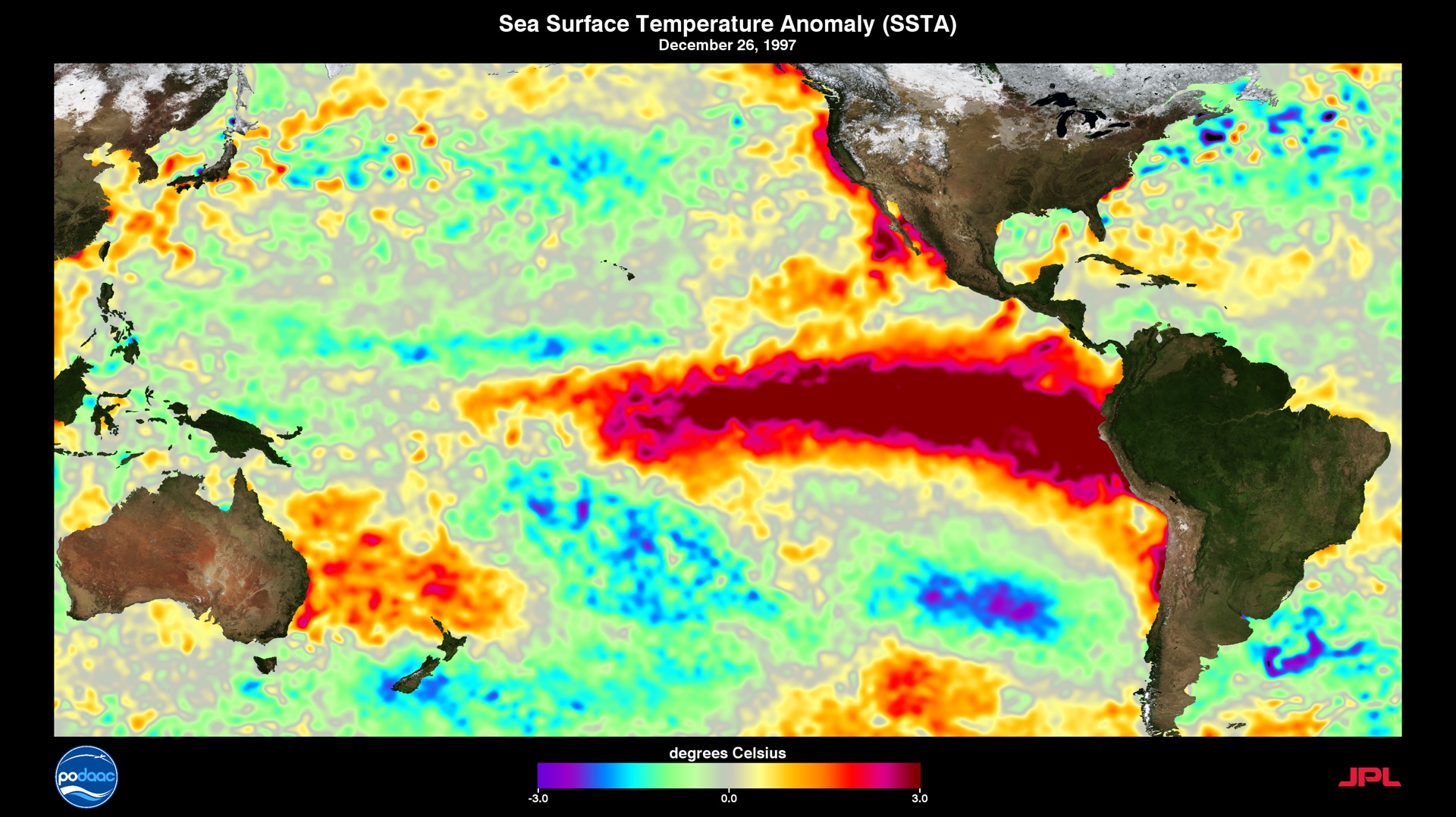
This is why the Super El Niño 2026-2027 will be catastrophic. The Intergovernmental Panel on Climate Change has confirmed that El Niño amplifies extreme weather which include droughts, floods and food system collapse (IPCC, 2023). The World Meteorological Organization warns that 2026-2027 is likely to be one of the strongest events on record (WMO, 2026).
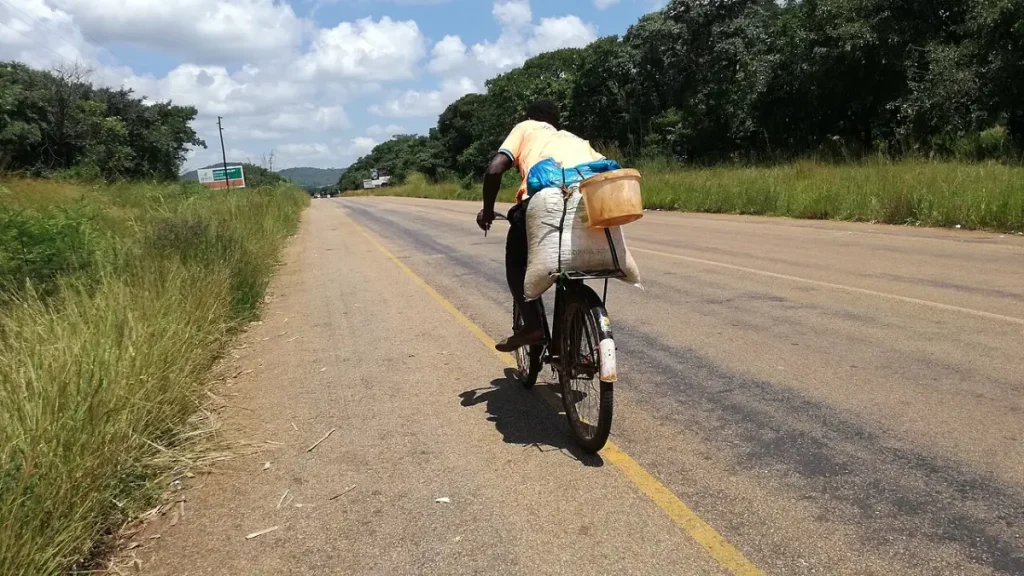
Africa and the most vulnerable nations will be hit first and worst. With 60% of Africa’s population dependent on rain-fed agriculture, with energy grids already collapsing, with shipping lanes disrupted by war, the continent has no buffer (African Development Bank, 2024). When the rains fail in the Zambezi and the Horn, and floods wash away infrastructure in West Africa, there will be no global supply chain to rescue us because war has already broken it.
And recovery will undoubtedly take longer. A nation at war cannot rebuild a dam, cannot restore a crop, cannot move food aid. War travels, and so will famine. The world must choose to continue funding 90 minutes of war, or fund 6 months of life.
For comments contact the researcher and author on email: kamayoyokm@gmail.com
References
- Achebe, C. (1958) Things Fall Apart. London: Heinemann.
- African Development Bank (2024) African Economic Outlook 2024: Climate and Food Security. Abidjan: AfDB.
- Annan, K. (2005) In Larger Freedom: Towards Development, Security and Human Rights for All. New York: United Nations.
- Carter, J. (2010) White House Diary. New York: Farrar, Straus and Giroux.
- Guterres, A. (2026) Statement by UN Secretary-General: War travels through energy markets, shipping lanes, supply chains and financial systems. New York: United Nations, 22 October.
- IPCC (2023) Climate Change 2023: Synthesis Report. Geneva: Intergovernmental Panel on Climate Change.
- Kissinger, H. (1982) Years of Upheaval. Boston: Little, Brown.
- Maathai, W. (2006) Unbowed: A Memoir. New York: Knopf.
- Mandela, N. (1994) Long Walk to Freedom. Boston: Little, Brown.
- Roy, A. (1997) The God of Small Things. New Delhi: IndiaInk.
- Roy, A. (1999) The Cost of Living. New York: Modern Library.
- Tutu, D. (1999) No Future Without Forgiveness. New York: Doubleday.
- WMO (2026) WMO El Niño/La Niña Update October 2026. Geneva: World Meteorological Organization.
WARNING! All rights reserved. This material and all other digital content on this website may not be reproduced, published, broadcast, rewritten, or redistributed, in whole or in part, without the prior express permission of The Zambian Economist. Where permission is granted, the content must be clearly credited to “The Zambian Economist,” with “www.zambianeconomist.com” prominently displayed.
WhatsApp: +260775574228 | Email: info@zambianeconomist.com © 2026 The Zambian Economist.
Work With The Zambian Economist