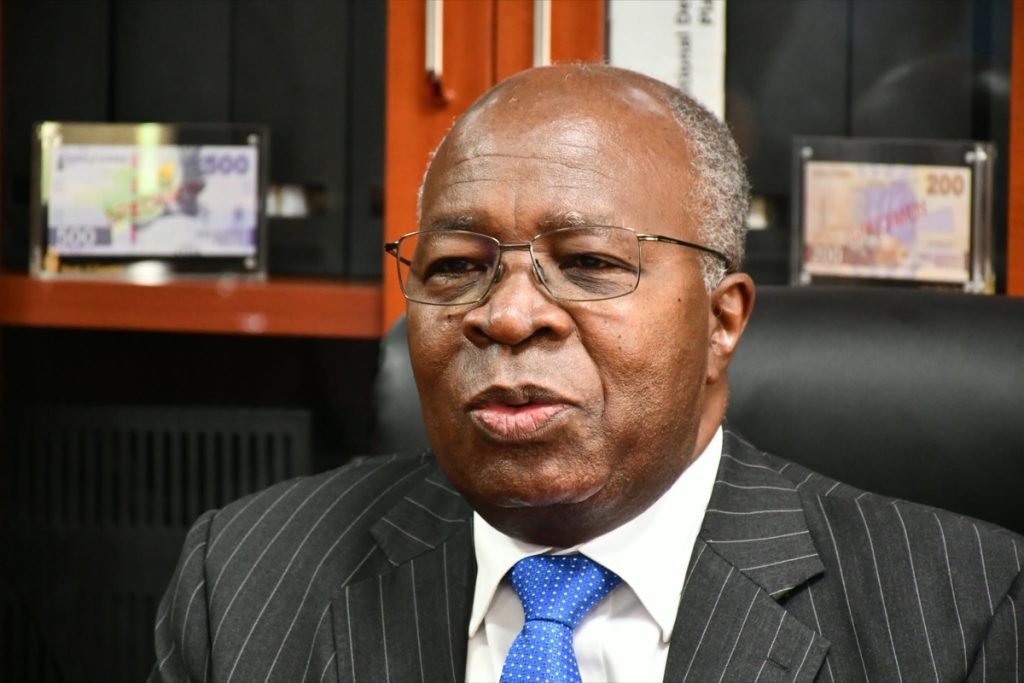


Musokotwane wants faster tax justice. The Tribunal that delivers it has three empty seats, a backlog built up over three years without members, and a heavier 2027 tax load heading its way.
Key takeaways
- Finance Minister Situmbeko Musokotwane has pledged to strengthen the Tax Appeals Tribunal and protect its independence, saying unresolved tax disputes cost taxpayers, businesses and the Treasury.
- The Tribunal is sitting with four members against a legal complement of seven. Two legal practitioner seats and one business community seat are vacant.
- It went without any members for about 36 months between 2023 and 2026, contributing to today’s case backlog.
- Chairperson Diana Bunting wants the remaining seats filled, money for circuit hearings and digital case management, and a gradual move to a specialised tax court with full-time members.
- The stakes are rising: the 2027 Budget raises VAT to 16.5% and adds a 39.5% top PAYE rate, which is likely to mean more assessments and more disputes.
Finance and National Planning Minister Situmbeko Musokotwane has committed the Government to strengthening the Tax Appeals Tribunal, the independent body that hears appeals against decisions of the Zambia Revenue Authority (ZRA). He made the pledge when Tribunal Chairperson Diana Bunting and members Danmore Mulima and David Chisupa called on him in Lusaka. The fourth member is Moono Simatyaba.
His argument was about money as much as fairness. “When tax disputes remain unresolved, taxpayers continue accumulating penalties, businesses operate under uncertainty and the Government does not receive revenue on time. In the end, everyone loses,” Dr Musokotwane said.
What did the Minister promise?
Dr Musokotwane said an efficient appeals system improves taxpayer confidence, encourages voluntary compliance and gets legitimately due revenue to the Treasury without delay. Tax reform, he said, should make the system simpler and fairer and more supportive of enterprise, while protecting the taxpayer’s right to seek redress.
He also said the Government would preserve the Tribunal’s independence and give it the conditions to work impartially and efficiently. He did not give a date for filling the vacant seats.
Why does the Tribunal have a backlog?
Largely because for long stretches it had nobody to hear cases. Ms Bunting has said the Tribunal went without appointments for about 18 months between 2013 and 2015, and again for about 36 months between 2023 and 2026. Appeals kept arriving while no one could decide them.
The current members were sworn in before the Court of Appeal in mid-2026. Even now the Tribunal has four of its seven statutory members. The empty seats are for two legal practitioners and one business community representative. Filling them, the Tribunal says, would let the Tribunal hear more cases, cut the backlog and stop new appeals piling up.
The Tribunal in numbers
| Item | Detail | Source |
|---|---|---|
| Tribunal members in office | 4 of 7 (Diana Bunting, Danmore Mulima, David Chisupa, Moono Simatyaba) | Ministry of Finance |
| Vacant seats | 2 legal practitioners, 1 business community representative | Ministry of Finance |
| Periods with no members | About 18 months (2013 to 2015) and about 36 months (2023 to 2026) | Tax Appeals Tribunal |
| Deadline to appeal a ZRA decision | 30 days from the decision notice | Tax Appeals Tribunal Act, 2015 |
| 2027 Budget | K284.8 billion, of which K233.7 billion (82.1%) from domestic revenue | 2027 Budget; RSM Zambia |
| 2027 tax changes | VAT to 16.5%; new 39.5% top PAYE rate from 1 January 2027 | 2027 Budget |
| ZRA collections, 2026 | Projected K169.6 billion against a K185 billion target | ZRA Commissioner General |
Why the delay costs businesses money
Zambia applies a “pay now, argue later” principle to most assessed taxes. A company that disputes an assessment is generally expected to pay while its appeal is heard, and tax specialists note that the law gives the Tribunal no express power to suspend collection while an appeal is pending. A slow appeal therefore ties up cash that a business could be using for stock, wages or expansion.
Where tax has not been paid, penalties and interest keep running, which is the point the Minister made. Either way, each month a case waits is a cost to someone. For the Treasury, disputed revenue sits in limbo until a decision is made, whichever way it goes.
What does the Tribunal want?
Ms Bunting set out a list. Beyond the three appointments, she asked for sustained funding for circuit hearings so that taxpayers outside Lusaka can be heard, a digital case management system, continuous professional development for members, and wider access to tax justice across the country.
Her longer-term proposal is the most significant: a gradual move to a specialised tax court, or a tribunal with full-time members. A full-time body would hear more cases and build deeper expertise in areas such as transfer pricing and mining tax, where disputes involve large sums and often end up in the Supreme Court.
Why it matters more in 2027
The 2027 Budget, presented on 6 November under the theme “Grow Zambia: From Stabilisation to Unlocking Opportunities, Creating Jobs and Improving Livelihoods for All”, leans harder on domestic revenue. It raises VAT to 16.5% and introduces a 39.5% top PAYE rate from 1 January 2027, and it expects domestic revenue to fund about 82% of spending. ZRA has also said that weak compliance is its biggest problem and that it is heading for about K169.6 billion this year against a K185 billion target.
More collection effort and new rates usually bring more assessments, and more assessments bring more disputes. A Tribunal that is understaffed going into that cycle risks a bigger backlog, not a smaller one. That is why the appointments matter more than the statement.
What it means for business
For companies, a working Tribunal reduces the risk of having large sums locked in a dispute for years, which makes tax exposure easier to plan for. Firms with open disputes should check their status, make sure filings are complete and keep records ready for hearings as the Tribunal works through its list.
For investors, the speed and independence of tax dispute resolution is part of how they price country risk. A specialised tax court with full-time members would send a clear signal, but it needs legislation and funding, so it is several years away at best.
What to watch
Three things will show whether the pledge is real: appointments to the three vacant seats, a budget line for circuit hearings and digital case management, and a published figure for the backlog so progress can be measured. We have not found a published count of pending appeals.
Related reading
- When National Growth Causes Household Suffering
- Zambia to Launch 2027–2031 Revenue Strategy Consultations
- Mineral Wealth Is No Reason to Shun the IMF, Says Musokotwane
- Zambia Tax 2026 hub | Doing Business in Zambia | Business Directory
WARNING! All rights reserved. This material and all other digital content on this website may not be reproduced, published, broadcast, rewritten, or redistributed, in whole or in part, without the prior express permission of The Zambian Economist. Where permission is granted, the content must be clearly credited to “The Zambian Economist,” with “www.zambianeconomist.com” prominently displayed.
WhatsApp: +260775574228 | Email: info@zambianeconomist.com
© 2026 The Zambian Economist.