

A Chasefu chief has handed Zambia’s new Labour Minister a public test. The numbers suggest it will be a hard one to pass: 192 inspectors, a minimum wage review with no date, and a workforce that is still mostly informal.
Key takeaways
- Chief Phikamalaza of Chasefu District has told Labour and Social Security Minister Misheck Nyambose to use his post to make a real difference for workers and employers.
- Mr Nyambose, the Chasefu MP, was sworn in on 28 October 2026 as one of 24 Cabinet ministers in President Hakainde Hichilema’s second-term government.
- His ministry has 192 labour officers and inspectors nationwide. It carried out 2,505 inspections, charged 179 companies and imposed K4,995,520 in penalties, according to a statement he made to Parliament.
- A minimum wage review is under consultation, but no figures or timeline have been published.
- For employers, expect tighter checks on contracts and wages. For workers, the test is whether enforcement reaches districts such as Chama that have no labour officer at all.
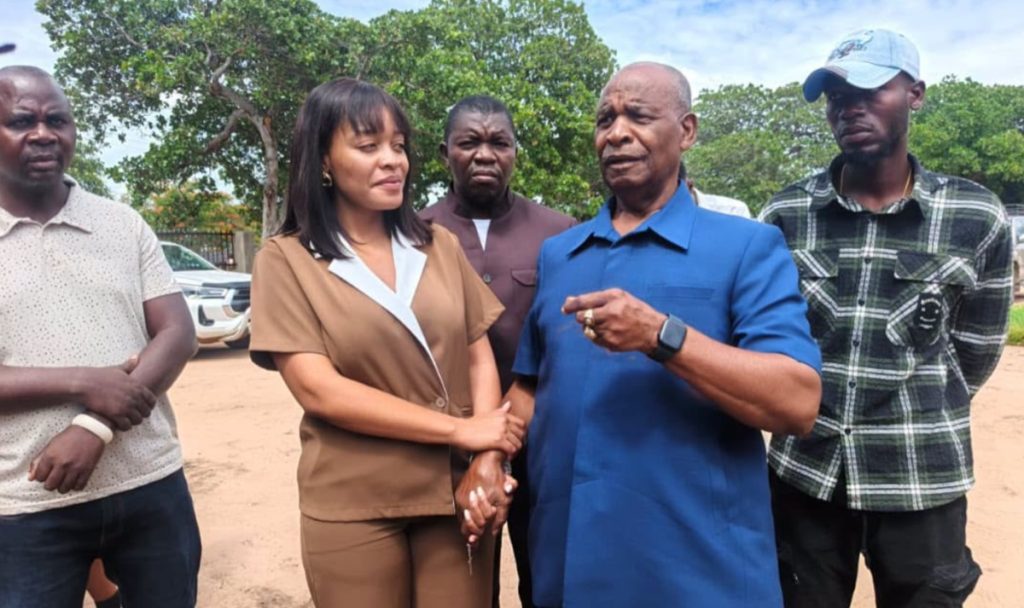
Chief Phikamalaza of the Ngoni-Tumbuka people in Chasefu District, Eastern Province, has urged Labour and Social Security Minister Misheck Nyambose to deliver on his new mandate and make a meaningful difference in the lives of workers and employers. Mr Nyambose is also the Member of Parliament for Chasefu.
Mr Nyambose promised not to disappoint the people of Chasefu and said he would make sure the Ministry of Labour and Social Security contributes to the Government’s development agenda.
What did Chief Phikamalaza tell the minister?
The chief said Mr Nyambose’s patience and loyalty had paid off. He told the minister that the appointment came with expectations and a duty to contribute to national development, and that he believed Mr Nyambose was equal to the task.
He also asked the minister and the people of Chasefu to support President Hichilema, describing him as Head of State for the whole nation. Backing his leadership, the chief said, was important for Zambia’s development. He called for collective support for the Grow Zambia Agenda, which the Government says will widen economic opportunity, raise productivity and improve livelihoods.
This is not the first time Chief Phikamalaza has given Mr Nyambose public instructions. On an earlier visit, reported by the Zambian Observer, he told Mr Nyambose and Eastern Province Minister Peter Phiri to stop being “praise singers” and to tell the President the truth about hardships in the district, pointing to a road network he said could be washed away by the rains. A chief who has asked for candour before is now asking for delivery.
How did Nyambose respond?
Mr Nyambose said the trust placed in him was a responsibility he would carry with dedication. He pledged to make sure that workers and ordinary citizens benefit from the country’s economic progress.
That pledge can be measured. In his first month in office the minister has made several commitments on the record, and each one comes with a number attached.
The job in numbers
| Indicator | Figure | Source |
|---|---|---|
| Labour officers and inspectors deployed | 192 | Ministerial statement to Parliament, November 2026 |
| Labour inspections conducted | 2,505, covering more than 66,505 employees | Ministerial statement to Parliament |
| Companies charged | 179 | Ministerial statement to Parliament |
| Administrative penalties imposed | K4,995,520 (about K27,900 per company charged) | Ministerial statement; Zambian Economist calculation |
| Official unemployment rate | 9.9%, down from 12.6% in 2022 | Zambia Statistics Agency (ZamStats) |
| Share of employed people in informal jobs | 76.3% | ZamStats Labour Force Survey 2022 |
Three things stand out. First, 192 inspectors across more than 110 districts works out at fewer than two per district. Mr Nyambose has acknowledged the gap: on 21 November he told ZNBC the ministry would redistribute labour officers after Chama’s District Commissioner complained that the district, which has significant economic activity, had none.
Second, the average penalty of roughly K27,900 per company charged is modest for a large employer. Whether fines of that size change behaviour is an open question.
Third, the headline unemployment rate has fallen, but about three in four working Zambians were in informal jobs at the last full Labour Force Survey. Most of them sit outside the reach of labour inspections, employment contracts and NAPSA contributions.
What it means for workers
The minister’s early messages point to three priorities. In Chipata on 16 November he told employers that workers employed for more than six months must be given contracts, and advised firms not to hire people they cannot afford to pay. He singled out television and radio stations as employers that should pay the prescribed wages.
He has also told Parliament that the Government is consulting stakeholders on a review of the minimum wage. No figure or date has been published. For a domestic worker, shop worker or general worker on a sectoral minimum, that review is the commitment that would show up in a payslip.
On public-sector pay, Mr Nyambose told trade unions in November that the Emoluments Commission does not replace their collective bargaining rights under ILO Convention No. 98. Unions will be watching how that plays out at the next round of talks.
What it means for employers and investors
Employers should plan for more inspections, not fewer. The ministry has shown it is willing to charge companies and publish the totals. Firms that rely on rolling casual contracts are the most exposed, given the minister’s stated six-month rule.
A minimum wage increase would raise labour costs for sectors that pay at or near the statutory floor, including retail, security, domestic work and parts of agriculture. Businesses budgeting for 2027 should build in a scenario where sectoral minimums rise.
For investors, the signal is mixed but readable. The minister has linked labour policy to the Grow Zambia Agenda and to skills, and has said a small, well-paid workforce is better than a large, poorly paid one. Predictable enforcement is generally easier to price than uneven enforcement. The risk is that rules tighten faster than the ministry’s capacity to apply them evenly across districts.
Who is Misheck Nyambose?
Misheck Nyambose is the Member of Parliament for Chasefu in Eastern Province. He served on several parliamentary committees, including Delegated Legislation and Local Government Accounts, during the 2021 to 2026 Parliament. President Hichilema appointed him Minister of Labour and Social Security on 28 October 2026, after the August general election, succeeding Brenda Tambatamba.
What does the Ministry of Labour and Social Security do?
The ministry sets and administers policy on employment, labour relations, occupational safety and health, productivity and social security. It enforces the Employment Code, issues minimum wage orders for specific sectors, and oversees bodies such as NAPSA and the Workers’ Compensation Fund Control Board.
What to watch
Chief Phikamalaza asked for a meaningful difference. Three markers will show whether one is coming: a published minimum wage decision with a date attached, a labour officer posted to every district including Chama, and progress on bringing informal workers into social security. Until those arrive, the pledges made in Chasefu remain pledges.
Related reading
- Trade Unions Retain Collective Bargaining Rights, Labour Minister Nyambose Clarifies
- Hichilema Swears In Newly Appointed Ministers at State House
- The Educated but Unemployed: Can Education Still Be Zambia’s Great Equaliser?
- Grow Zambia Agenda: What It Would Take to Double Zambia’s Economy by 2031
- More from Labour & Employment | Business Directory | Events
WARNING! All rights reserved. This material and all other digital content on this website may not be reproduced, published, broadcast, rewritten, or redistributed, in whole or in part, without the prior express permission of The Zambian Economist. Where permission is granted, the content must be clearly credited to “The Zambian Economist,” with “www.zambianeconomist.com” prominently displayed.
WhatsApp: +260775574228 | Email: info@zambianeconomist.com
© 2026 The Zambian Economist.