

With a new presidential term under way and the Economics Association of Zambia electing leaders this week, Zambia has a rare opening to build a standing bridge between government decisions and independent economic evidence. EAZ should make the offer, and protect its freedom to disagree.
Key Takeaways
- The Economics Association of Zambia meets in Livingstone on 3 and 4 September, with an elective EGM scheduled for 4 September. It should use the meeting to propose a five-year economic advisory compact with government.
- The compact should give the Ministry of Finance and National Planning and sector ministries access to peer-reviewed policy briefs, independent project appraisal, budget analysis and public economic scorecards.
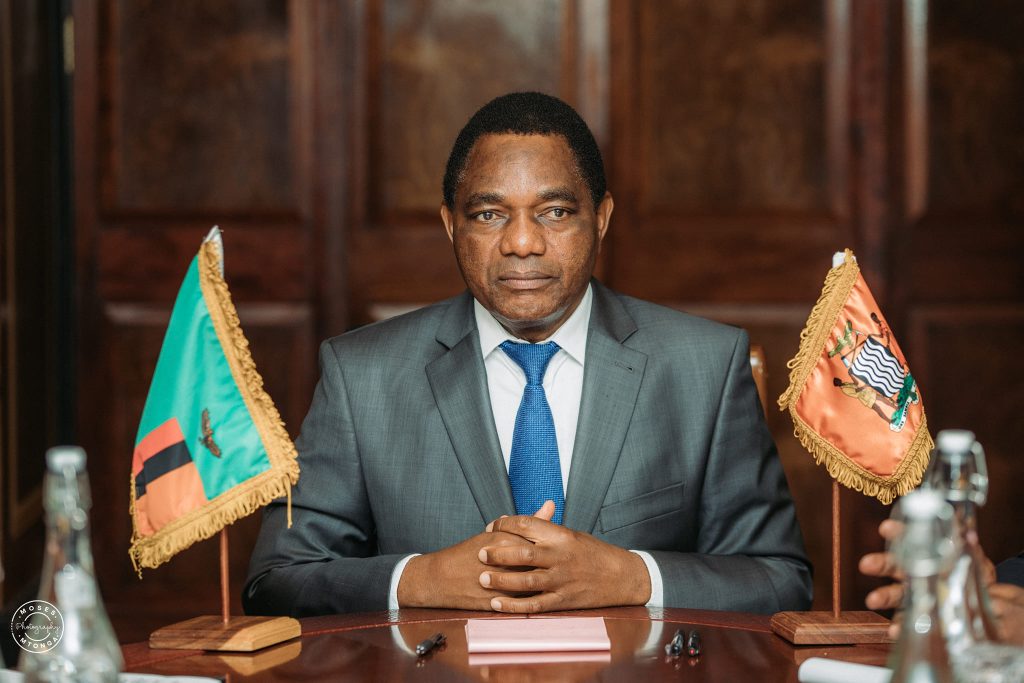
- President Hakainde Hichilema’s economics training is an asset, but no president should be expected to substitute for an organised national economics profession.
- EAZ should consult its members and State House on whether the President could serve as honorary patron, subject to constitutional review and safeguards that keep the Association non-partisan.
- Cooperation must not mean silence. EAZ will earn public trust only if it can praise sound policy, identify failure and publish dissenting evidence without political permission.
The Economics Association of Zambia should use the opening of President Hakainde Hichilema’s second term to offer government a formal five-year economic advisory compact. The proposal should begin with the Ministry of Finance and National Planning, then extend to the ministries whose decisions shape jobs, prices, production and public investment.
This is not a call for EAZ to become an appendage of State House. It is a call for Zambia’s organised economics profession to become more useful, more visible and harder to ignore.
The timing could scarcely be better. President Hichilema took the oath for a second term on 1 September. EAZ is due to hold its Annual General Meeting in Livingstone on 3 and 4 September, with elections for a new leadership on 4 September. Two mandates are beginning within days of each other. One is political. The other is professional.
EAZ should meet that moment with an institutional offer: let Zambia’s economists help government test policy before citizens pay for mistakes.
A professional body should meet a political term with an institutional offer
EAZ already has the mandate. Its constitution provides for participation in the development of sound economic policy, the publication of research and the provision of advisory services to the public and private sectors. Its stated vision is to become a centre of excellence for independent economic policy analysis.
The Association has also said it wants to play an advisory role to government. The next step is to turn that intention into a working arrangement with deliverables, deadlines and public accountability.
Zambia is moving from one planning cycle into another. The Eighth National Development Plan covers 2022 to 2026, while the new presidential term runs to 2031. The Government has already opened work around a 2027 to 2031 Medium-Term Revenue Strategy. Decisions made now will shape taxation, borrowing, public investment and the space available for social spending over most of the new term.
EAZ should not wait to be invited into isolated workshops after the main choices have been made. It should propose a standing channel through which government can request analysis, and through which the Association can submit advice on its own initiative.
What a five-year advisory compact should contain
The compact need not create another expensive bureaucracy. It should organise expertise that already exists in universities, banks, businesses, research institutes, civil society and the public service.
A quarterly national economic council
EAZ should convene a quarterly technical meeting with the Ministry of Finance and National Planning, the Bank of Zambia and relevant sector ministries. Each meeting should focus on one defined problem and end with a short public record of the evidence considered, areas of agreement and unresolved questions.
The agenda should move beyond commentary on inflation and the kwacha. It should examine the quality of public investment, the cost of tax incentives, farm productivity, mining linkages, electricity constraints, employment and the performance of state-owned enterprises.
Independent policy and budget notes
Before every national budget, EAZ should publish a costed submission that identifies trade-offs. After the budget, it should explain who gains, who pays and whether the numbers are consistent with the Government’s fiscal targets.
Major policy proposals should receive the same treatment. A new subsidy, tax concession or state investment should be tested against its full cost, its likely effect and credible alternatives. Government would remain free to decide. The public would be better able to judge the decision.
Technical groups embedded around real ministry problems
The Ministry of Finance and National Planning should be the anchor, not the only partner. EAZ should establish rotating technical groups for Agriculture, Mines, Energy, Commerce, Small and Medium Enterprise Development, Labour and other economic portfolios.
These groups could review programme design, help ministries improve economic modelling and connect public officers with specialists outside government. The work should be demand-led and time-bound. A ministry facing a question about fertiliser support, power pricing or local content should be able to request a team with the right skills, not a general conference.
A public scorecard for the new term
EAZ should publish an annual independent scorecard on a small set of measures that citizens and businesses can follow. The indicators should include real household income, formal employment, productivity, domestic arrears, public investment completion and export value added.
Targets should be drawn from official plans and budgets. Methods should be published. Where data are missing or disputed, EAZ should say so plainly.
A rapid-response economics panel
Floods, droughts, fuel shocks, power shortages and abrupt movements in commodity prices do not wait for annual conferences. EAZ needs a roster of members who can produce short, reviewed advice within days of a major shock. Government would gain an additional source of analysis. The public would gain a sober explanation at the moment confusion is highest.
An economist in State House still needs economists outside State House
President Hichilema holds a degree in economics and business administration and a master’s degree in finance and business strategy. That background should make a structured relationship with EAZ easier to build.
It should not make the Association less necessary.
Economic decisions are rarely defeated by a lack of intelligence at the top. They fail because assumptions go untested, officials work in silos, political incentives shorten the time horizon or inconvenient evidence reaches the room too late. A president trained in economics should understand the value of an organised body that can challenge forecasts before they become budgets and question projects before they become debt.
The best advice will sometimes confirm the Government’s course. At other times it will recommend delay, redesign or reversal. That is the point. An advisory body that only applauds is not advising.
EAZ should ask whether Hichilema could serve as honorary patron
EAZ should consult its membership and State House on whether President Hichilema could serve as honorary patron of the Association. His economics background and the timing of a new term make the question worth asking.
Patronage could raise the profile of the profession, help bring young economists into EAZ and signal that economic debate belongs in national life. It could also give the Association more convening power when it calls ministries, businesses and universities to the same table.
But the title must be designed with care. EAZ’s own membership terms describe it as non-political and non-partisan. An honorary patron should therefore have no power to appoint the leadership, approve research, block publication or direct the Association’s positions. The arrangement should require member approval, a legal and constitutional review, a written statement of independence and a clear route for EAZ to publish criticism of government.
If those protections cannot be secured, EAZ should pursue the advisory compact without presidential patronage. Access is useful. Independence is indispensable.
Cooperation must include the right to disagree
For government, the attraction of this compact is straightforward. It would widen the pool of expertise available to ministries and create an early warning system for weak policy design. It would also help officials explain difficult trade-offs with evidence from a body outside government.
For EAZ, the compact offers relevance. Zambia does not need a professional association that appears mainly at conferences and ceremonial dinners. It needs one that produces work people can quote, test and debate.
For citizens and businesses, the gain would be better scrutiny. A farmer should be able to see the economics behind an input-support change. A small manufacturer should be able to understand the cost of unreliable power. A taxpayer should be able to compare what a public project promised with what it delivered.
None of this works if EAZ exchanges independence for proximity. Its funding should be disclosed. Government commissions should be published where security and personal data do not prevent it. Research teams should declare conflicts of interest. Dissenting views should be recorded when members reach different conclusions.
The Association must remain willing to say that a popular policy is expensive, that a target is unrealistic or that an official forecast rests on weak assumptions. That candour would make cooperation more useful, not less.
Livingstone can mark a change in EAZ’s national role
The EAZ meeting on 3 and 4 September should produce more than a new list of office bearers. Candidates for the Association’s leadership should be asked whether they support a formal advisory compact, what safeguards they would place around presidential patronage and which public products they would deliver in their first year.
A credible first-year programme would be simple: sign a memorandum with the Ministry of Finance and National Planning, publish two independent policy briefs, launch the annual scorecard and convene the first ministry technical group. Put the dates in the public domain. Report progress to members every quarter.
President Hichilema has received a second five-year mandate. EAZ is about to choose the people who will speak for Zambia’s economics profession. The Association should pledge to work with government now, while making clear that partnership will never require permission to tell the truth.
Zambia needs a stronger economic advocacy body inside the national conversation. EAZ should volunteer for the job.
Sources and related reading
- Economics Association of Zambia: About Us
- EAZ 2026 elective EGM notice
- State House: President Hakainde Hichilema’s background
- Ministry of Finance and National Planning: Eighth National Development Plan
- Zambia After the Oath: The Economic and Diplomatic Tests of Hichilema’s Second Term
- Zambia to Launch 2027-2031 Revenue Strategy Consultations
- EAZ Seeks Formal Partnership With Finance Ministry as Musokotwane Calls for Practical Policy Ideas
- Macroeconomy and Policy coverage
WARNING! All rights reserved. This material and all other digital content on this website may not be reproduced, published, broadcast, rewritten, or redistributed, in whole or in part, without the prior express permission of The Zambian Economist. Where permission is granted, the content must be clearly credited to “The Zambian Economist,” with “www.zambianeconomist.com” prominently displayed.
WhatsApp: +260775574228 | Email: info@zambianeconomist.com
© 2026 The Zambian Economist.