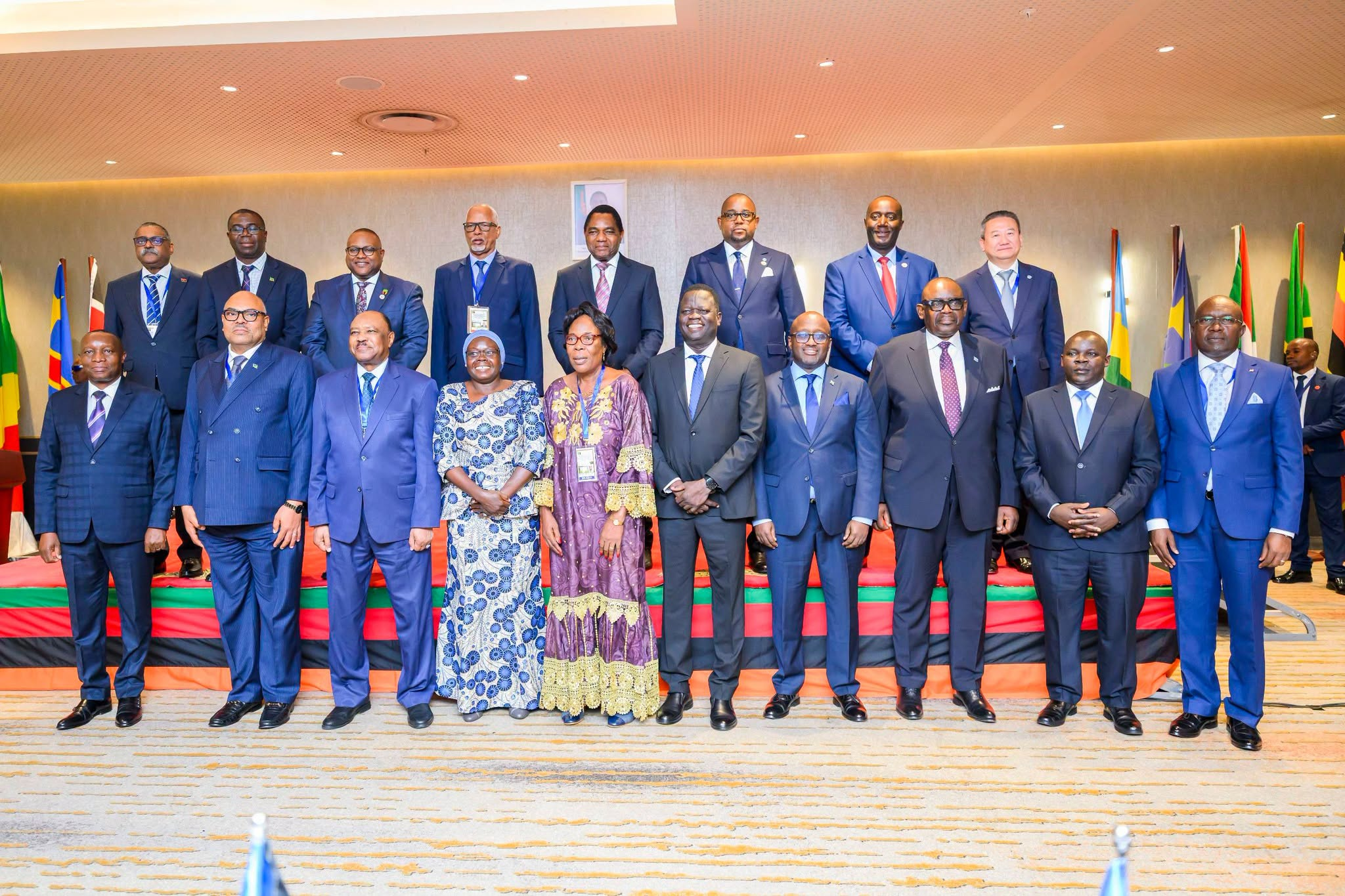
At the ICGLR ministerial meeting in Lusaka, President Hakainde Hichilema argues that lasting security must underpin investment, resource processing and shared prosperity.
President Hakainde Hichilema has called for peace and regional integration to translate into economic opportunities across the Great Lakes region, arguing that insecurity undermines the livelihoods and investment needed for sustained growth.
Opening the International Conference on the Great Lakes Region (ICGLR) Regional Inter-Ministerial Committee meeting in Lusaka on Monday, 19 October, he connected the region’s security challenges with the prospects of households and businesses.
“Insecurity anywhere is insecurity everywhere,” the President said in a statement on the meeting.
He said conflict destroys lives and livelihoods, while ending it allows families to rebuild and businesses to create jobs. Those opportunities, he argued, give communities an economic stake in preserving peace.
From regional integration to economic transformation
Hichilema said the twentieth anniversary of the ICGLR Pact should prompt renewed attention to the economic purpose of regional cooperation. He called for greater value addition to resources already available in the region, supported by lasting peace, security and stability.
“When Zambia grows, the whole region should grow with us,” he said, describing the Grow Zambia Agenda as a regional agenda.
The ICGLR Secretariat’s 15 October announcement identified the Lusaka session as the twentieth ordinary meeting of the committee, concluding statutory meetings held from 8 to 19 October. It listed peace and security, humanitarian issues, natural resource governance and regional cooperation among the priorities.
Why does regional peace matter for Zambia’s economy?
For Zambia, regional stability matters because businesses depend on customers, suppliers and transport routes beyond the country’s borders. Conflict can interrupt those relationships, make deliveries less predictable and discourage firms from committing money to long-term projects.
These are economic transmission channels, rather than estimates of losses from this particular meeting or conflict. The presidential statement supplied for this report did not quantify the investment or jobs that might follow from improved security.
For a small exporter, greater predictability can mean being able to honour a delivery contract. For a household, sustained demand for local goods and services can support income. Neither outcome follows automatically from a diplomatic declaration; it depends on security improvements reaching the places where people work and trade.
Value addition requires more than mineral deposits
Processing resources within the region could support demand for local services and industrial skills. But investors also need dependable electricity, workable transport links, clear rules and viable markets for the finished products.
The President’s remarks therefore raise a practical policy question: how will governments turn regional commitments into conditions that allow firms to invest? Progress would need to be assessed through implementation, including reliable trade routes and projects that move into production, rather than the number of meetings held.
This connects with Zambia’s wider debate on mining, local businesses and value addition, and the relationship between foreign financing and lasting domestic capacity.
What businesses and policymakers should watch
Businesses should look for specific follow-through on cross-border cooperation and resource governance. Policymakers face the task of explaining what will change, which institutions will deliver it and how the public will judge progress.
The supplied statement does not announce a new financing package, a signed investment agreement or a timetable for industrial projects. Its central proposition is that Zambia’s growth ambitions are tied to the stability and prosperity of its neighbours. Delivering that ambition will require economic opportunities to accompany the work of securing peace.
Explore our Economic Diplomacy coverage for more on Zambia’s regional and international partnerships.
Sources: Statement attributed to President Hakainde Hichilema, supplied to The Zambian Economist; ICGLR Secretariat announcement dated 15 October 2026. The economic implications discussed above are The Zambian Economist’s analysis.
Photo: President Hakainde Hichilema’s Official Facebook Page.
WARNING! All rights reserved. This material and all other digital content on this website may not be reproduced, published, broadcast, rewritten, or redistributed, in whole or in part, without the prior express permission of The Zambian Economist. Where permission is granted, the content must be clearly credited to “The Zambian Economist,” with “www.zambianeconomist.com” prominently displayed.
WhatsApp: +260775574228 | Email: info@zambianeconomist.com
© 2026 The Zambian Economist.