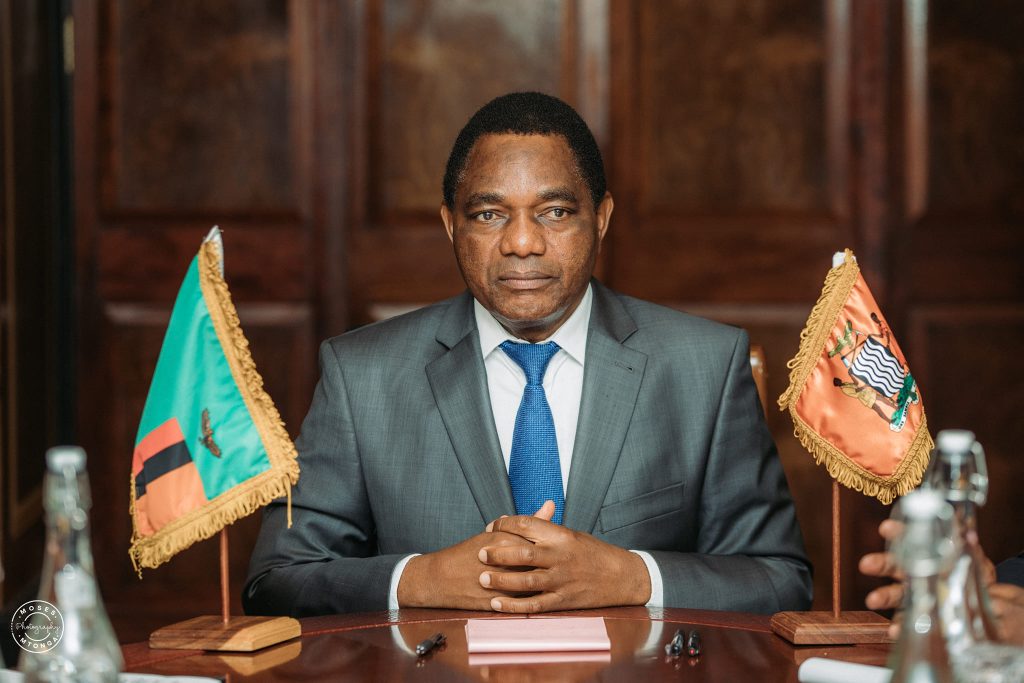

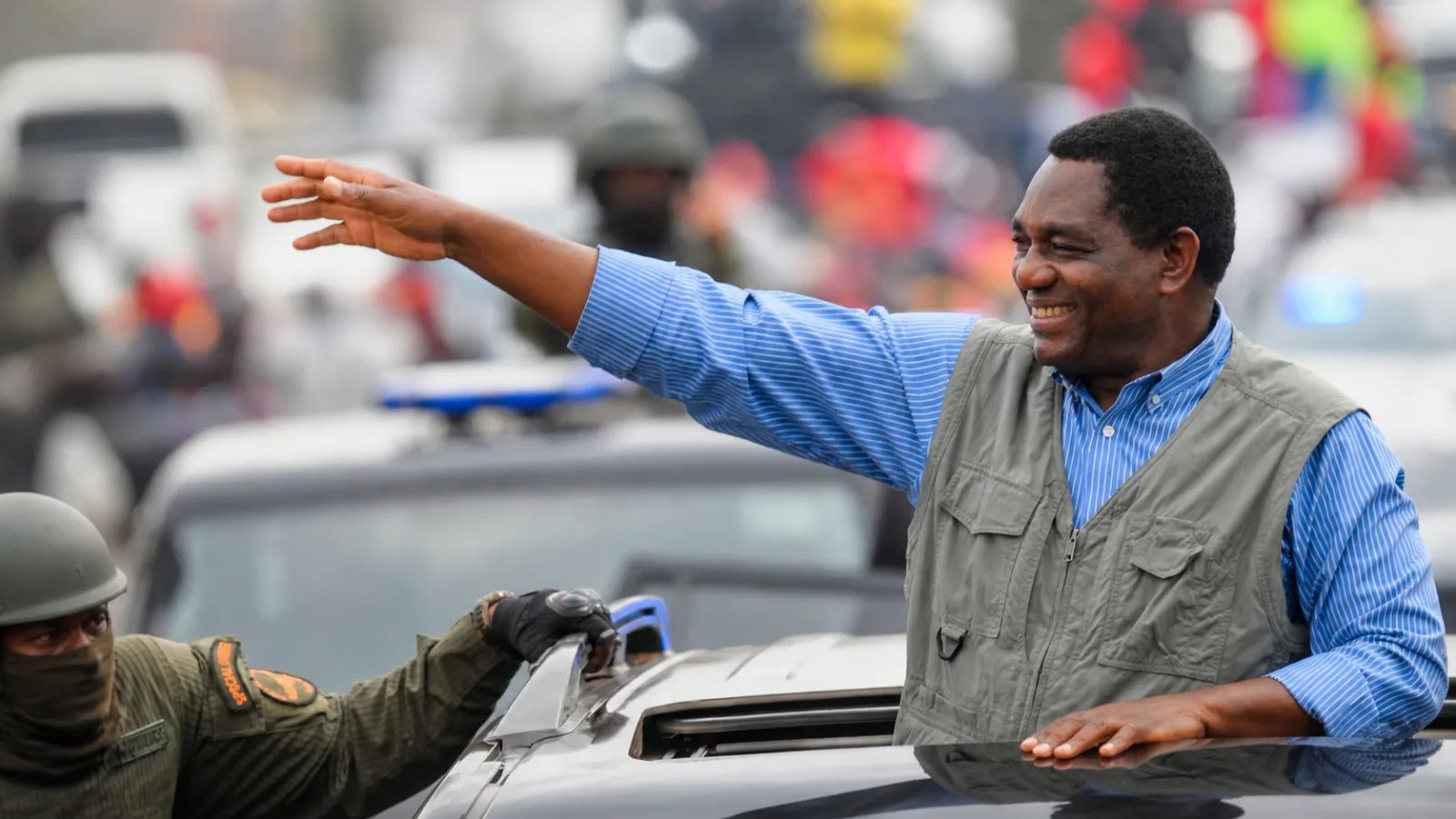
Hakainde Hichilema takes the oath for a second term on Tuesday, 1 September. The ceremony will be watched across Africa, but the first cabinet appointments will tell Zambians and investors far more about how he intends to govern through 2031.
Key Takeaways
- President-elect Hakainde Hichilema and Vice-President-elect Mutale Nalumango are due to be sworn in at National Heroes Stadium on Tuesday, 1 September 2026, which has been declared a public holiday.
- The Electoral Commission’s declared result gave Hichilema 2,965,326 votes, or 60.49%, and a second five-year mandate.
- Zambian law allows no more than 30 ministers, appointed from among Members of Parliament. The first appointments will show whether Hichilema favours continuity, a reset, or a mixture of both.
- Our assessment is selective continuity: experienced economic hands or close equivalents, paired with visible changes in portfolios where electricity, farm spending and public delivery remain under pressure.
- No cabinet names had been officially announced at publication. Any discussion of individuals remains speculation until State House confirms appointments.
Hakainde Hichilema’s inauguration will formalise his second term. His cabinet will define it.
The President-elect and Vice-President-elect Mutale Nalumango are scheduled to take the oath at National Heroes Stadium in Lusaka on Tuesday, 1 September 2026. The day has been declared a public holiday. According to the official results compiled on The Zambian Economist’s election dashboard, Hichilema won 2,965,326 votes, or 60.49%, against 1,856,217 for Brian Mundubile.
That gives the President-elect a clear electoral mandate under the declared result. It does not give him an easy second term. Zambia enters the next five years with debt restructuring largely completed, inflation back near the Bank of Zambia’s target range and foreign reserves rebuilt. It also carries stubborn constraints: unreliable electricity, high poverty, expensive domestic credit, weak job creation and public concern about political space.
The ceremony is settled. The cabinet question is not
Cabinet Office said the swearing-in would proceed on 1 September after the seven-day period for filing a presidential election petition expired without a petition being received. The venue is National Heroes Stadium, where government and security officials have been inspecting preparations.
What follows the oath is less certain. Under Article 116 of Zambia’s Constitution, the President appoints ministers from among Members of Parliament. The Ministers (Prescribed Number and Responsibilities) Act caps the number at 30. A 2025 constitutional amendment also provides that ministerial office becomes vacant 90 days before a general election.
Hichilema therefore has room to rebuild the executive around the MPs returned in 2026. The decision is not simply about rewarding campaign loyalty. Each appointment places one person between a policy promise and the public service expected to deliver it.
What we expect: selective continuity, not a wholesale purge
Our assessment is that Hichilema is more likely to choose selective continuity than radical change. The government has an incentive to retain experienced economic management, or appoint close equivalents, while talks with the International Monetary Fund move towards a possible successor programme and debt agreements are implemented.
The pressure for change is stronger in portfolios where households and businesses feel policy failure most directly. Electricity shortages can erase the benefit of a stronger kwacha for a workshop that cannot run its machinery. Farm-support overruns can weaken the budget without reliably raising productivity. Delayed permits and tax refunds can turn an investment announcement into idle capital.
Expect the final team to mix familiar figures with newer MPs, including appointments intended to widen regional, gender and generational representation. Loyalty will matter, as it does in every presidential system. The more important test is whether competence and measurable delivery matter more.
Five appointments that markets and households will read closely
1. Finance: can Zambia protect stability without choking growth?
The finance portfolio must carry Zambia from debt restructuring to debt management. In May, the IMF said restructuring agreements covered about 94% of the perimeter, reserves stood at US$6.4 billion, equal to 4.4 months of prospective imports, and the 2025 primary surplus reached 3.1% of GDP. It also warned that 2026 fiscal pressures, tax underperformance and Food Reserve Agency overruns were eroding that position.
The next finance minister needs credibility with lenders and investors, but also a plan that makes stability visible in lower borrowing costs, reliable VAT refunds and room for productive public investment. A name that reassures bondholders but cannot explain policy to Zambian households would solve only half the problem.
2. Energy: the portfolio that can make or break the growth story
The World Bank’s 2026 Zambia Economic Update identified power shortages and ZESCO’s financial distress as threats to growth and debt sustainability. The next energy minister will inherit an argument that is already settled: Zambia cannot promise more mining, processing, irrigation and manufacturing without dependable power.
Investors will watch for faster procurement, clearer tariffs, stronger regulation and projects that add generation and transmission rather than announcements alone. Households will judge the same appointment by hours of supply and the price they pay.
3. Mines: can copper investment produce Zambian value?
Zambia sits at the centre of global competition for copper and other energy-transition minerals. China remains deeply invested, while the United States and other partners are seeking more secure mineral supply chains. The mines portfolio must attract capital, settle regulatory uncertainty and push for local processing, supplier development and skills without making projects unbankable.
The test will be production and public value. More tonnes matter, but so do tax compliance, power availability, environmental enforcement and how much Zambian business is built around each mine.
4. Agriculture: can spending deliver cheaper food and higher output?
Agriculture is where climate risk, food prices and the budget meet. The next minister will have to improve the targeting of farmer support, manage grain reserves more transparently and help farmers move from rain-dependent production towards irrigation, storage and market access.
This is also a political test. Subsidies are visible. Productivity reform is slower. A serious appointment must be able to defend decisions that reduce waste while protecting small farmers from drought and price shocks.
5. Home Affairs and Justice: can the new term rebuild political trust?
International attention will not stop at the economy. The election was followed by opposition complaints, arrests and concern from the United Nations human rights chief over the treatment of opposition figures. The detention of opposition leader Brian Mundubile has kept questions about political space in view.
Cabinet choices in justice, home affairs and information will show whether the second term intends to answer criticism through stronger institutions and clear due process, or treat it mainly as a communications problem. Investors care about this too. Predictable law and political restraint are part of country risk.
What should Zambians demand from the new cabinet?
The useful debate is bigger than a list of names. Each nominee should be judged against four questions: Do they understand the portfolio? Can they manage a ministry and its budget? Will they publish measurable targets? Can they defend decisions in Parliament and before the public?
Hichilema’s first term restored important macroeconomic order after Zambia’s 2020 default. The second term will be judged by conversion: whether improved national accounts become dependable electricity, affordable credit, more formal jobs, stronger farms and public institutions that citizens trust.
That is why the cabinet may matter more than the inauguration speech. Tuesday will provide the symbols of office. The appointments that follow will show who is being trusted with the work.
The cabinet question for our readers
Which portfolios need new leadership, and which ministers from the previous administration deserve another term? Name the ministry, the result you expect within the first year, and the reason for your choice.
No official cabinet list had been released when this article was published. The Zambian Economist will update its reporting when appointments are announced.
Sources: Cabinet Office inauguration notice, 25 August 2026; The Zambian Economist 2026 election results dashboard; Constitution of Zambia (Amendment) Act No. 13 of 2025; IMF staff statement, 14 May 2026; World Bank Zambia Economic Update, 2026; Associated Press reporting on the 2026 election and post-election arrests.
Related reading
- Zambia After the Oath: The Economic and Diplomatic Tests of Hichilema’s Second Term
- Zambia Declares Tuesday, 1 September a Public Holiday for Hichilema’s Inauguration
- Is Zambia Ready for Hichilema’s Second Term?
- The Economics of Zambia’s 2026 Election
- Economic Diplomacy and Zambia in the Global Economy
WARNING! All rights reserved. This material and all other digital content on this website may not be reproduced, published, broadcast, rewritten, or redistributed, in whole or in part, without the prior express permission of The Zambian Economist. Where permission is granted, the content must be clearly credited to “The Zambian Economist,” with “www.zambianeconomist.com” prominently displayed.
WhatsApp: +260775574228 | Email: info@zambianeconomist.com
© 2026 The Zambian Economist.
Work With The Zambian Economist
Related: Hichilema Sworn In for Second Term as African Leaders Gather in Lusaka.
Update, 1 September: the oath has been taken. Read the ceremony report: Hichilema Takes the Oath as His Second Term Begins at National Heroes Stadium. The cabinet watch continues.