
ELECTION ECONOMICS | PROVISIONAL RESULT ANALYSIS
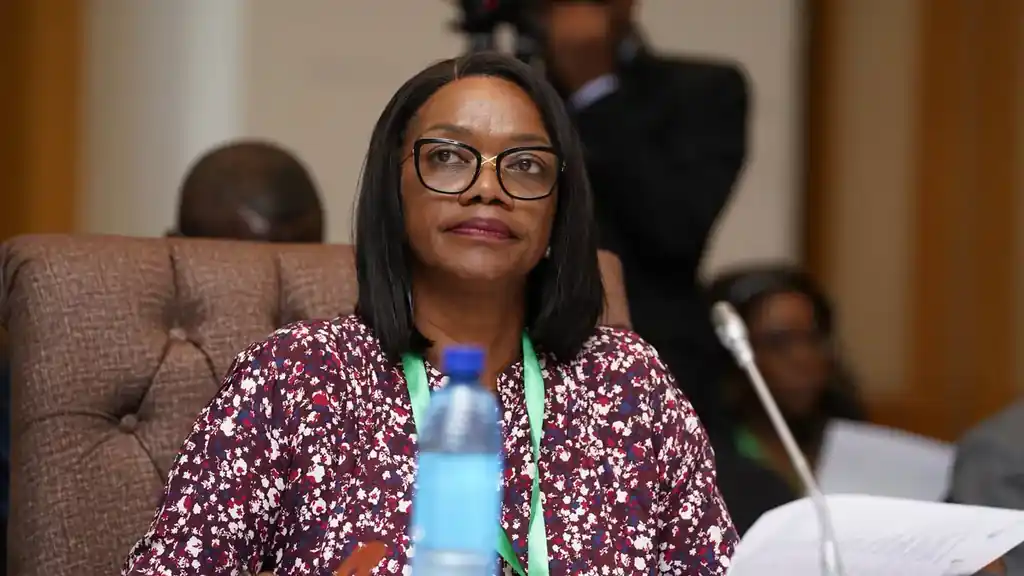
From third place in 2021 to an independent campaign after a brief UPND association, Iris Kaingu’s reported victory in Mwandi would be a striking political return. The result and the circulating 718-vote margin still require confirmation by the Electoral Commission of Zambia.
By The Zambian Economist Analyst | 14 August 2026
EDITOR’S VERIFICATION NOTE: Hold final publication of a definitive victory headline until ECZ issues or confirms the Mwandi parliamentary declaration. The Commission’s published timetable places receipt and verification of results between 15 and 17 August, with declarations scheduled for 17 August.
Some election results are expected. Others reorder the story of a candidate almost overnight.
The reports emerging from Mwandi Constituency in Western Province place Iris Kaingu Kamwi in the second category. Local tallies circulating after voting on 13 August say the independent candidate defeated the UPND’s Sibeso Sefulo, the MP elected in 2021. Some reports put the margin at 718 votes.
The Zambian Economist has not independently matched that margin to an ECZ declaration. Until the Commission confirms the result and vote totals, both the victory and the margin should be described as reported, not final.
That caution does not diminish the political journey. If confirmed, Kaingu’s win would take her from a distant third-place finish in 2021, through party realignment and rejection, to Parliament as an independent. Among supporters celebrating the reported result, one phrase has become the refrain: ‘God’s power is limitless.’
From 2,831 votes to a second attempt
Kaingu first sought the Mwandi seat in 2021 on the Patriotic Front ticket. ECZ’s official parliamentary results show that Sefulo won for the UPND with 5,148 votes. Independent candidate Lisulo Siloba took 2,972, while Kaingu finished third with 2,831.
The gap between first and third place was 2,317 votes. The result also punctured the confidence surrounding her first campaign. Five years later, she returned in different political circumstances and without the backing of the party that had carried her in 2021.
A route through PF, UPND and independence
In August 2025, Sefulo and other UPND figures said Kaingu was welcome to join the governing party, provided she followed its procedures. The move immediately raised an obvious local question: Mwandi already had a UPND MP, and only one candidate could carry the party’s parliamentary ticket.
The arrangement unravelled. In a resignation letter dated 3 June 2026, reported by Mwebantu, Kaingu said her attempt to participate in Mwandi party affairs had not been accepted and her bid for the UPND nomination had failed. She resigned from the party and said she would pursue other ways of serving the constituency.
On 20 May, during the nomination period, she lodged papers to stand for the National Assembly as an independent. ECZ subsequently listed validly nominated parliamentary candidates for the 13 August poll.
For a politician, leaving the governing party weeks before an election can be terminal. Kaingu instead converted the rejection into the central fact of her campaign: she would ask Mwandi voters for a personal mandate.
The candle dispute
Her campaign also became part of a legal dispute over the Candle symbol. Kaingu joined Gary Nkombo, Simon Mwila, Michael Chuulu and Faith Lungu in challenging an ECZ directive that required them to replace the symbol approved during nominations.
On 20 June, Diamond Media reported that the Lusaka High Court granted the five candidates leave to begin judicial review proceedings. The leave operated as a stay, temporarily preventing implementation of the directive against them while the substantive case was pending.
A ballot symbol matters more than it may appear, especially where campaign teams have already printed materials and spent weeks teaching voters how to identify an independent candidate. Replacing it late can add cost and voter confusion to a campaign that already lacks a national party’s resources.
A recognised surname, but no inherited seat
Kaingu entered the race with one of Mwandi’s best-known political surnames. National Assembly records show that her father, Michael Liwanga Kaingu, represented the constituency after the 2006 and 2011 elections. UPND candidates won Mwandi in 2016 and 2021.
Family recognition can open doors, but the 2021 result showed that it does not transfer votes automatically. Iris Kaingu still had to create her own local organisation and persuade voters who had twice backed UPND parliamentary candidates.
She also campaigned under heavy public scrutiny. A 2025 Gender Links feature examined the gendered abuse and cyberbullying around her political participation. That history does not settle any argument about her policies. It does show that her candidacy has been judged in a public environment that women in politics often experience differently from men.
What an independent win would say about campaign economics
Independent candidates begin with a structural disadvantage. A large party can provide organisers, polling agents, transport, campaign material, legal support, voter data and a national message. An independent must assemble much of that operation locally and pay for it through personal funds, donors or volunteers.
Kaingu’s victory suggests that personal recognition and constituency relationships were strong enough to overcome the UPND’s institutional advantage in Mwandi. It also offers a warning to every major party: voters do not always transfer loyalty from a party to whichever candidate receives its symbol.
Candidate selection has an economic cost. When dissatisfied aspirants leave with local organisers, parties can end up financing a full campaign while losing part of the network they expected to mobilise. The independent then pays to recreate functions normally supplied by the party. In a small constituency contest, that duplication can shape the race.
What Mwandi voters should ask next
A comeback story can win attention. Representation will be judged on delivery.
Now elected, Kaingu will need to explain how an independent MP will work with the national government, the Mwandi Town Council and traditional leadership to secure practical gains. Constituents should press for measurable commitments on roads, schools, health services, farming markets, tourism and reliable public services.
She would also need a transparent constituency office and a public system for tracking promises. Without a party caucus, an independent MP can speak with greater freedom, but may have less influence over government priorities and parliamentary bargaining. The test is whether personal popularity can be turned into budgets, oversight and visible constituency work.
A result bigger than one candidate
Mwandi has changed political hands before. National Assembly records show MMD representation through much of the multiparty era, followed by UPND victories in 2016 and 2021. Her confirmed independent win adds another turn to that history.
For Kaingu, the personal arc is clear. She finished third in 2021. She moved towards the UPND, failed to secure its path to the ballot, resigned and stood independently. She fought a court dispute over her symbol and faced an incumbent backed by the governing party.
The result completes the outcome she failed to achieve five years ago, pending national ECZ collation of the full result set.
The underdog story is complete. The harder chapter begins now, as celebration gives way to the daily work of representing the constituency.
KEY TAKEAWAY: Iris Kaingu’s Mwandi victory ranks among the clearest parliamentary comeback stories of Zambia’s 2026 election: from 2,831 votes and third place in 2021 to a declared 6,595-vote win as an independent against the governing party’s incumbent.
Related reading
- The Stone the Builders Rejected: Iris Kaingu’s Long Road to Mwandi
- Election Economics coverage
- Why official ECZ results matter to Zambia’s economy
- ECZ has not released verified 2026 election results yet
Sources and verification
- Electoral Commission of Zambia: 2026 election timetable
- Electoral Commission of Zambia: 2021 parliamentary results
- Electoral Commission of Zambia: validly nominated 2026 parliamentary candidates
- National Assembly of Zambia: Mwandi constituency history
- Mwebantu: Kaingu resigns from UPND after failed parliamentary bid
- Diamond Media: High Court grants leave in Candle symbol case
- News Diggers: UPND figures welcome Kaingu
- Gender Links: cyberbullying and women’s political participation
WARNING! All rights reserved. This material and all other digital content on this website may not be reproduced, published, broadcast, rewritten, or redistributed, in whole or in part, without the prior express permission of The Zambian Economist. Where permission is granted, the content must be clearly credited to “The Zambian Economist,” with “www.zambianeconomist.com” prominently displayed.
WhatsApp: +260775574228 | Email: info@zambianeconomist.com
© 2026 The Zambian Economist.
Work With The Zambian Economist
Related: Mwandi MP-Elect Iris Kaingu Congratulates Hichilema on Re-Election