Moody’s has raised Zambia’s sovereign rating one notch to Caa1 with a positive outlook. All three major agencies have now moved up since the 2020 default, a week before Musokotwane presents the 2027 Budget.
KEY TAKEAWAYS
- Moody’s Ratings upgraded Zambia from Caa2 to Caa1 with a positive outlook on 30 October 2026, according to the Ministry of Finance and National Planning.
- The Ministry says Moody’s cited “substantial and sustained improvements” in the government’s debt trajectory since the 2020 default.
- S&P Global Ratings and Fitch Ratings both lifted Zambia out of default in November 2025, to CCC+ and B- respectively.
- The upgrade follows a 9 October staff-level agreement with the IMF on a US$1.472 billion, 36-month Extended Credit Facility, still subject to Executive Board approval.
- Caa1 remains deep in speculative territory, seven notches below investment grade. The 2027 Budget on 6 November will show whether the fiscal path behind the upgrade holds.
Moody’s Ratings has upgraded Zambia’s long-term sovereign credit rating from Caa2 to Caa1 and assigned a positive outlook, the Ministry of Finance and National Planning announced. The decision, dated 30 October 2026, means Zambia has now been upgraded by all three of the main international rating agencies since it defaulted on its Eurobonds in November 2020.
According to the Ministry, Moody’s based the move on “substantial and sustained improvements” in the government’s debt trajectory. The positive outlook signals that a further upgrade is possible if that trend continues.
Where Zambia now stands with the agencies
| Agency | Current rating | Latest action |
|---|---|---|
| Moody’s | Caa1, positive outlook | Upgraded from Caa2, 30 October 2026 |
| Fitch | B-, stable outlook | Upgraded from Restricted Default, November 2025 |
| S&P Global | CCC+ | Upgraded from Selective Default, November 2025 |
The three ratings sit at roughly the same level: all are speculative grade, and Moody’s Caa1 is seven notches below the lowest investment-grade rating of Baa3. Zambia is out of default, but it is not yet a cheap borrower.
The IMF programme behind the numbers
The upgrade comes three weeks after the International Monetary Fund reached a staff-level agreement with Zambia on 9 October for a new 36-month Extended Credit Facility of SDR 1,076 million, about US$1.472 billion. The IMF described the programme as supporting a “growth-oriented, revenue-led fiscal strategy to rebuild fiscal buffers and safeguard debt sustainability.” It still needs approval from the IMF Executive Board and the completion of agreed prior actions.
Rating agencies tend to read an IMF programme as an external check on fiscal policy. A board approval later this year would remove one of the remaining uncertainties.
What does the Moody’s upgrade mean for Zambia?
The Ministry lists several possible gains: stronger investor confidence, lower borrowing costs for government and business over time, and more investment in mining, agriculture, energy, manufacturing and infrastructure. It also notes that “rating upgrades are not an end in themselves.”
That caution is fair. A one-notch move inside the Caa band will not change the price of a loan at a Lusaka bank this month. Its effect works slowly, through the yields investors demand on Zambia’s restructured Eurobonds and on domestic government securities. When the state pays less to borrow, it crowds out less private credit, and banks have more reason to lend to firms. The gain for a small business is real but indirect, and it depends on government keeping its deficit on the path the agencies have priced in.
What to watch on Friday
Finance Minister Situmbeko Musokotwane presents the 2027 National Budget to Parliament on Friday, 6 November 2026. Three figures will tell analysts, and the agencies, whether the upgrade is secure:
- The fiscal deficit target, and whether it keeps falling as the IMF programme assumes.
- Domestic revenue, since the new programme is explicitly revenue-led and depends on the Medium-Term Revenue Strategy delivering.
- Spending on arrears and capital projects, which shows how far the Grow Zambia Agenda will be financed from the budget rather than through borrowing.
The Ministry framed the task as turning “renewed confidence into stronger production, more jobs, greater economic opportunities, and better livelihoods for ordinary Zambians.” For what that could look like at household level, read our policy brief on how ordinary Zambians can plug into the Grow Zambia Agenda.
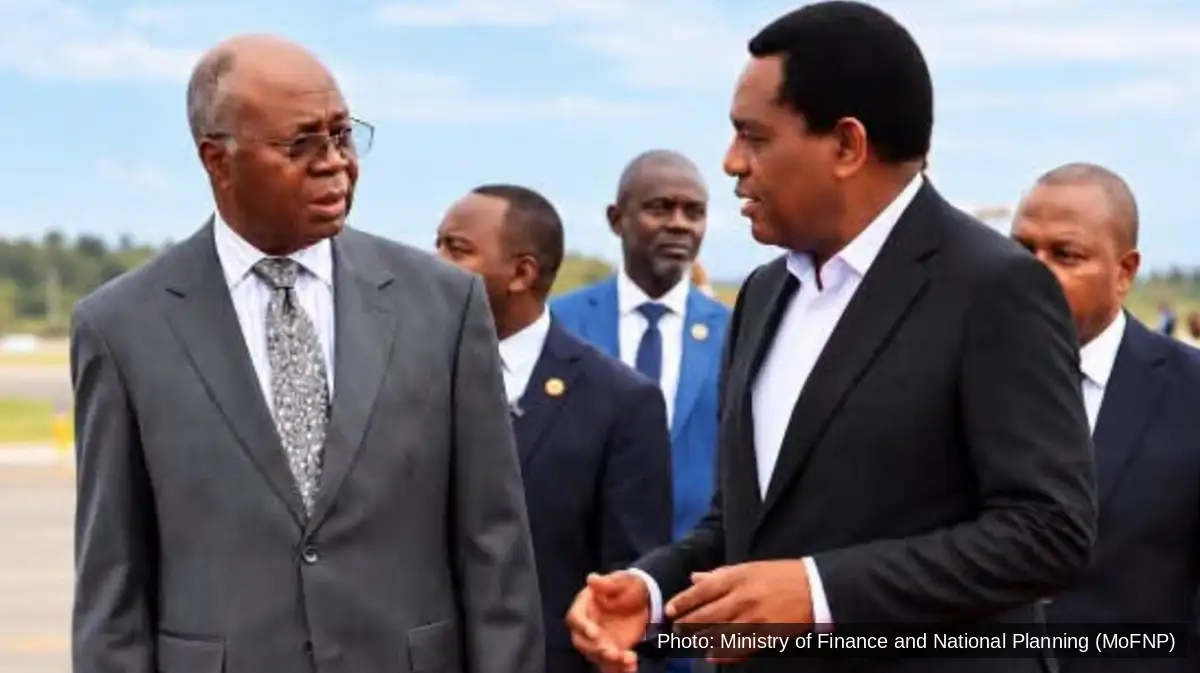
Featured photo: Ministry of Finance and National Planning (MoFNP).
Related coverage
- Budget 2027: A Bigger Envelope With Only K6.9 Billion of Room
- Line by Line: Musokotwane Sends New Ministers to Budget School Ahead of 6 November
- Libala to the Value Chain: How Ordinary Zambians Can Plug Into the Grow Zambia Agenda
- EAZ Backs US$1.5 Billion IMF Deal, Wants Treasury to Leave Room for Private Borrowers
- Zambia’s Turnaround Won the Election. Now It Has to Deliver.
- Grow Zambia Agenda: The Eight Numbers Behind the Plan to Double Zambia’s Economy
WARNING! All rights reserved. This material and all other digital content on this website may not be reproduced, published, broadcast, rewritten, or redistributed, in whole or in part, without the prior express permission of The Zambian Economist. Where permission is granted, the content must be clearly credited to “The Zambian Economist,” with “www.zambianeconomist.com” prominently displayed.
WhatsApp: +260775574228 | Email: info@zambianeconomist.com
© 2026 The Zambian Economist.
Work With The Zambian Economist
Related: Musokotwane Presses KoBold to Fast-Track Mingomba Copper Mine