
Government wants Mingomba to move faster from discovery to production. At about 300,000 tonnes a year, the KoBold mine alone would cover a tenth of the 3 million tonne copper target, but its first output is planned for the early 2030s.
KEY TAKEAWAYS
- Finance Minister Situmbeko Musokotwane urged KoBold Metals co-founder Josh Goldman to accelerate the Mingomba copper project in Chililabombwe, and promised government help with implementation bottlenecks.
- KoBold says it is increasing capital deployment, hiring and procurement from Zambian firms, according to the Ministry of Finance and National Planning.
- Mingomba is planned to produce about 300,000 tonnes of copper a year from the early 2030s, at an estimated cost of US$2.3 billion to US$2.5 billion.
- The meeting followed President Hichilema’s 27 October talks with KoBold at State House, where he said mining licences must lead to production, not speculative holding.
- Zambia produced 890,346 tonnes of copper in 2025. Reaching 3 million tonnes by 2031 depends on projects like Mingomba arriving on time.
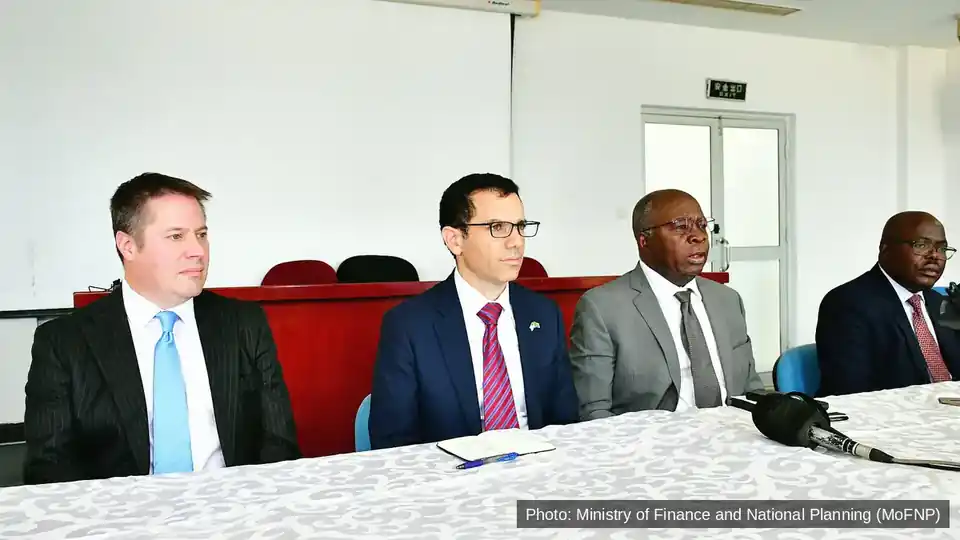
Finance and National Planning Minister Dr Situmbeko Musokotwane has asked KoBold Metals to speed up development of the Mingomba copper project on the Copperbelt, saying Zambia needs mining investment to turn into production, jobs, export earnings and work for local businesses. He met KoBold co-founder and global president Dr Josh Goldman and his delegation on Wednesday, the Ministry of Finance and National Planning said in a statement.
Musokotwane said government would work to clear implementation bottlenecks and support timely investment decisions. According to the Ministry, Goldman confirmed that KoBold was increasing capital deployment, expanding employment and opening procurement to Zambian enterprises, while stepping up technology-driven exploration for further deposits.
What Mingomba is, in numbers
Mingomba sits near Chililabombwe in Copperbelt Province. KoBold, backed by investors including Bill Gates and Jeff Bezos, broke ground on shaft construction with partner ZCCM Investments Holdings on 29 April 2026. The company calls it the largest private investment in Zambia’s history.
| Item | Figure |
|---|---|
| Estimated capital cost | US$2.3 billion to US$2.5 billion |
| Planned output | About 300,000 tonnes of copper a year |
| First production | Early 2030s |
| Spent in Zambia before construction | More than US$200 million (KoBold estimate) |
| Zambia’s 2025 copper output | 890,346 tonnes |
Why the timing matters
At full capacity, Mingomba would add roughly a third of Zambia’s current output, and about a tenth of the Grow Zambia Agenda target of 3 million tonnes a year by 2031. The difficulty is the calendar. KoBold has guided first copper for the early 2030s, which means most of Mingomba’s volume may arrive after the 2031 deadline, not before it.
That gap explains the pressure from Lusaka. Every year shaved off construction brings tonnes, tax and foreign exchange forward into the current term. KoBold has said similar deep underground projects usually take more than 15 years from discovery to production, and that Mingomba is already on a faster schedule.
Licences for production, not for holding
The Finance Ministry meeting followed President Hakainde Hichilema’s talks with KoBold executives at State House on 27 October. According to the Ministry, the President stressed advanced exploration technology and productive use of licences, and said mining licences must support investment, not speculative holding of mineral resources. He had already warned licence holders earlier in October to develop their ground or risk losing it.
The message is aimed at the wider sector as much as at KoBold, which is already building. The President’s remarks show government sees too much mineral ground held without work, and the 2025 audit flagged K626.64 million in uncollected mining penalties. Enforcing work obligations is one of the few levers government controls directly.
What it means for Zambian businesses
A project of this size buys catering, transport, protective clothing, fuel, civil works, security and engineering services for years before the first tonne is hoisted. Under Statutory Instrument No. 68 of 2025, non-core goods and services for mines are reserved for local companies, and a rising share of core procurement must go to them. Copperbelt suppliers who are registered, tax-compliant and able to deliver at volume stand to gain most. Our policy brief on how ordinary Zambians can plug into the Grow Zambia Agenda sets out the first steps.
What to watch
- Shaft sinking. KoBold has said this should start in early 2027. Any slippage pushes first copper further out.
- Financing. KoBold has said it remains the only backer for now. A financing package or partner would firm up the timetable.
- Local procurement data. The Ministry says Zambian firms are getting more work. Published figures on what share of spending goes to local suppliers would show whether that holds.
Featured photo: Ministry of Finance and National Planning (MoFNP).
Related coverage
- Seizing the Critical Minerals Moment Is Africa’s Path to Industrialisation
- Zambia targets 250,000 jobs by 2031 under World Bank minerals compact
- Grow Zambia targets are realistic within five years, economist says
- Moody’s Lifts Zambia to Caa1 Days Before the 2027 Budget
- Libala to the Value Chain: How Ordinary Zambians Can Plug Into the Grow Zambia Agenda
- Inside Statutory Instrument 68: Zambia’s New Local-Content Rules for Miners
WARNING! All rights reserved. This material and all other digital content on this website may not be reproduced, published, broadcast, rewritten, or redistributed, in whole or in part, without the prior express permission of The Zambian Economist. Where permission is granted, the content must be clearly credited to “The Zambian Economist,” with “www.zambianeconomist.com” prominently displayed.
WhatsApp: +260775574228 | Email: info@zambianeconomist.com
© 2026 The Zambian Economist.