The October pump price adjustment is about far more than what motorists pay. Diesel runs through almost every supply chain in Zambia, and the real test now is whether the increase stays at the pump or works its way into food, transport and business costs.
KEY TAKEAWAYS
- Petrol has risen from K25.29 to K31.46 a litre and diesel from K26.86 to K33.27, increases of K6.17 and K6.41, or roughly 24 per cent each, effective midnight on 30 September.
- The Energy Regulation Board (ERB) attributed the adjustment to higher international petroleum prices, a weaker Kwacha and the reinstatement of excise duty.
- The excise suspension and VAT zero-rating in force from April to September shielded consumers, but at the cost of forgone tax revenue. VAT on fuel is due to return on 1 December.
- Diesel is the bigger concern because it feeds transport, agriculture, mining, construction, manufacturing and logistics. The main risk is second-round pressure on food prices and household budgets.
- Policy should look past the pump price itself towards energy diversification, efficient logistics and agricultural productivity, so that fuel shocks do not derail the shift from stabilisation to production-led growth.
Fuel is an input, not just a product
The October fuel price adjustment matters because fuel is not simply something consumers buy. It is an input into the entire production economy. When the price of a litre changes, the cost of moving maize, running a generator, hauling ore and delivering goods to a shop in Kasama changes with it.
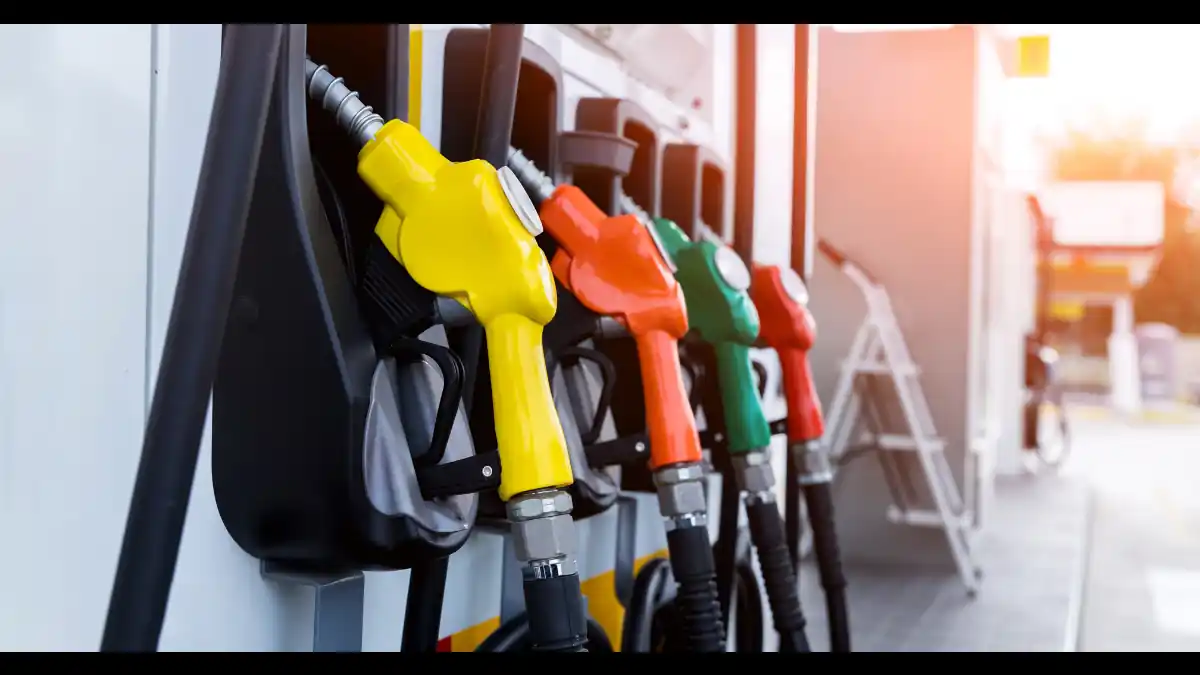
Petrol has increased from K25.29 to K31.46 per litre, while diesel rises from K26.86 to K33.27. That is an increase of K6.17 and K6.41 per litre respectively. Kerosene and aviation fuel also went up, though by smaller margins.
| Product (per litre) | September | October | Change | % change |
|---|---|---|---|---|
| Petrol | K25.29 | K31.46 | +K6.17 | +24.4% |
| Diesel | K26.86 | K33.27 | +K6.41 | +23.9% |
| Kerosene | K27.02 | K29.76 | +K2.74 | +10.1% |
| Jet A-1 | K28.71 | K31.85 | +K3.14 | +10.9% |
Source: Energy Regulation Board, October 2026 pump price review. Percentages calculated by The Zambian Economist.
Why diesel carries the heavier weight
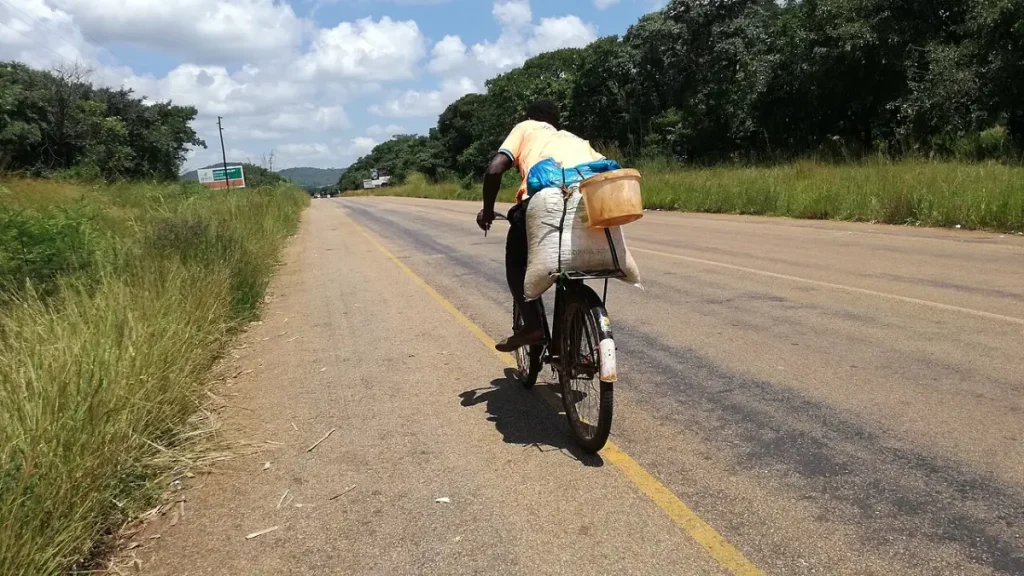
Petrol hits the private motorist first. Diesel hits everyone else. It powers the trucks on the Great North Road, the buses that carry workers into Lusaka every morning, the tractors and irrigation pumps on commercial farms, the haul trucks and equipment on the Copperbelt, and the generators that keep many small businesses running during power cuts.
That is why diesel is the number to watch. A household that owns no car will still feel a K6.41 rise in diesel through bus fares, the price of a bag of mealie meal, and the cost of vegetables trucked in from farming areas.
Three forces behind the adjustment
The ERB pointed to three drivers. The first is international prices. According to figures reported from the regulator’s review, the reference price of petrol rose from US$104.94 to US$121.58 a barrel and diesel from US$150.92 to US$160.88. ERB Board Chairperson James Banda linked the rise to “sustained geopolitical tensions in the Middle East”.
The second is the exchange rate. The Kwacha weakened from about K19.28 to K19.76 per US dollar over the review period. Because Zambia imports its petroleum and pays for it in dollars, even a modest depreciation feeds straight into the landed cost.
The third, and the one most within the Government’s control, is tax. Excise duty on petrol and diesel has been reinstated after a temporary suspension.
The cost of the cushion
From April, Cabinet suspended excise duty and zero-rated VAT on petrol and diesel to protect consumers from rising global oil prices. The relief was first granted for three months and later extended to 30 September through Statutory Instrument No. 56 of 2026.
That relief helped households and businesses through a difficult period. It also meant forgone tax revenue at a time when the Treasury is working to meet its fiscal targets. Tax relief of this kind is a bridge, not a permanent arrangement, and the bridge has now ended for excise duty. VAT on fuel is scheduled to return on 1 December, which means the December review could bring further upward pressure unless oil prices ease or the Kwacha strengthens.
Managing the second-round effects
The immediate effect is at the pump. The harder challenge is what follows. Higher fuel costs raise transport and distribution expenses, and over time that pressure reaches food prices and household budgets.
The channels are familiar. Bus operators review fares. Transporters reprice haulage contracts. Farmers face higher costs for land preparation and for moving produce to market. Retailers pass on higher delivery costs. Each of these adjustments is small on its own, but together they can lift the general price level.
Annual inflation stood at 6.2 per cent in August, within the Bank of Zambia’s target band. How much of the fuel increase passes through to consumer prices over the coming months will be a test of whether that progress holds.
From stability to a production dividend
Zambia has achieved important macroeconomic stability. Inflation is back within the target band. The real test is whether that stability can become a production dividend: lower business costs, more investment, stronger exports, more jobs and better household welfare.
Fuel prices sit right at the centre of that test. A business deciding whether to expand looks at its operating costs, and transport and energy are among the largest of them. If fuel shocks repeatedly push those costs up, the incentive to invest weakens, regardless of how stable the headline numbers look.
Where policy attention should go
The policy focus should therefore move beyond simply managing pump prices. Monthly reviews and temporary tax relief can smooth the ride, but they do not change how exposed the economy is to oil prices and the exchange rate.
Energy diversification. The less the economy depends on imported liquid fuel for power, transport and production, the smaller the damage from each international price spike. Solar for farms and small enterprises, and a wider generation mix, reduce the reliance on diesel generators.
Efficient logistics. Moving more bulk freight by rail rather than road, and cutting delays at borders and depots, lowers the fuel cost built into every tonne of goods.
Agricultural productivity. Higher yields per hectare spread fuel and input costs over more output, which helps protect food prices when diesel goes up.
Economic resilience. Building fiscal buffers in calmer periods gives the Government room to respond to the next shock without relying on revenue it cannot afford to forgo.
The objective
The aim must be to make sure that fuel price adjustments do not undermine the broader transition from economic stabilisation to production-led growth. The October increase is a reminder that stability alone is not enough. The economy also needs to become less vulnerable to the next shock at the pump.
Related: Zambia Raises Petrol to K31.46 and Diesel to K33.27 as Excise Duty Returns.
Related: ERB Holds Zambia’s September Fuel Prices Steady Despite Oil and Kwacha Pressure.
Related: Zambia’s Inflation Eases to 6.2% as Food Price Growth Slows.
Related: Zambia’s Q2 2026 Economy: Stability Deepens, the Growth Dividend Still Missing.
Related: Zambia’s K12.1 Billion Grant Shortfall Is a Fiscal Warning, Chisanga Says.
Related: The K700 Question: Is Zambia’s Salary Increase Making a Difference?
WARNING! All rights reserved. This material and all other digital content on this website may not be reproduced, published, broadcast, rewritten, or redistributed, in whole or in part, without the prior express permission of The Zambian Economist. Where permission is granted, the content must be clearly credited to “The Zambian Economist,” with “www.zambianeconomist.com” prominently displayed.
WhatsApp: +260775574228 | Email: info@zambianeconomist.com
© 2026 The Zambian Economist.
Work With The Zambian Economist
Related: The currency side of that shock is traced in The Kwacha’s October Slide: Why Copper Dollars Are Not Enough, on why copper receipts and the fuel bill run on different clocks.