A 50-litre petrol refill now costs K308.50 more than before October’s adjustment. Higher import prices and a weaker kwacha explain part of the increase; the withdrawal of tax relief explains another.
Zambia’s October fuel-price increase reflects a more expensive import bill compounded by the return of excise duty. The announced reinstatement of VAT in December adds uncertainty for motorists and businesses already revising their budgets.
For a driver buying 50 litres, petrol now costs K1,573, up from K1,264.50. The same quantity of diesel costs K1,663.50 rather than K1,343. That additional K320.50 matters to a delivery business paying for repeated trips, as well as to a household filling its vehicle once a month.
How much did October fuel prices rise?
| Product | Previous K/litre | October K/litre | Increase K/litre |
|---|---|---|---|
| Petrol | 25.29 | 31.46 | 6.17 |
| Diesel | 26.86 | 33.27 | 6.41 |
| Kerosene | 27.02 | 29.76 | 2.74* |
| Jet A-1 | 28.71 | 31.85 | 3.14 |
Petrol rose by 24.4% and diesel by 23.9%, calculated against their previous prices. The scale of the adjustment makes the explanation especially important: motorists are paying for changes in both the underlying cost of fuel and its tax treatment.
Why did fuel become more expensive?
ERB’s September review recorded higher international prices for the petroleum products Zambia imports. It attributed that pressure to continuing Middle East tensions. These are refined-product prices, which should not be confused with a benchmark price for crude oil.
A weaker kwacha compounded the dollar-cost increase. The exchange rate used in the review moved from K19.28 to K19.76 per US dollar, a rise of approximately 2.5% in the kwacha cost of a dollar. A US$1 million purchase therefore required K480,000 more, even before any change in the product’s dollar price.
That is how an exchange-rate movement reaches a filling station. Importers need more local currency to obtain the same dollar amount. A stronger kwacha can work in the opposite direction, although its benefit may be offset by other costs. Our explainer on what determines the kwacha’s daily closing rate examines those wider forces.
Tax also returned to the calculation. ERB’s October pump-price build-up applies excise duty of K2.34 per litre of petrol and K0.75 per litre of diesel. These are the amounts in that month’s calculation, rather than a basis for describing all future excise charges as capped.
The Ministry of Energy’s April announcement presented temporary tax relief as a way to ease consumer pressure and improve supply. Withdrawing relief raises a difficult fiscal choice: continuing it costs public revenue, while ending it exposes consumers to a larger share of fuel costs.
Will VAT make fuel more expensive in December?
ERB’s 30 September statement explicitly announces VAT reinstatement on 1 December 2026. The Zambia Revenue Authority identifies 16% as the standard VAT rate. The October build-up applies zero VAT.
That announced timetable is a reason to budget cautiously. It is not a December pump-price determination. A future price will depend on the applicable tax treatment and the other components in ERB’s review, including import prices and the exchange rate. Any subsequent policy change could also alter the outcome.
It would therefore be misleading to promise motorists a particular December price, or to present a 16% increase on today’s pump price as a confirmed forecast. VAT would add upward pressure if reinstated as announced, but other cost movements could offset or amplify it.
What does this mean for household and business budgets?
Diesel helps move goods from farms and factories to shops. It also powers machinery and generators. A sustained increase can raise distribution and operating costs well beyond the transport sector.
That does not mean every shop price should rise by the same percentage as diesel. Fuel accounts for only part of a business’s costs. Competition, stock bought earlier and the ability to absorb smaller margins will influence how much is passed on. A fuel-price increase creates inflationary pressure; it does not by itself establish the next inflation rate.
For an operator using 1,000 litres of diesel a month, October’s K6.41 increase adds K6,410 to the monthly fuel bill if consumption is unchanged. That is a useful starting point for reviewing routes, quotations and cash flow. It is more informative than applying the pump-price percentage to every expense.
Households face a similar planning problem. Transport spending may rise directly, while some food and service costs could respond later. Keeping a margin in the budget is sensible where possible, but many households have little room to absorb another shock.
Predictability needs more than a longer price interval
The Government is exploring longer pricing periods. In a 30 September Ministry of Energy account of discussions with ADNOC Global Trading, President Hakainde Hichilema raised intervals of two or three months as a way to support business planning.
Longer intervals may make quotations easier to manage. They do not remove changes in import costs. If those costs move sharply between reviews, a pricing arrangement still needs to explain who carries the difference and how it is recovered.
For policymakers, the practical test is whether supply remains reliable and the treatment of taxes and price adjustments is clear enough for businesses to plan. For consumers, October’s increase is already a fact. December’s outcome remains a risk to prepare for, rather than a number anyone can responsibly promise today.
Explore more in our Business & Economy coverage.
About the author

Chiti Mulenga Bwalya is a Ndola-based contributor with industry experience in extractive and physical metallurgy and beverage production. He holds degrees in Metallurgy and Economics and Enterprise Management from Ural Federal University, Russia, and an MBA from Information and Communication University, Zambia. His interests include economic policy and the implications of global affairs for Zambia.
Biography and contributor portrait: Meet Our Contributors.
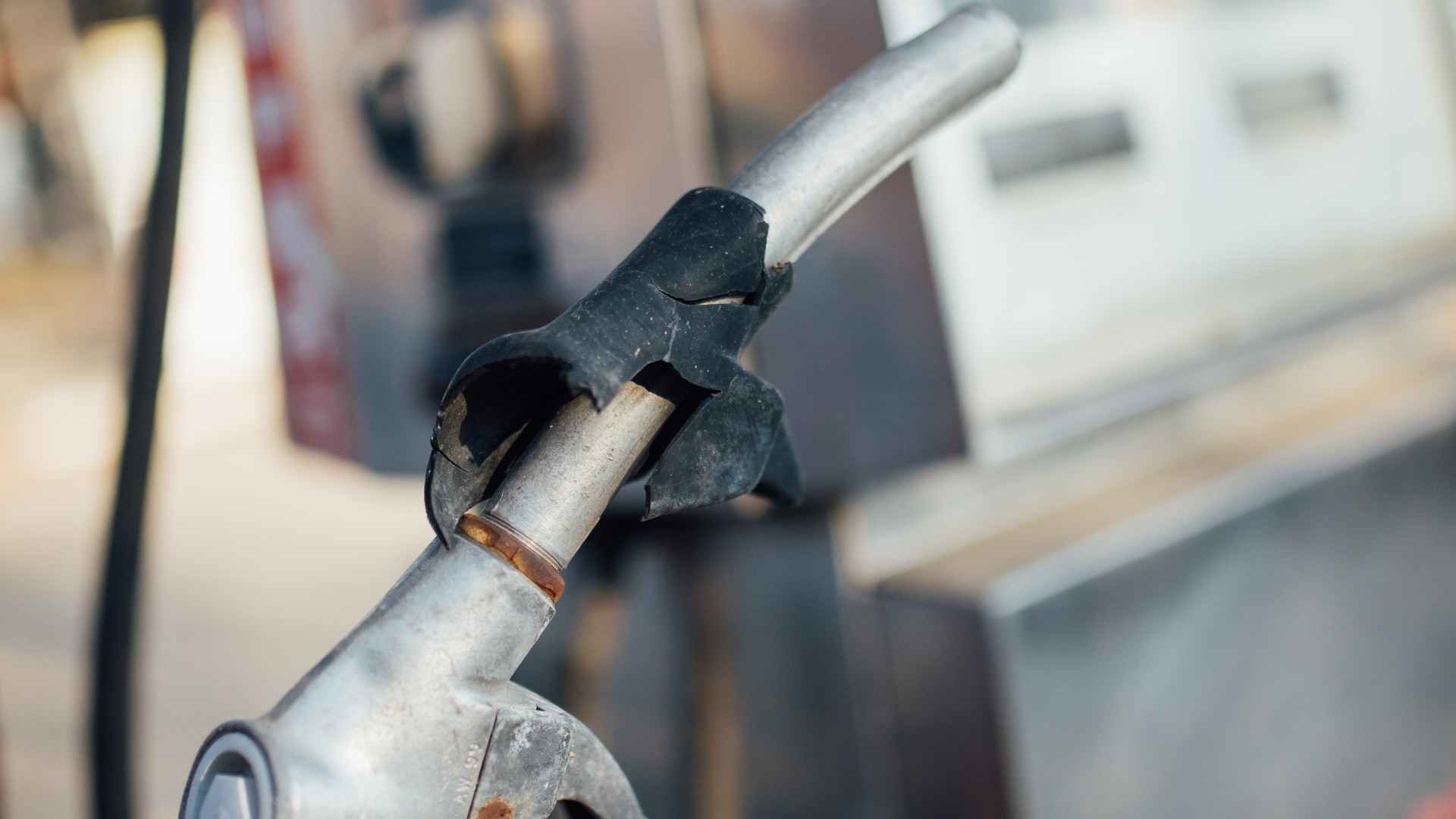
Illustrative fuel photograph: Nenad Stojkovic, “Close-up of a man holding fuel pump at the station”, 21 March 2022, via Wikimedia Commons, CC BY 2.0. Cropped and resized. This photograph does not document Zambia’s October price adjustment.
WARNING! All rights reserved. This material and all other digital content on this website may not be reproduced, published, broadcast, rewritten, or redistributed, in whole or in part, without the prior express permission of The Zambian Economist. Where permission is granted, the content must be clearly credited to “The Zambian Economist,” with “www.zambianeconomist.com” prominently displayed.
WhatsApp: +260775574228 | Email: info@zambianeconomist.com
© 2026 The Zambian Economist.
The separately credited fuel photograph remains available under its CC BY 2.0 licence.