Polls opened across Zambia on Thursday in a presidential election framed as a referendum on Hakainde Hichilema’s five years of debt restructuring and IMF-backed reform, with cost of living still the dominant concern for voters.
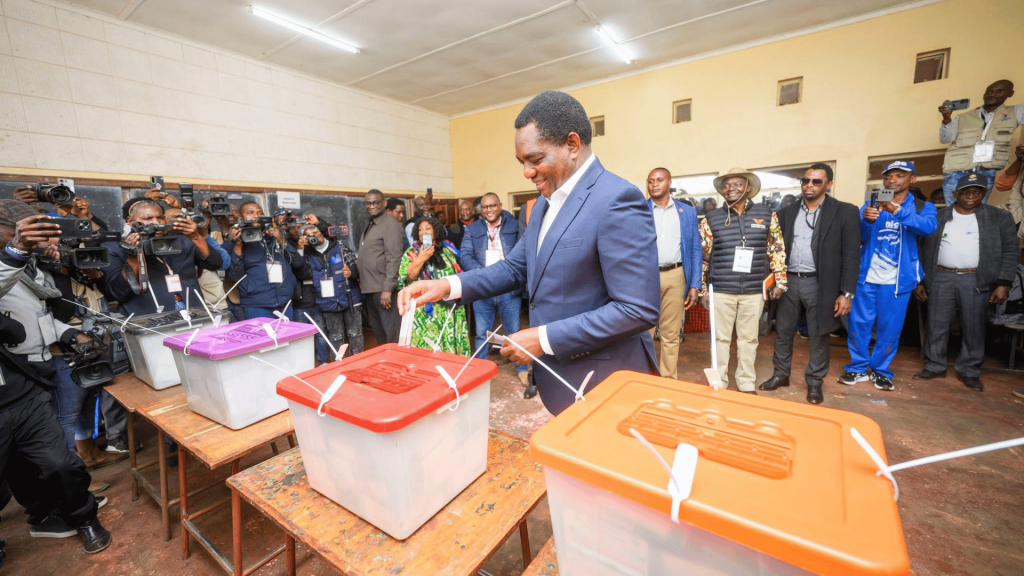
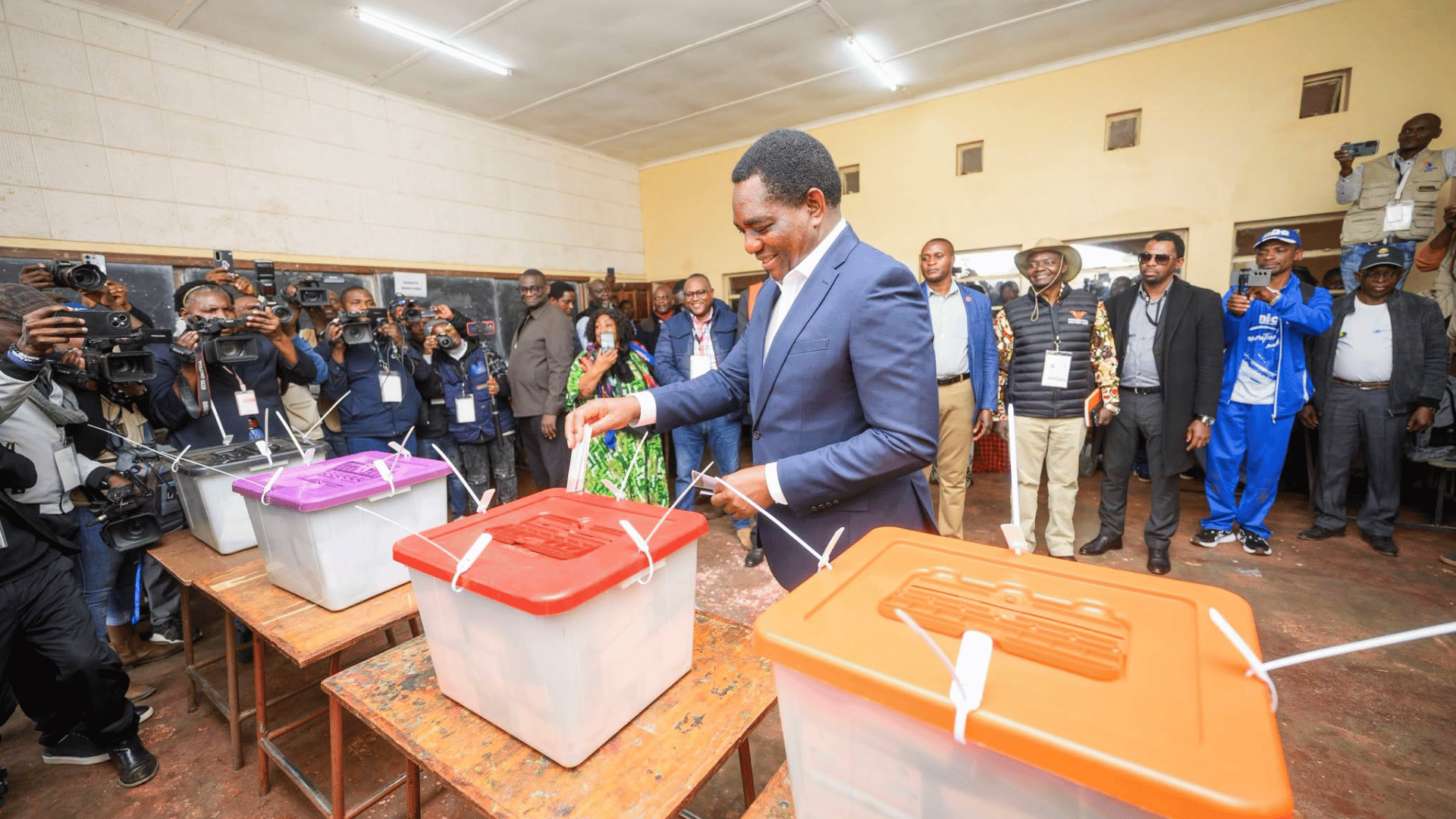
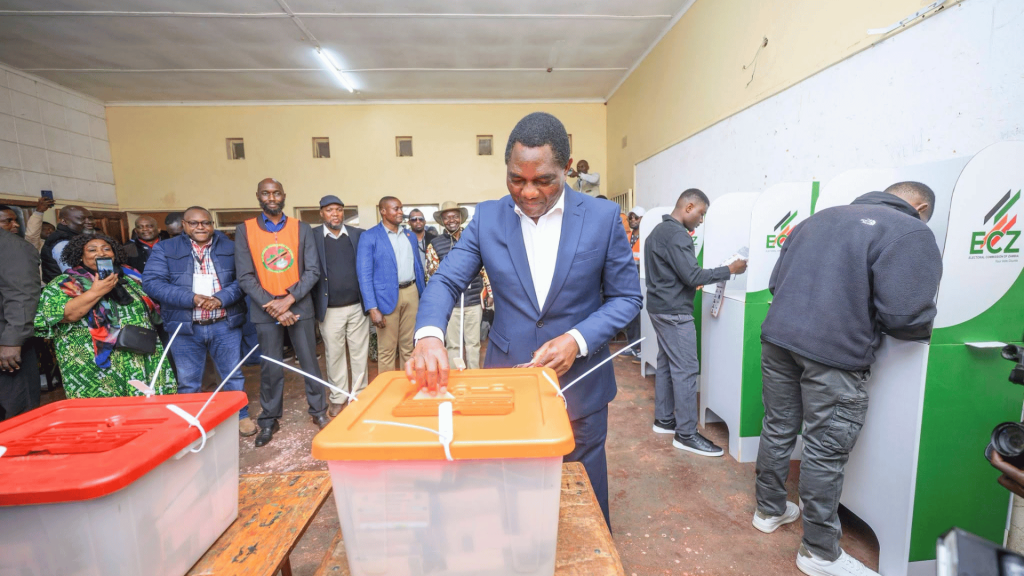
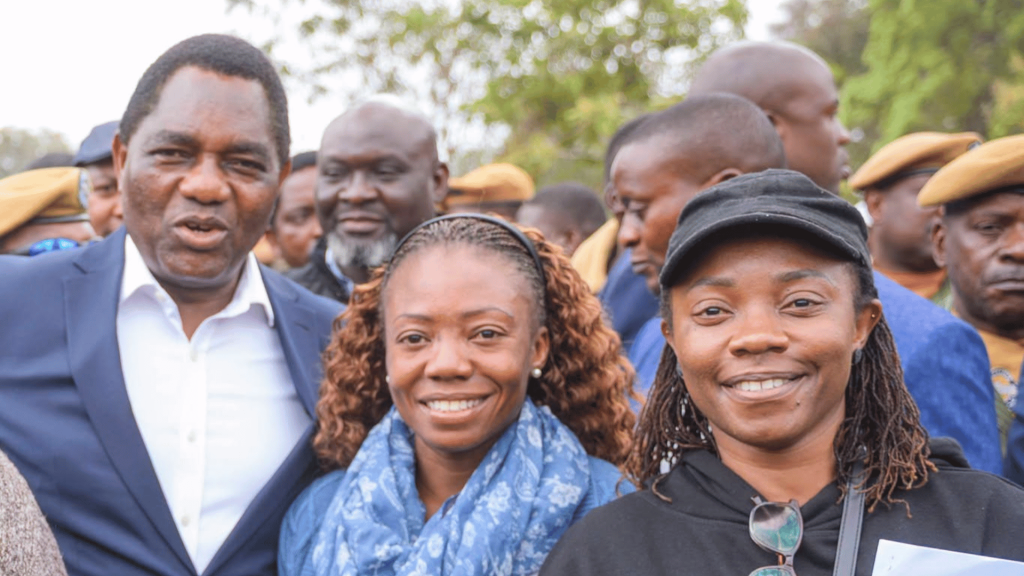
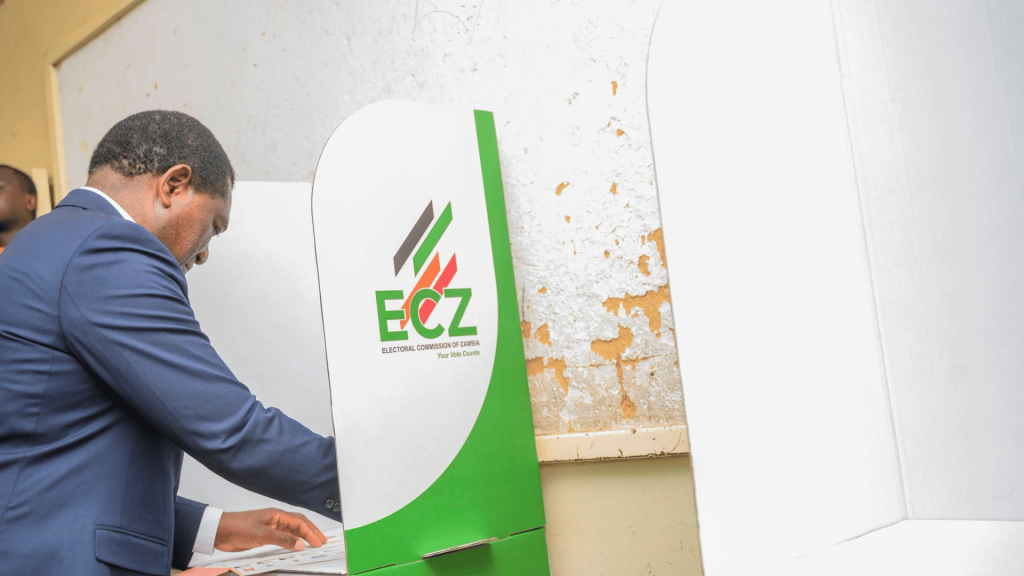
President Hakainde Hichilema voted at Kabulonga Boys Secondary School in Lusaka on the morning of 13 August, joining an estimated 8.7 million registered Zambians choosing between him and thirteen other presidential candidates. In a statement released as polls opened, he told citizens the decision for the next five years now “rests where it should, with the people of Zambia,” and urged them to vote before stations close at 18:00, carrying their green National Registration Card and voter’s card.
The election closes a campaign dominated by one question: whether Zambia’s macroeconomic recovery since its 2020 sovereign default has reached household budgets. Hichilema’s government restructured the country’s external debt, ended fuel and energy subsidies, and expanded free primary and secondary education. The kwacha has strengthened sharply against the dollar over the past year. Yet food prices, unemployment and rolling power cuts have kept public frustration high, and his most serious challenger, Brian Mundubile of an opposition alliance backed by the late Edgar Lungu’s supporters, built his campaign on that gap between statistics and daily life.
A vote administered under scrutiny
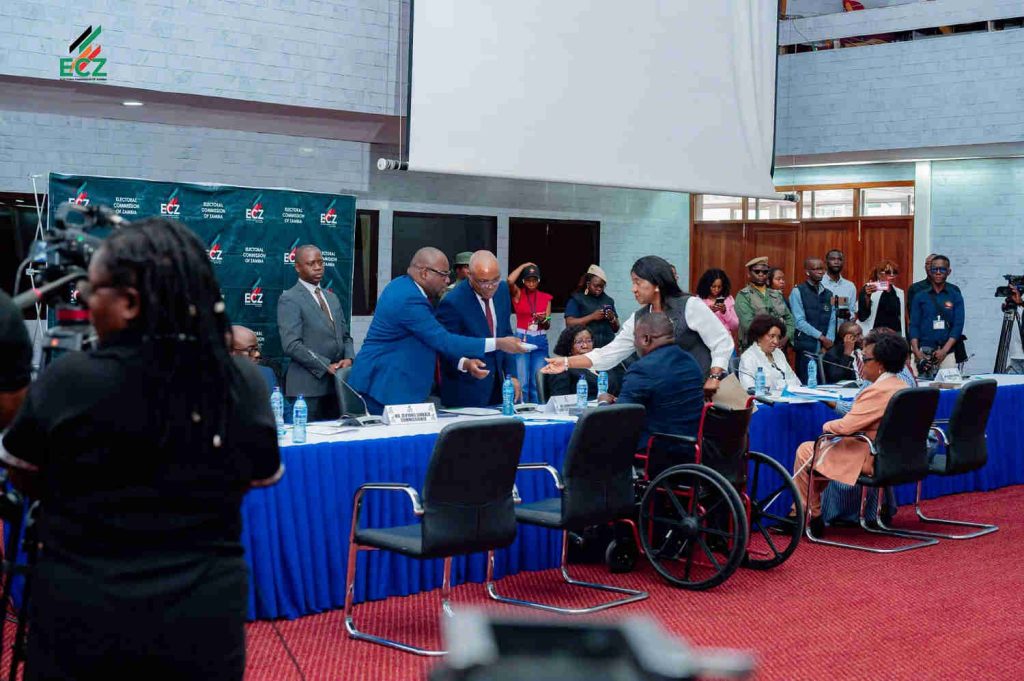
The Electoral Commission of Zambia distributed ballot papers nationwide between 2 and 10 August following a verification exercise observers described as transparent. International missions, including an ICGLR team led by former Botswana president Mokgweetsi Masisi and an EU Election Observation Mission, deployed alongside more than 600 domestic monitors coordinated by the ZIKO LATHU Consortium. A candidate needs more than 50 percent of the vote to avoid a runoff, a threshold Zambia has not had to test since its return to multiparty politics in 1991.
Hichilema’s own history with Zambian elections has shaped how closely this one is being watched. He rejected the results in 2015 and 2016 before winning in 2021 on his sixth attempt, and was jailed on treason charges in 2017 during Lungu’s presidency. That record earned him credibility among Western governments and investors as a democracy advocate. It also means his conduct of this election, and his handling of any dispute over the result, will be read internationally as a test of whether the man who fought for a clean process delivers one now that he holds it.
What the vote means for markets and business
For investors, the immediate question is continuity. Hichilema’s government has courted mining capital, pushed local content rules requiring miners to raise domestic procurement toward 40 percent, and set a target of three million tonnes of annual copper output by 2031, up from 0.89 million tonnes in 2025. Zambia’s dollar bonds rose after the 2024 Eurobond restructuring, and the central bank’s policy rate sits well below the roughly 28 percent average commercial lending rate, a gap that continues to strain small business borrowing regardless of who wins.
A second Hichilema term would likely mean continuity in fiscal policy under the current IMF programme, with the deficit projected to narrow from 2.7 percent of GDP this year to 1.9 percent in 2027. A Mundubile win, by contrast, would raise questions in Lusaka’s business community about whether that programme survives a change of government, and how quickly a new administration could reassure the Eurobond market that put Zambia back on a normal footing.
What it means for households
For ordinary voters, the calculation is more immediate. Extreme poverty eased only slightly, from 49 percent in 2024 to 48 percent in 2025, according to African Development Bank figures, even as GDP growth accelerated to 7.7 percent in the first quarter of 2026. That disconnect between macro numbers and lived experience is what opposition candidates spent the campaign pointing to, and what Hichilema’s team spent it trying to explain, arguing the gains take time to reach markets, taxi ranks and household budgets.
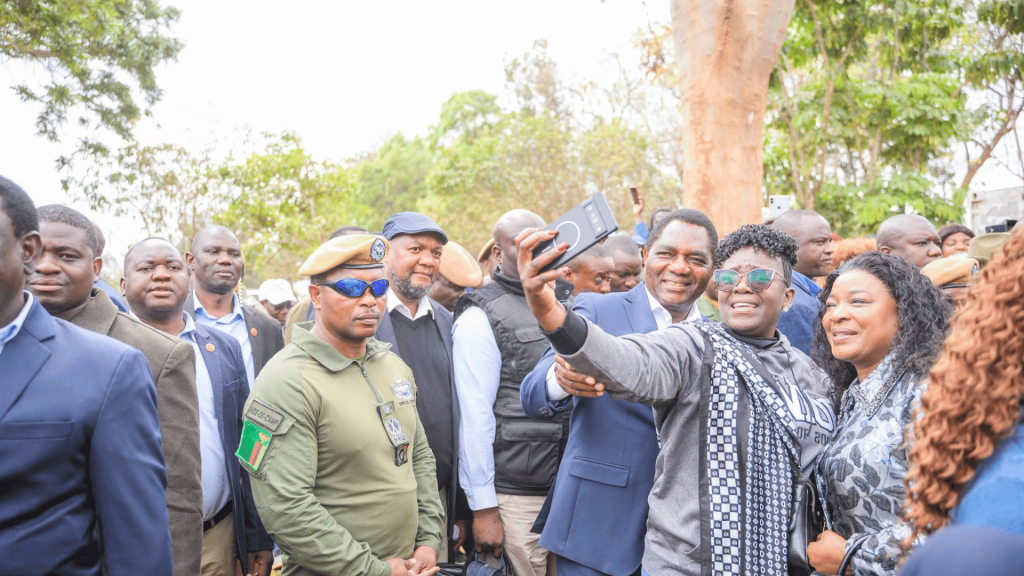
Thursday itself carried its own economic footprint. The government declared the election a public holiday under Article 56, and Friday remains a working day, according to Secretary to the Cabinet Patrick Kangwa. Streets that are normally clogged with Lusaka’s morning traffic, including sections of Great East Road, stood unusually quiet as commuters queued to vote instead of heading to work.
What happens next
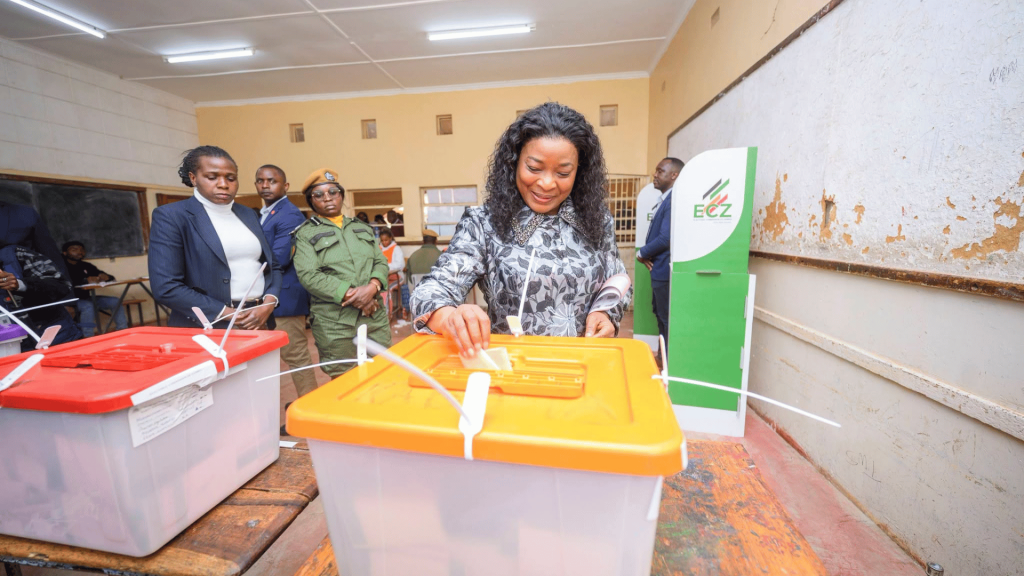
Counting begins once polling stations close at 18:00, with results declared at constituency level before being collated nationally. The Electoral Commission has said it will use its newly launched National Election Results Centre at Mulungushi to manage the count, a change some civil society groups have asked the Commission to explain in more detail before results are announced. Should no candidate cross 50 percent, Zambia would hold its first runoff since the current constitutional threshold was introduced.
Key takeaways
- Hichilema voted in Lusaka as roughly 8.7 million Zambians cast ballots in a fourteen candidate presidential race.
- The election is widely read as a referendum on his economic record: debt restructuring, a stronger kwacha and faster GDP growth against unemployment, food prices and power cuts.
- International and domestic observers deployed in large numbers, with more than 600 local monitors alongside ICGLR and EU missions.
- A win below 50 percent of the vote would trigger Zambia’s first runoff under the current threshold.
- Investors are watching for continuity in the IMF programme and the mining sector’s local content and output targets regardless of the outcome.
Related Coverage
- Hichilema Casts Vote at Kabulonga Boys as Zambia Decides His Second Term
- Tasila Lungu Breaks Silence, Votes at Kabulonga Boys Alongside Opposition Candidate
- LDF Observers Report Calm Voting in Lusaka, Turnout Growing at Some Polling Stations
- What Investors Are Watching as Zambia Heads to the Polls
WARNING! All rights reserved. This material and all other digital content on this website may not be reproduced, published, broadcast, rewritten, or redistributed, in whole or in part, without the prior express permission of The Zambian Economist. Where permission is granted, the content must be clearly credited to “The Zambian Economist,” with “www.zambianeconomist.com” prominently displayed.
WhatsApp: +260775574228 | Email: info@zambianeconomist.com
© 2026 The Zambian Economist.
Election update: ECZ extended voting hours at polling stations that opened late, while confirming that voters already in the closing queue must be allowed to vote.