
Key Takeaways
- Iris Kamwi Kaingu was sworn in as MP for Mwandi Constituency in Western Province on 7 September 2026, after winning as an independent candidate.
- She defeated sitting UPND MP Sibeso Sefulo by 485 votes (6,595 to 6,110), having contested independently after missing out on the ruling party’s adoption.
- Kaingu is the daughter of Michael Liwanga Kaingu, who represented Mwandi for the MMD between 2006 and 2011 and later served as Minister of Education.
- Her election adds to a small but notable bloc of independent MPs returned in the 2026 general election, a trend that weakens straight party-line voting in Parliament.
- Mwandi’s economy rests on cattle, floodplain agriculture and informal cross-border trade with Namibia, sectors that depend heavily on the road, veterinary and market infrastructure a constituency MP can lobby for.
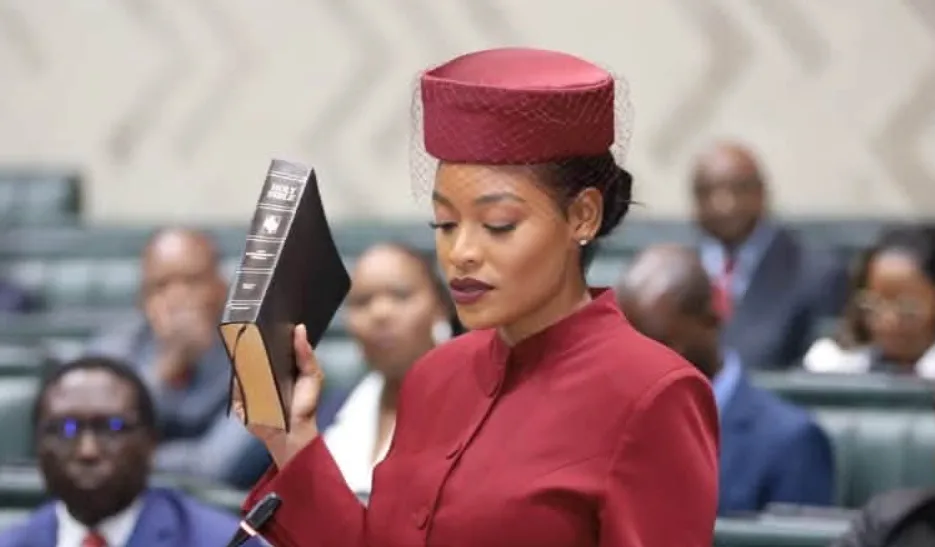
Iris Kamwi Kaingu took the oath of office as Member of Parliament for Mwandi Constituency in the National Assembly on Monday, becoming one of the independent candidates who broke through a party structure in the 2026 general election. She won the seat by 485 votes, defeating the sitting UPND member Sibeso Sefulo, after the ruling party did not adopt her as its candidate.
Kaingu marked the moment on social media with a passage from 1 Corinthians and a short message to constituents. “The campaign brought us here. Now, the work begins,” she wrote, adding that she carries the “hopes, concerns and aspirations” of Mwandi residents into Parliament.
An Independent Win in a UPND Stronghold
Mwandi, in Mwandi District in Western Province, has changed hands between parties before but had been held by the UPND since 2016, first under Sililo Mutaba and then Sibeso Sefulo from 2021. Kaingu’s decision to run outside the party after being left off its adoption list put her against the incumbent directly rather than against a divided opposition field, and she won on a margin narrow enough that turnout in a handful of polling stations could have changed the outcome.
She is not a newcomer to the constituency’s politics. Her father, Michael Liwanga Kaingu, held the Mwandi seat for the MMD from 2006 to 2011 and went on to serve as Minister of Education. That link gives her a base of name recognition in the constituency that an outside candidate would not have had.
Her victory sits inside a wider pattern from the 2026 general election, in which several independents unseated ruling-party incumbents in constituencies where local adoption disputes pushed sitting or aspiring candidates to run without party backing. Each such win removes a guaranteed vote from the governing party’s parliamentary bloc on any question where the whip is tested, from budget votes to constitutional amendments.
Why Mwandi’s Economy Runs on Cattle, Water and the Border
Western Province is consistently among Zambia’s poorest provinces on standard living-condition measures, and Mwandi District’s own economy is narrower than most: cattle rearing, floodplain farming tied to the seasonal rise and fall of the Zambezi, and informal trade across the nearby border with Namibia’s Zambezi Region. None of these sectors generate the kind of formal tax revenue that gives a constituency leverage in Lusaka, which is part of why road access, veterinary services and market infrastructure in Western Province lag behind more industrialised provinces.
A constituency MP’s practical economic tool is not fiscal policy but the Constituency Development Fund and a seat at the table when the national budget allocates money for feeder roads, dip tanks, health posts and schools. What Kaingu does with that leverage, and how effectively an independent MP can compete for ministerial attention against MPs sitting inside the governing party, will be more informative for Mwandi’s residents over the next term than the outcome of the swearing-in itself.
Business and Investor Implications
| Sector | Relevance to Mwandi | What to watch |
|---|---|---|
| Livestock and beef value chain | Core household income source in the district | Veterinary infrastructure funding, disease control, access to Namibian and regional markets |
| Cross-border trade | Informal trade flows through Sesheke and Katima Mulilo corridor | Border facilitation, customs enforcement, road maintenance |
| Agriculture (floodplain farming) | Zambezi floodplain supports maize and vegetable production | Irrigation and flood-control investment, FISP allocation to Western Province |
| Constituency infrastructure spend | CDF and line-ministry budget lines | Whether an independent MP can secure the same ministerial access as governing-party MPs |
Investors with interests in agro-processing, livestock services or cross-border logistics in Western Province should treat Kaingu’s win as a reminder that constituency-level political change can shift which local priorities get budget attention, even where national policy is unchanged.
Policy Implications
Kaingu’s election will be watched in Lusaka less for what it changes in Mwandi and more for what it signals nationally: that adoption disputes inside the governing party carry a real electoral cost, and that independent MPs are now numerous enough to matter on close votes. For Western Province specifically, the test is whether an MP outside the ruling party’s structure can still pull in the road, water and veterinary funding the constituency needs, or whether independence comes at the cost of reduced access to executive decision-makers.
What Happens Next
Kaingu now joins the National Assembly for the remainder of the parliamentary term. Her first substantive test will be how she positions herself on the floor, whether she aligns informally with the opposition benches, the governing party, or neither, and how quickly she can convert local goodwill into funded projects for Mwandi.
WARNING! All rights reserved. This material and all other digital content on this website may not be reproduced, published, broadcast, rewritten, or redistributed, in whole or in part, without the prior express permission of The Zambian Economist. Where permission is granted, the content must be clearly credited to “The Zambian Economist,” with “www.zambianeconomist.com” prominently displayed.
WhatsApp: +260775574228 | Email: info@zambianeconomist.com© 2026 The Zambian Economist.
Work With The Zambian Economist
Advertise With Us | List With Us | Submit an Article
Related: Sesheke East’s Romeo Kangombe Sworn In for a Third Term, Says Development “Has No Finish Line”
Related: Mwiinde Sworn In as Choma South MP, Renews Call to Respect Election Outcomes