
The President addresses 272 members with inflation at 6.1% and interest rates falling. The harder questions are jobs, copper, power, and a 2027 budget with very little room left in it.
Key takeaways
- President Hakainde Hichilema is due to address the First Session of the 14th National Assembly at about 10:25 today, according to the official programme.
- The House now has 226 constituency seats, up from 156, plus 40 proportional representation seats reserved for women, young people and persons with disabilities. Women hold 61 seats, against 25 in the last Parliament.
- He speaks with inflation at 6.1%, the policy rate just cut to 10.75% and growth projected at 5.3% this year, but with the kwacha back near K20 per dollar and copper output up only 0.45% in the first half.
- The Treasury expects about K271.9 billion for 2027, yet says only K6.9 billion is free once existing commitments are paid. The speech will show which promises get priority.
- Jobs, copper, power and the fiscal envelope are the economic tests. National unity and the term-limits debate are the political ones investors will also be reading.
President Hakainde Hichilema walks into the largest Parliament in Zambia’s history this morning with a simple problem: he has spent five years telling voters the economy has been stabilised, and he now has to show it can grow fast enough to create jobs. His address to the First Session of the 14th National Assembly, scheduled for about 10:25 according to the National Assembly’s ceremonial programme, sets the Government’s policy direction for 2026 and 2027. Members will debate it over the coming days, and it frames the 2027 Budget that follows.
The occasion is his first address to Parliament since he was sworn in for a second term on 1 September. The audience is very different from the one he faced a year ago.
A bigger House, and new arithmetic
The Constitution of Zambia (Amendment) Act of December 2025 raised the number of constituency seats from 156 to 226 and introduced a mixed-member proportional representation system. Forty seats are now allocated by party lists: up to 20 for women, 15 for young people and 5 for persons with disabilities. Five members are nominated by the President.
The composition printed in today’s programme shows how the August election translated into seats.
| Group | Seats |
|---|---|
| United Party for National Development (UPND), constituency seats | 139 |
| National Reconciliation Party for Unity and Prosperity (NRPUP), constituency seats | 57 |
| Independents | 20 |
| Resolute Party | 5 |
| Citizens First | 2 |
| Zambia Must Prosper | 1 |
| Proportional representation (all parties) | 40 |
| Nominated | 5 |
| Vacant (Lumezi North, Mandevu) | 2 |
| Total members, excluding the Vice-President, Speaker and First Deputy Speaker | 269 |
Once the proportional representation seats are added, Lusaka Times counts 169 seats for the UPND and 67 for the NRPUP. That is a comfortable working majority for ordinary legislation. It is not enough, on the ruling party’s own numbers, to amend the Constitution, which needs a two-thirds vote. Lusaka Times puts that threshold at 187 and the UPND 18 votes short of it alone.
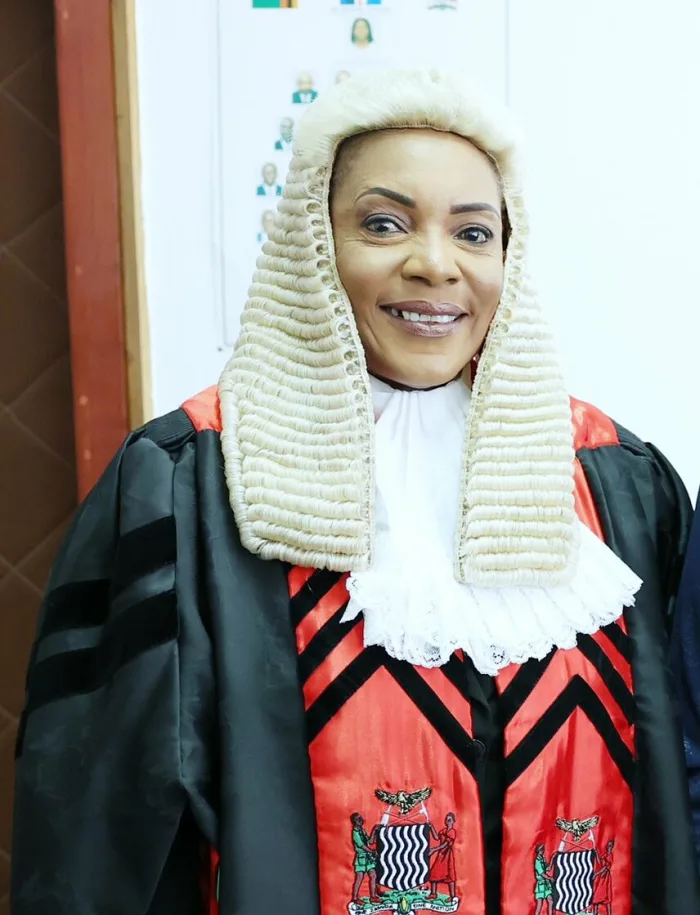
The House is also more mixed. The programme lists 61 women and 206 men, compared with 25 women among 167 members before the election. Speaker Dr Nelly Mutti and First Deputy Speaker Malungo Chisangano were returned unopposed. The only contested ballot, for Second Deputy Speaker, went to independent Nshamba Muzungu, who beat the NRPUP’s Vincent Mwale by 166 votes to 58.
The economy he will describe
On the headline numbers, the President has a good story to tell. Annual inflation fell to 6.1% in September, inside the Bank of Zambia’s 6% to 8% target band. A week ago the central bank cut its policy rate by 2.5 percentage points to 10.75%, its deepest cut in 15 years according to Bloomberg. The Treasury projects growth of 5.3% this year and an average of 7% a year between 2027 and 2029. Public debt, according to figures cited by Ecofin Agency, fell from 133.4% of GDP in 2023 to about 93.4% in 2025 after the restructuring.
| Indicator | Latest reading | Source |
|---|---|---|
| Annual inflation | 6.1% (September 2026) | ZamStats |
| Bank of Zambia policy rate | 10.75% (cut from 13.25% on 30 September) | Bank of Zambia |
| GDP growth | 5.3% projected for 2026 | Ministry of Finance and National Planning |
| Copper output | 447,182 tonnes in H1 2026, up 0.45% | Ministry of Mines and Minerals Development |
| Kwacha per US dollar | About K19.9 in early October, from K17.87 in June | Market rates |
| Pump prices (October) | Petrol K31.46, diesel K33.27 per litre | Energy Regulation Board |
| 2027 resource envelope | About K271.9 billion | Treasury, 2027 Budget Hearings |
The less flattering numbers are the ones households feel. The kwacha has given back most of its first-half gain as fuel and import bills outpace the arrival of copper dollars. Oil above US$100 a barrel has pushed pump prices up again this month. Those costs feed into transport fares and food prices faster than a falling policy rate feeds into cheaper loans.
Five things to listen for
1. A jobs plan, not only a jobs target
The Grow Zambia Agenda sets targets for 2031 that include 10 million tonnes of maize, 10,000 megawatts of electricity, 5 million tourist arrivals and 3 million tonnes of copper. Finance Minister Situmbeko Musokotwane told the visiting IMF mission last week that employment, especially among young people, remains a major challenge. The speech will be judged on whether it names the sectors, the financing and the timelines that turn tonnage targets into payrolls.
2. The copper gap
Zambia produced 447,182 tonnes of copper in the first half of the year. Even doubled, that is about 0.9 million tonnes for 2026, a third of the 2031 goal. Kansanshi’s expansion and a 21% rise at KCM helped, while Mopani, NFCA and Chibuluma recorded declines. Investors will listen for specifics on licensing, power supply to the mines and the fate of struggling assets, not a restatement of the target.
3. Power and fuel
The 10,000-megawatt target sits against a grid that has spent much of the past two years rationing supply after drought cut hydropower at Kariba and Kafue. Forecasters are warning of a strong El Niño in 2026/27. Any commitment on new generation, private power purchase agreements or cost-reflective tariffs will matter to manufacturers more than any other line in the speech.
4. How the money will be found
At the opening of the 2027 Budget Hearings this week, the Treasury told spending agencies that only about K6.9 billion of next year’s discretionary budget is uncommitted, after K15.0 billion for arrears, K10.2 billion for social cash transfers, K9.0 billion for the Constituency Development Fund and smaller lines for free education and school feeding. Zambia has also opened talks with the IMF, led by mission chief Edward Gemayel, on a successor to the Extended Credit Facility. New promises in the address will either have to fit inside that envelope or come with revenue measures attached.
5. The political temperature
Business confidence is not only a function of interest rates. Church bodies, including the Evangelical Fellowship of Zambia, have urged the President to put national unity first after a bitter campaign, and he told the Fellowship he had heard the message “loud and clear.” Some commentators, including historian Dr Euston Chiputa and Antonio Mwanza of the DPP, have urged him to restate his position on calls by some ruling party supporters to remove presidential term limits. No formal amendment on term limits is before Parliament. NRPUP presidential candidate Brian Mundubile and his running mate Makebi Zulu are among 18 people in custody in Kabwe on treason charges, according to Lusaka Times. How the President addresses reconciliation will be read closely by lenders and investors as well as by voters.
What it means for business and households
For businesses, the address is the clearest early signal of 2027 policy before the Budget. Watch for anything on tax administration, since the Cabinet’s budget concept paper commits to a broader tax base and more digital compliance, and for the treatment of Government arrears, which are money owed to suppliers and contractors. A firm owed money by the State will learn more from the arrears line than from the growth forecast.
For households, the transmission is slower. The 250 basis-point rate cut should eventually lower borrowing costs, but commercial banks reprice loans over months. In the meantime, fuel, mealie meal and transport costs decide how the economy feels. A speech heavy on 2031 targets and light on the cost of living will be received coolly outside the Chamber.
How today’s ceremony runs
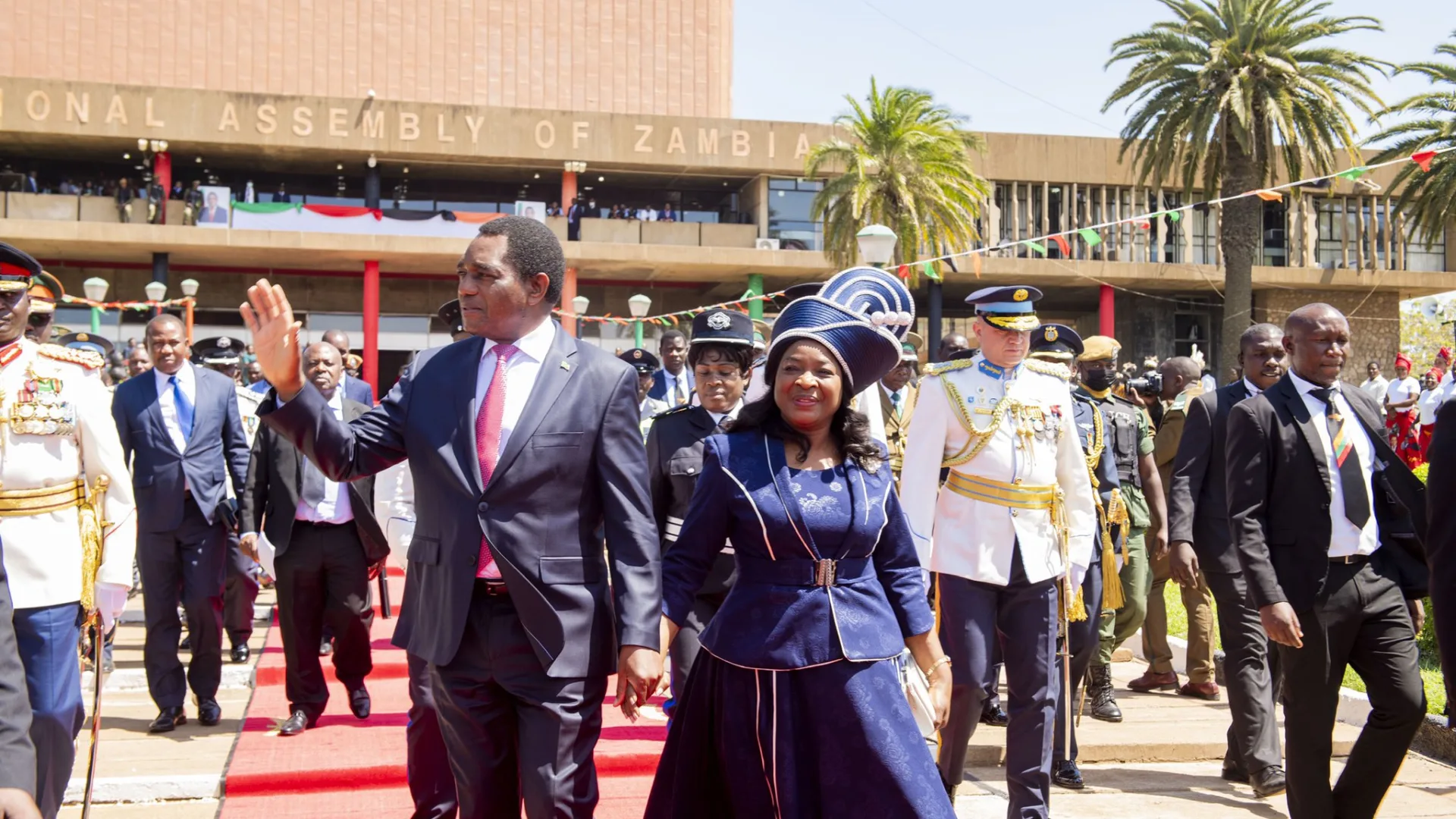
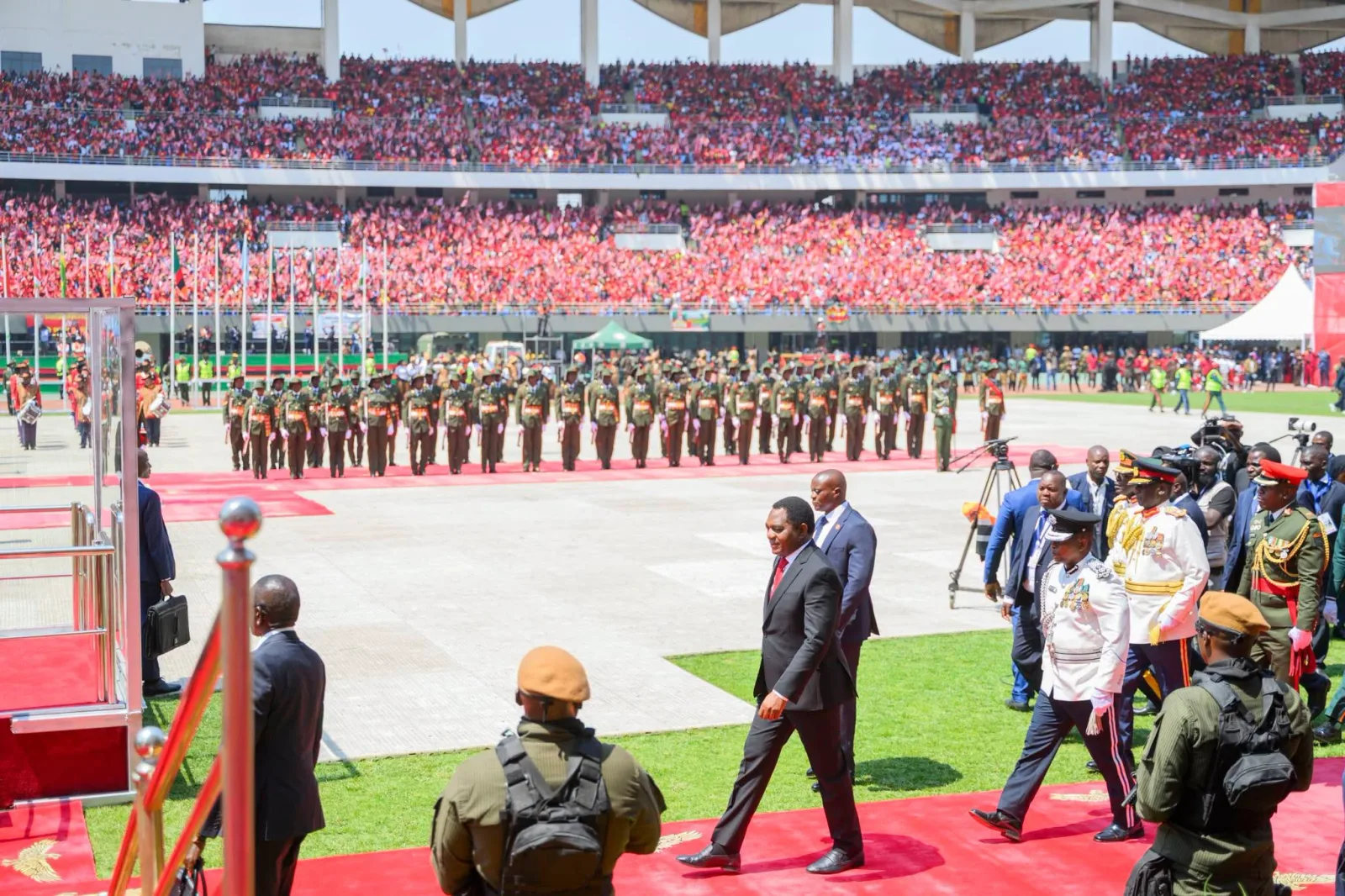
The programme follows a fixed order. The Guard of Honour, mounted by the 2nd Infantry Battalion of the Zambia Army, takes position from 09:15. The President and First Lady leave State House at 09:50 and arrive at Parliament Buildings at 10:00, where a 21-gun salute is fired and the Zambia Air Force flies past, weather permitting. At 10:25 a traditional drum, the Ngoma Yabukali, announces the President’s procession into the Chamber. His Aide-de-Camp hands him the written speech. When he finishes, he hands a copy to the Speaker, and the House resumes business after he leaves.
The Clerk of the National Assembly, Loveness Mayaka, has asked the public to follow proceedings on Parliament Radio, Parliament TV and the National Assembly’s online platforms. Phones are not allowed in the Chamber or galleries.
Frequently asked questions
What time does President Hichilema address Parliament today?
The official programme schedules the President’s entry into the Chamber for 10:25 on Friday, 9 October 2026, after a 10:00 arrival ceremony outside Parliament Buildings.
How many members does the 14th National Assembly have?
The programme lists 269 sitting members plus the Vice-President, the Speaker and the First Deputy Speaker, a grand total of 272. Two constituency seats were vacant. At full strength the House has 226 constituency seats, 40 proportional representation seats and up to 5 nominated members.
Is today’s speech the 2027 Budget?
No. The President’s address sets policy direction. The 2027 Budget is presented separately by the Minister of Finance and National Planning, and its date has not yet been announced. Public comments on the 2027 to 2029 Medium Term Budget Plan close today.
The test
The President’s earlier opening addresses were made to a House of 167. Today’s is larger, has more than twice as many women, and faces a single sizeable opposition bloc in the NRPUP. The figures the President cites will mostly be good ones. The test of the speech is whether it says, in kwacha and in dates, how a 5% economy becomes a 7% one that hires people.
We will publish a full analysis of the address and what it means for the 2027 Budget later today.
Related coverage:
- Zambia’s 2027 Budget: K271.9 Billion to Spend, but Only K6.9 Billion Left for Other Programmes
- The Kwacha’s October Slide: Why Copper Dollars Are Not Enough
- Zambia’s Most Representative Parliament Now Has to Earn It
- How Zambia’s Mixed-Member Proportional Representation System Works
- Musokotwane Pivots Zambia Toward Export-Led Growth as Jobs and Investment Take Centre Stage
- Zambia After the Oath: The Economic and Diplomatic Tests of Hichilema’s Second Term
Related: Zambia@62: A Self-Funded Independence Week for an Economy Told to Do More With Less.
WARNING! All rights reserved. This material and all other digital content on this website may not be reproduced, published, broadcast, rewritten, or redistributed, in whole or in part, without the prior express permission of The Zambian Economist. Where permission is granted, the content must be clearly credited to “The Zambian Economist,” with “www.zambianeconomist.com” prominently displayed.
WhatsApp: +260775574228 | Email: info@zambianeconomist.com
© 2026 The Zambian Economist.