Creditors have long had their clubs. Borrowing countries now have one too. At its first Governing Council meeting in Bangkok, Finance Minister Dr Situmbeko Musokotwane told the new Borrowers’ Platform that its value will be judged by results, not structures.
KEY TAKEAWAYS
- Dr Situmbeko Musokotwane spoke for the Platform’s African members at its inaugural Governing Council meeting, held at the United Nations Conference Centre in Bangkok on the margins of the 2026 IMF and World Bank Annual Meetings.
- The Borrowers’ Platform, launched in Washington DC in April 2026, has 31 formal member countries. More than 100 developing countries have been invited, and UNCTAD serves as its Secretariat.
- The Platform is not a debt restructuring mechanism or a negotiating bloc against creditors. Its stated purpose is technical cooperation, information sharing and better representation of borrowers in international debt discussions.
- UNCTAD data shows rising interest payments squeezed development spending in 99 developing countries, home to about 5.5 billion people, between 2018 and 2024.
- The Minister urged more eligible African countries to join and called for the Platform to move “from establishing structures to delivering practical results.”
Zambia’s Finance and National Planning Minister, Dr Situmbeko Musokotwane, has called on low-income borrowing countries to take a larger part in shaping the international debt system, as the Borrowers’ Platform began its first annual operating cycle in Bangkok, Thailand.
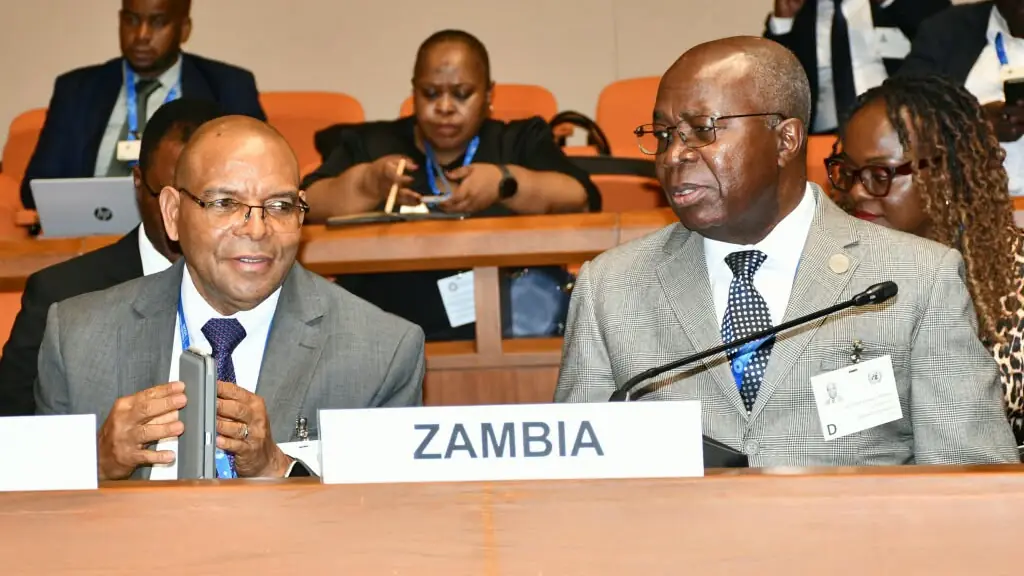
Speaking on behalf of the Platform’s African members at its inaugural Governing Council meeting, held at the United Nations Conference Centre on the sidelines of the IMF and World Bank Group Annual Meetings, the Minister said many African countries still face high financing costs, limited access to affordable loans and slow debt restructuring processes. All three, he said, hold back investment in economic and social development.
“Decisions about debt therefore matter not only to governments, but also to the everyday lives of our people,” he said.
Why borrowers needed their own forum
The Platform was set up to correct an imbalance in how international finance is governed. Creditors have long-established ways of coordinating. Official lenders meet through the Paris Club, and bondholders organise into committees when a country runs into trouble. Borrowing countries have had no comparable institution through which to share expertise, build debt management capacity or put forward common positions on debt policy.
Zambia knows that gap well. Its own restructuring, which followed the 2020 Eurobond default, took more than three years to complete under the G20 Common Framework. During that time the country had to negotiate with official creditors, bondholders and commercial lenders in separate tracks, often on terms set elsewhere.
The scale of the problem is wide. According to United Nations Trade and Development (UNCTAD), rising interest payments reduced the fiscal space available for development in 99 developing countries between 2018 and 2024. Those countries are home to approximately 5.5 billion people.
What the Platform is, and what it is not
The initiative does not encourage governments to borrow more. Its starting position is that borrowing can support development when it is affordable, when the money goes into investments that earn economic and social returns, and when repayments stay within what the budget can carry.
Nor is it a vehicle for collective debt restructuring or a bloc that negotiates against creditors. Members will instead learn from each other’s debt management experience, improve transparency, flag emerging financial risks earlier and take part more effectively in the discussions that set borrowing conditions.
Launched in April 2026 in Washington DC, the Platform has 31 formal member countries, and more than 100 developing countries have been invited to join. UNCTAD provides its Secretariat. The inaugural Governing Council adopted a communiqué that sets out shared priorities for cooperation, knowledge exchange and stronger representation of borrowing countries in international debt discussions.
Results over structures
Dr Musokotwane’s main message to fellow members was about delivery. The Platform, he said, must turn its institutional arrangements into practical benefits: stronger technical cooperation, better information sharing and more effective participation in international financing talks.
“As the Platform begins its work, we must move from establishing structures to delivering practical results,” he said.
He also asked more eligible African countries to join, arguing that a more representative membership would deepen the group’s pooled expertise and its ability to deal with shared financing problems.
The Minister commended Egypt for its leadership as Interim Chair, the Steering Committee for laying the Platform’s institutional foundations, and UNCTAD for its Secretariat support. He linked the initiative to the Sevilla Commitment, the outcome of the 2025 Financing for Development conference, which Zambia co-facilitated, and which states that developing countries should have a meaningful voice in decisions that affect their development prospects.
What it means for Zambians
Debt policy can seem remote from daily life. It is not. When a large share of government revenue goes to interest, less is left for schools, hospitals, roads and water supply. Long restructuring processes keep a country locked out of affordable finance and weigh on investment, jobs and household incomes.
Zambia has seen both effects. Debt service still takes a large share of monthly Treasury releases, and the fiscal space recovered through restructuring is what now allows more spending on social sectors and capital projects. Better debt management, in that sense, is a way of protecting public money.
Zambia’s participation also sits alongside its domestic programme: consolidating fiscal and debt sustainability, improving competitiveness and moving towards higher production, investment, exports and employment under the Grow Zambia Agenda. The Bangkok meeting comes days after Zambia reached a staff-level agreement with the IMF on a new Extended Credit Facility of about US$1.47 billion.
The Minister said Zambia was ready to share its own experience with other members.
The test ahead
For Zambia and the other member states, the Platform’s worth will show in outcomes that can be measured: cheaper and better structured financing, lower debt-related risks, and more fiscal room to pay for public services and economic transformation. A forum that produces communiqués but no change in borrowing terms would add little.
“Together, we can ensure that borrowing countries have a stronger voice in decisions about their debt and a greater opportunity to achieve sustainable development,” Dr Musokotwane said.
Related: Zambia Goes to Bangkok With a US$1.47 Billion Question.
Related: EAZ Backs US$1.5 Billion IMF Deal, Wants Treasury to Leave Room for Private Borrowers.
Related: From K70 to K15: How Debt Restructuring Changed What Zambia’s Taxes Pay For.
Related: Zambia’s Debt Restructuring, Two Years On: What Changed for Bondholders.
Related: Debt Took Almost Half of Zambia’s August Treasury Release. The Rest Has to Work Harder.
Related: Grow Zambia Agenda: The Eight Numbers Behind the Plan to Double Zambia’s Economy.
Hub: Economic Diplomacy.
Related: 177 Votes: Zambia Wins UN Human Rights Council Seat With the Highest Tally of 2026.
WARNING! All rights reserved. This material and all other digital content on this website may not be reproduced, published, broadcast, rewritten, or redistributed, in whole or in part, without the prior express permission of The Zambian Economist. Where permission is granted, the content must be clearly credited to “The Zambian Economist,” with “www.zambianeconomist.com” prominently displayed.
WhatsApp: +260775574228 | Email: info@zambianeconomist.com
© 2026 The Zambian Economist.
Work With The Zambian Economist
Related: Musokotwane urges stronger IDA support and private-sector-led growth in Africa.