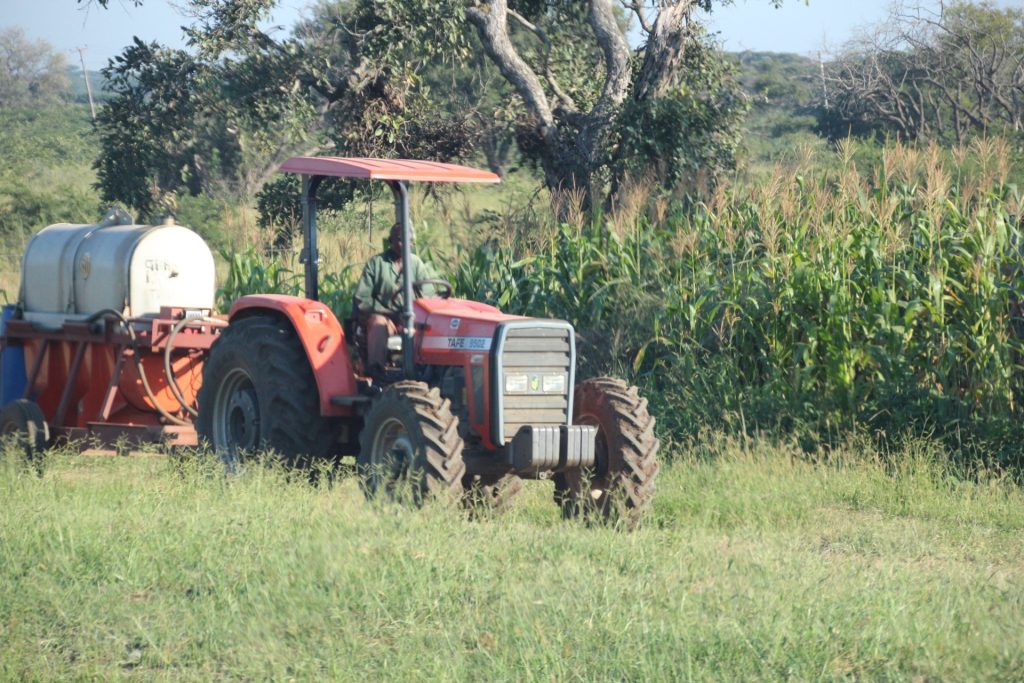

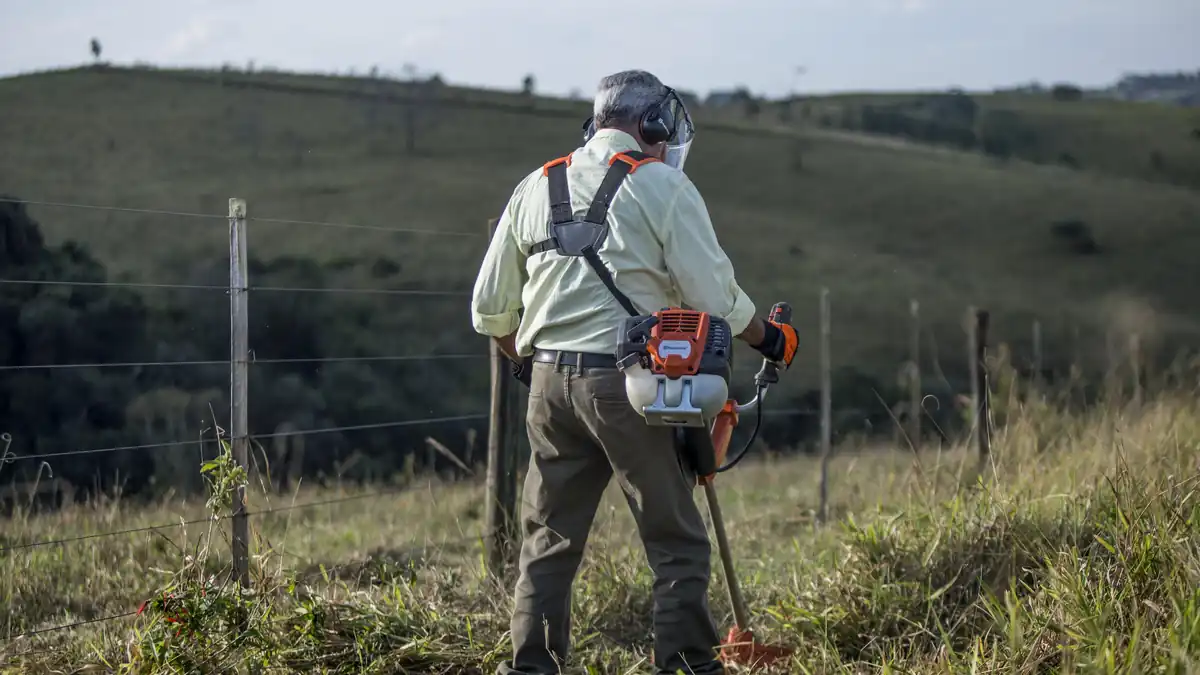
A brushcutter looks like the simplest machine on the farm. Used badly, it burns petrol, chews through blades, tires out the operator and can injure the person holding it. Husqvarna sets out the six mistakes it sees most often, and the rains are close enough that every Zambian farm with a fence line should read them.
KEY TAKEAWAYS
- Fit the attachment to the growth: a trimmer head for grass, a grass blade for tough grass and weeds, a saw blade for brush and small saplings.
- Bigger is not better. Choose a machine a little more capable than your lightest regular job, not the heaviest one you can buy.
- Walk the ground before you cut. Stones, wire and old stumps hidden in long grass damage blades and cause kickback, especially along fence lines.
- Cut with a controlled sideways sweep using the edge of the blade or the tip of the line, rather than pushing the full face into the growth.
- Adjust the harness to the operator and wear full protective gear, including leg protection. Boots, a visor and ear defenders are not enough on their own.
Why this matters before the rains
For most of Zambia, October is the last stretch of the dry season. Once the rains arrive, grass along fence lines, drainage channels, paddocks and the edges of fields grows faster than a team with slashers can keep up with. Tractors and mowers handle the open ground. The awkward places, such as fence posts, slopes, ditches, the corners around pens and the bush creeping in from the boundary, are where a brushcutter earns its place.
It is also a machine that costs money every time it runs. Most farm brushcutters burn petrol, and petrol now sells at K31.46 a litre after the October fuel price review. A second or third pass over the same patch is paid for in fuel, in blade and line wear, and in the operator’s time and energy.
“How it is used can make all the difference to how effectively the job gets done,” says Timothy Isabirye, Marketing Manager at Husqvarna South Africa. “A brushcutter looks deceptively easy to handle but coupled with unpredictable terrain, it’s trickier than many think.”
These are the six mistakes he says most often slow the work down, whether on a smallholding, a commercial farm or a large estate.
1. Using the wrong cutting attachment
Each attachment has its own job. A trimmer head suits grass and light vegetation. Tougher grass and weeds need a grass blade. Brush and small saplings call for a saw blade.
Fit the wrong one and the cut is poorer, so the operator goes over the same ground several times. The extra passes strain the person holding the machine and wear out the machine itself sooner.
2. Assuming more power is best
The natural instinct is to buy the biggest, most powerful brushcutter on the shelf. Isabirye’s advice is to match the machine to the work it will do most days.
Too much machine for the job adds weight and vibration. The operator tires sooner, and careful work around posts and young trees becomes harder. Too little machine for heavy growth causes the opposite problem: it stalls, labours and takes longer. His rule of thumb is to choose a brushcutter slightly more capable than your lightest regular task requires.
For a farmer comparing prices at a dealer, that is useful. The most expensive model is not automatically the best value if most of the work is grass along a fence.
3. Treating every job the same
Long grass hides things. Stones, loose fencing wire, old stumps and the hard bases of termite mounds are invisible until the blade finds them.
Before starting, look at what you are cutting and what may lie under it. A blade that strikes a hidden obstacle can kick back without warning, throwing the operator off balance or causing injury, and the blade itself can be damaged. The risk is highest along fence lines, around buildings and in corners of the property that are rarely cleared, because that is where rubbish and old materials collect under the growth.
4. Cutting at the wrong angle
It is tempting to drive straight into thick grass or brush. That makes the work harder. Pushing the full face of the blade into vegetation, or forcing the line into dense grass, increases resistance, strains the engine and the operator, and makes it more likely that grass wraps around the head.
A controlled sideways sweep, letting the edge of the blade or the tip of the line do the cutting, gives a cleaner result with less effort. It takes some practice to find the rhythm. Once an operator has it, the work goes noticeably faster.
5. Working against the machine
A day with a brushcutter should not feel like a wrestling match. A badly adjusted harness, handles in the wrong position or an awkward stance make a demanding job more tiring than it needs to be, and over time can contribute to shoulder, back and wrist strain.
Take a few minutes to set the harness and controls for the person using the machine. When it hangs correctly, the operator can hold a steady, comfortable position across a large area or a long shift. On farms where several workers share one machine, that adjustment has to be made for each of them, not set once and forgotten.
6. Skipping some of the protective gear
Technique matters, but protective equipment matters more. Isabirye notes that the legs and lower body take the worst of most brushcutter accidents, so safety trousers belong on the list alongside sturdy boots, eye protection and ear defenders.
That has a cost implication for anyone employing seasonal or casual labour to clear land. The machine is only half of the purchase. The gear for the person using it is the other half.
Getting value from the machine
“A brushcutter can be remarkably versatile,” Isabirye says. “From routine grass trimming to clearing dense brush, it earns its keep across all sorts of properties. And by avoiding these common mistakes and knowing how best to use it, you’ll get maximum value out of it.”
The advice applies to brushcutters of any make. Husqvarna lists its range of brushcutters and protective gear for Zambian buyers at husqvarna.com/zm, and dealers can advise on fitting the right machine and attachment to the job.
This article is based on guidance issued by Husqvarna South Africa.
Related coverage
- Zambia Raises Petrol to K31.46 and Diesel to K33.27 as Excise Duty Returns
- Zambia Warned of Thunderstorms and Strong Winds From 27 September to 2 October
- Grow Zambia Agenda: The Eight Numbers Behind the Plan to Double Zambia’s Economy
WARNING! All rights reserved. This material and all other digital content on this website may not be reproduced, published, broadcast, rewritten, or redistributed, in whole or in part, without the prior express permission of The Zambian Economist. Where permission is granted, the content must be clearly credited to “The Zambian Economist,” with “www.zambianeconomist.com” prominently displayed.
WhatsApp: +260775574228 | Email: info@zambianeconomist.com
© 2026 The Zambian Economist.