The Office of the Auditor General is rebuilding its specialist mining audit team with help from AFROSAI-E and Norway’s audit office. Its own 2025 report shows what is at stake: K626.64 million in mining penalties that the State never collected.
KEY TAKEAWAYS
- Acting Auditor General Patricia Malaila has opened a three-day workshop to revitalise the Extractive Industries (EI) Sector Group of the Office of the Auditor General (OAG).
- AFROSAI-E and SAI Norway are facilitating. The workshop will update the OAG’s extractive industries risk register and pick priority audit areas for the mining sector.
- The OAG’s 2025 audit report found the Ministry of Mines and Minerals Development had not collected K626.64 million in penalties from 5,222 mining licence holders, plus K30.48 million in unpaid annual area charges.
- Copper accounts for more than 70% of Zambia’s goods exports, so weak oversight of mining revenue has a direct cost to the Treasury.
Zambia’s Supreme Audit Institution is rebuilding the team that audits its most important industry. Acting Auditor General Patricia Malaila has officially opened a three-day workshop to revitalise the Office of the Auditor General’s Extractive Industries Sector Group, the unit responsible for monitoring mining and auditing how the State manages mineral revenue.
The workshop is facilitated by AFROSAI-E, the regional body for English-speaking audit institutions in Africa, and by SAI Norway, the Office of the Auditor General of Norway. According to the OAG, it will strengthen sector monitoring, update the extractive industries risk register, identify priority audit areas and improve risk-based audit planning. The stated aim is to build the OAG’s capacity to carry out “value-adding audits” in mining, and to promote accountability, transparency and better management of Zambia’s natural resources.
What is an Extractive Industries Sector Group?
It is a standing team of auditors inside an audit office who specialise in mining, oil and gas. Under the AFROSAI-E model, each participating audit institution sets up its own EI sector group, which meets monthly or every two months, in person or online, with support from the AFROSAI-E secretariat. The group tracks what is happening in the sector, keeps a register of the biggest risks to public money, and uses it to decide which audits to run.
“Revitalise” suggests Zambia’s group had lost momentum. The workshop is meant to restart it with a current risk register and a fresh list of audit priorities.
Why mining audits matter now
The OAG’s own latest findings make the case. The Report of the Auditor General for the year ended 31 December 2025, released on 19 October 2026, found that the Ministry of Mines and Minerals Development had not collected K626.64 million in penalties imposed on 5,222 mining licence holders. A further K30.48 million in annual area charges was unpaid. Malaila said shortcomings of this kind had caused revenue losses and inefficient use of public resources.
| Finding (2025 audit) | Amount | Who it concerns |
|---|---|---|
| Uncollected penalties on mining licence holders | K626.64 million | 5,222 licence holders |
| Unpaid annual area charges | K30.48 million | Mining rights holders |
| Unresolved audit findings across government | 27 (down from 33 in the 2024 audit) | Ministries, provinces and agencies |
Mining is also where the money is. Copper makes up more than 70% of Zambia’s goods exports, and the Government is targeting three million tonnes of copper a year under the Grow Zambia Agenda. More production means more royalties, licence fees and taxes to account for. A risk register built around today’s mining sector should tell auditors where those revenues are most likely to leak.
What has the OAG done on mining before?
This is not new ground. The OAG ran a compliance audit on the awarding and monitoring of mining rights, covering 2017 accounts, which Zambia EITI republished in 2020. In July 2024, the OAG and AFROSAI-E held an extractive industries multi-stakeholder and risk assessment workshop in Lusaka, with support from the African Development Bank. In July 2025, Livingstone hosted AFROSAI-E’s annual extractive industries workshop alongside the INTOSAI Working Group on the Audit of Extractive Industries.
The Norwegian link is older still. Peer-to-peer cooperation between Zambia’s audit office and the Office of the Auditor General of Norway began in 1997. Norway’s audit office is a long-standing backer of AFROSAI-E’s extractive industries work.
What it means for mining companies and investors
A stronger mining audit team audits government, not companies directly. Its targets are the Ministry of Mines, the Zambia Revenue Authority and other bodies that license, monitor and tax the sector. But licence holders will feel the effects. If auditors press the Ministry to enforce penalties and area charges, companies sitting on unpaid obligations can expect demands to follow. Compliant operators gain from a tighter system, because it removes the cost advantage enjoyed by those who do not pay.
For investors, credible oversight of mineral revenue is part of the case for Zambia. Clear licensing, consistent collection and published audit results reduce the risk of disputes over what is owed.
What it means for ordinary Zambians
K626.64 million is real money. It equals about 9% of the K6.9 billion that, by our analysis of the 2027 Budget, is left for other programmes. Every kwacha owed by a licence holder and not collected is a kwacha the Treasury has to find elsewhere, through borrowing or taxes on everyone else.
What to watch
- The updated risk register: whether the OAG publishes the priority audit areas it settles on.
- Follow-up on the K626.64 million: whether the Ministry of Mines reports collections to the Public Accounts Committee.
- The next mining-specific audit: a performance or compliance audit of licensing or royalties would show the revived group at work.
- The 2027 to 2031 OAG Strategic Plan: whether extractive industries feature as a named priority.
A workshop is a start. The test is whether the next Auditor General’s report shows the uncollected mining penalties going down.
Sources: Office of the Auditor General statement on the EI Sector Group workshop; Lusaka Times, October 2026; Zambian Observer, October 2026; AFROSAI-E, Extractive industries sector group initiative; AFROSAI-E, OAG Zambia and OAG Norway peer-to-peer cooperation; Melo Media, July 2024; AFROSAI-E, Livingstone workshop 2025.
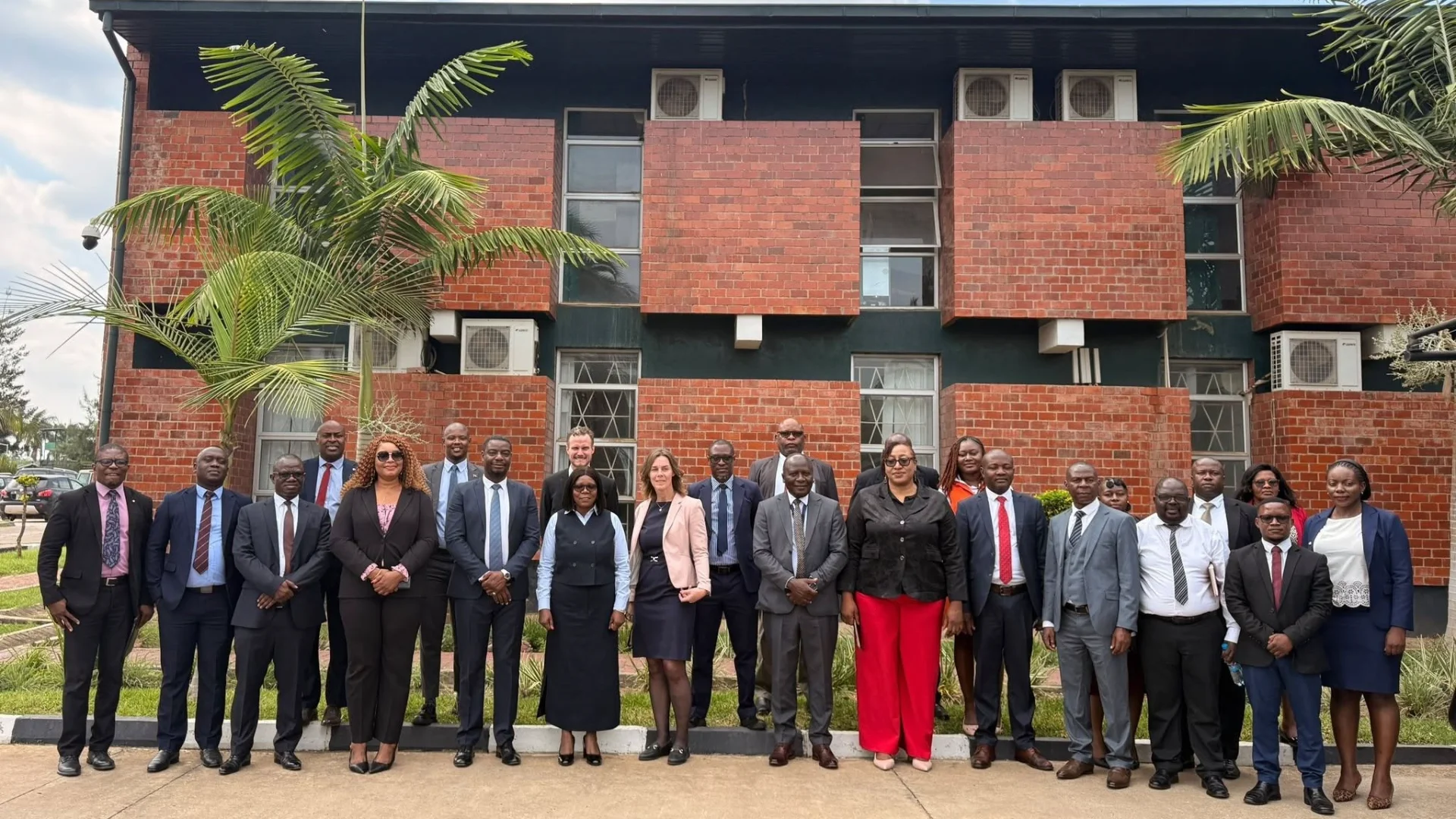
Featured photo: Participants at the Office of the Auditor General workshop to revitalise its Extractive Industries Sector Group, facilitated by AFROSAI-E and SAI Norway. Photo: Office of the Auditor General, Zambia.
Related coverage
- Zambia’s 2025 audit: K3.56bn in health arrears and K626.64m in uncollected mining penalties
- Five Years, One Mission: OAG Opens 2027-2031 Strategic Plan Talks
- OAG and ZICA Move to Deepen Ties on Auditor Training and IPSAS
- ACC Probes Seven Complaints from Zambia’s 2025 Audit Report
- US Backs Zambia’s Three-Million-Tonne Copper Ambition as Aid Gives Way to Trade
- Auditor General Explained and Zambia Public Money Tracker
- Business Directory | Events | Get The Ledger, our free weekly briefing
WARNING! All rights reserved. This material and all other digital content on this website may not be reproduced, published, broadcast, rewritten, or redistributed, in whole or in part, without the prior express permission of The Zambian Economist. Where permission is granted, the content must be clearly credited to “The Zambian Economist,” with “www.zambianeconomist.com” prominently displayed.
WhatsApp: +260775574228 | Email: info@zambianeconomist.com
© 2026 The Zambian Economist.