
Protecting forests and helping trees survive on farms and around homes is an investment in food production and household resilience. Dr Kelvin Kamayoyo argues for a practical starting point: plant and care for three suitable trees.
Key takeaways
- Trees support food production through habitat, soil protection and other ecological functions, although crops differ in their dependence on these services.
- FAO estimates global deforestation at 10.9 million hectares a year in 2015–2025. Net forest loss, after gains, was lower at 4.12 million hectares annually.
- Planting three trees is a household action proposed by the author, not a scientific threshold for restoring the atmosphere.
- Protecting existing woodland, managing natural regeneration and reducing pressure on woodfuel supplies must accompany planting.
For Zambia, trees are part of the infrastructure that supports farming and livelihoods. Losing them can damage the conditions on which food production depends. Planting suitable trees and protecting existing woodland should therefore be treated as an economic investment, alongside their environmental value.
My appeal is simple: where space, land rights and local conditions allow, households and farmers should plant and care for at least three trees. Schools, churches and other institutions can take part too. The useful measure is how many trees survive and provide benefits over time.
What the forest figures actually show
The FAO Global Forest Resources Assessment 2025 estimates that forests cover 4.14 billion hectares. Deforestation averaged 10.9 million hectares annually during 2015–2025, while annual net forest loss was 4.12 million hectares.
These figures measure different things. Deforestation records conversion of forest to other land uses. Net change takes forest gains into account as well as losses. A fall in net loss does not mean that the clearing of established forests has stopped.
The United Nations’ Global Forest Goals Report 2026 announcement says global forest area declined by more than 40 million hectares between 2015 and 2025. It also identifies inadequate finance and continuing pressures from land-use change and climate impacts. Household action matters, but it needs policies and investment that make conservation workable.
How trees connect to food
Trees and woodland provide habitats for organisms that support agricultural production. Their contribution extends beyond the fruit or other products harvested directly from them. Removing habitat can weaken the ecological relationships around farms.
FAO reports that more than three-quarters of the world’s food crops depend at least partly on animal pollination. That is a measure of crop types, not a claim that three-quarters of all food tonnage would disappear without bees.
The distinction is particularly relevant in Zambia, where maize is a staple. FAO’s pollinator guidance notes that maize can reproduce without animal pollination. Food systems nevertheless need diverse crops and functioning ecosystems. The case for protecting trees is stronger when it explains these relationships accurately, rather than suggesting that every crop depends on trees in the same way.
Make tree planting an investment that lasts
A seedling has a purchase cost, but planting also requires labour, space and care. A farmer must consider how a tree fits alongside crops. A household needs to consider its eventual size, roots and access to water. The wrong tree in the wrong place can create problems instead of solving them.
Choose species with local forestry or agricultural extension advice. Indigenous species and locally suitable fruit trees may serve different purposes. No single list is appropriate for every Zambian farm, schoolyard or urban plot, and an introduced species should not be described as indigenous simply because it is commonly planted.
The same caution applies to benefits. Carbon storage, shade and effects on temperature vary with species, age, water availability and location. Three young trees will not immediately deliver the services of three mature trees. Planting cannot guarantee rainfall, remove all dust or replace pollution controls.
A practical household plan should identify who will care for each tree and how it will be protected from fire, livestock and accidental damage. Institutions should budget for maintenance and check survival after planting campaigns. Counting seedlings distributed is only the beginning.
Protect what is already growing
Restoration does not always require buying and planting a seedling. Existing root systems and naturally emerging trees can also be managed and protected where appropriate.
World Vision’s Zambia Farmer Managed Natural Regeneration Business Plan for 2023–2033 sets an ambition to restore two million hectares through direct work and wider adoption. It describes regeneration from existing roots or seeds. That is a programme target, rather than evidence that two million hectares have already been restored.
For communities, the economic question is which approach can restore useful tree cover at a manageable cost. New planting and natural regeneration can complement one another. Neither justifies clearing established woodland on the assumption that replacement trees will quickly make up the loss.
Households cannot carry the whole burden
People need affordable ways to cook and earn a living. Asking households to protect forests while overlooking their energy costs and income constraints leaves the underlying pressure in place. Cleaner cooking options must be affordable to obtain and use; sustainable woodland management also needs credible local incentives.
Public agencies and businesses can support nurseries, extension advice and long-term tree care. Support should be judged by surviving trees and restored ecological functions, rather than ceremonial planting totals. Land-use decisions must also protect existing habitats: naturally open ecosystems should not automatically be treated as empty land awaiting trees.
Planting three suitable trees is a useful place to begin. Protecting them, conserving existing woodland and making sustainable livelihoods possible is the longer task. Zambia’s food security will be better served by sustained care than by a planting-day promise.
Contributor: Dr Kelvin Kamayoyo, Technical Advisor for African Rivers, as identified in the submitted contribution. This edited opinion article retains the author’s household tree-planting proposal; linked sources provide the factual background.
Comments to the author: kamayoyokm@gmail.com.
Explore our Agriculture & Mining coverage. Related reading: farm markets, transport and jobs and Zambia’s preparations for the African Hydro Symposium.
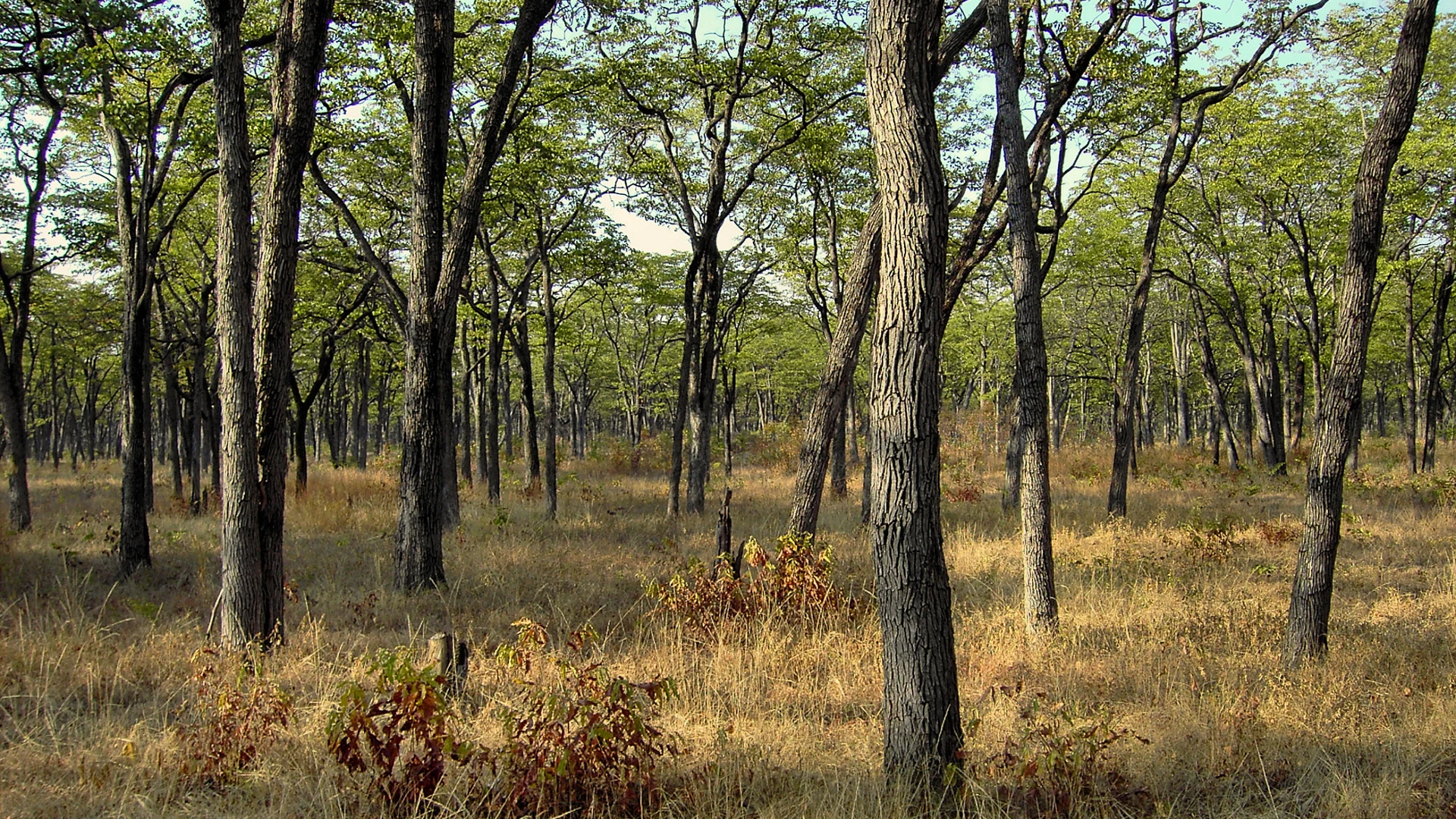
Featured photograph: cathedral mopane woodland in the Game Management Area adjoining South Luangwa National Park, Zambia, 31 May 2005. Archive image, not a current restoration project. © Hans Hillewaert / Wikimedia Commons, CC BY-SA 4.0. Cropped and resized; image remains under that licence. The notice below applies to the article text.
Related: Zambia’s 20–24 October heat alert and practical steps for households, workers and farmers.
Related analysis: ZAFFICO’s plantation expansion target and the opportunity for smallholder forest out-growers.
WARNING! All rights reserved. This material and all other digital content on this website may not be reproduced, published, broadcast, rewritten, or redistributed, in whole or in part, without the prior express permission of The Zambian Economist. Where permission is granted, the content must be clearly credited to “The Zambian Economist,” with “www.zambianeconomist.com” prominently displayed.
WhatsApp: +260775574228 | Email: info@zambianeconomist.com
© 2026 The Zambian Economist.