October’s fuel increases raise the cost of moving goods and earning a living. For traders, a busier till offers little comfort if less money remains after expenses.
Key takeaways
- Petrol rose to K31.46 a litre and diesel to K33.27 from 1 October 2026, increases of about 24%.
- ZamStats estimates that 3,015,487 people, or 63.4% of Zambia’s employed population, worked in the informal economy in 2025.
- Higher transport and restocking costs can reduce traders’ earnings even when sales revenue rises.
- The K700 basic-salary adjustment for eligible public service employees has no automatic equivalent for a self-employed trader.
Rising fuel prices can reduce an informal worker’s income by increasing business expenses faster than sales. The amount collected from customers is revenue; the money left after restocking, transport and other costs is what supports the owner’s household.
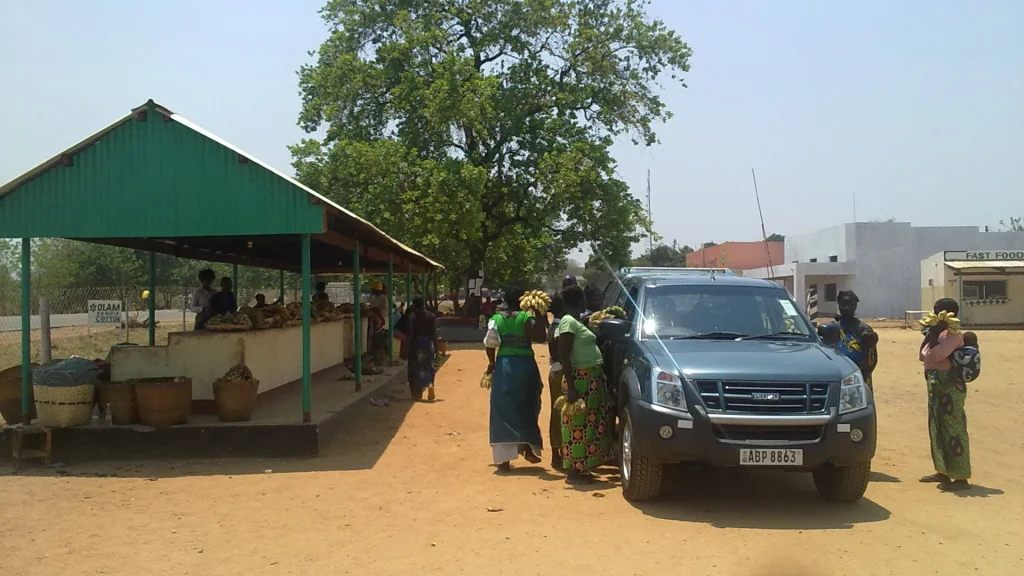
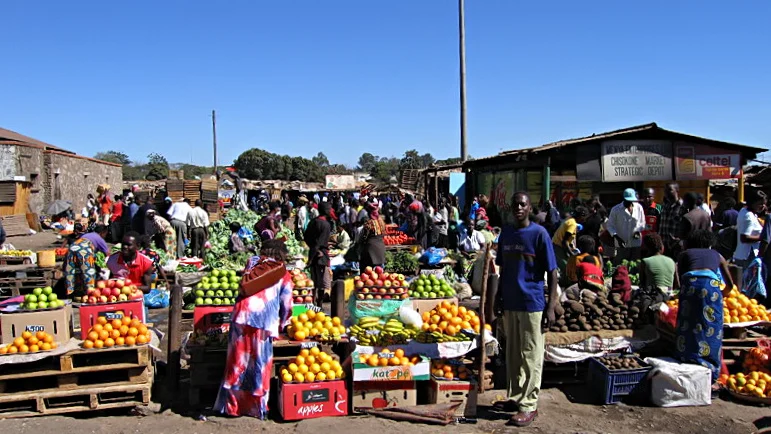
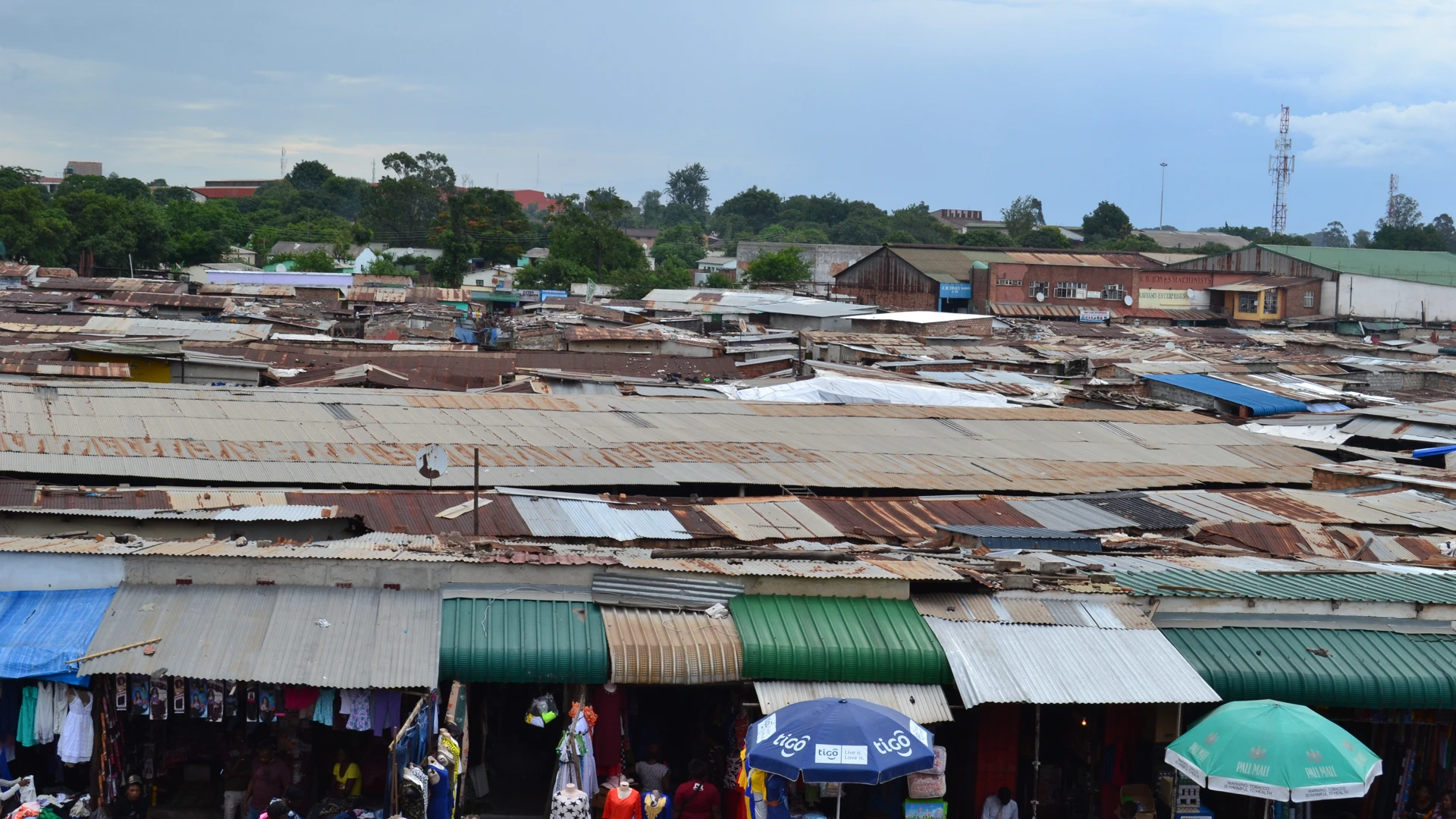
Consider a trader at Nakadoli Market in Kitwe. A full day of selling still has to pay for the next consignment of stock and the journey to collect it. If those costs rise, the trader can finish the day with less to spend at home. This example illustrates the pressure on a small business; it is not an account from an interviewed trader.
What changed at the pump?
The Energy Regulation Board’s October price review, issued on 30 September, raised petrol from K25.29 to K31.46 a litre and diesel from K26.86 to K33.27. The new prices took effect at midnight on 30 September.
| Fuel per litre | Previous price | October price | Increase |
|---|---|---|---|
| Petrol | K25.29 | K31.46 | K6.17 (24.4%) |
| Diesel | K26.86 | K33.27 | K6.41 (23.9%) |
Source: Energy Regulation Board. Percentage changes calculated from the published prices.
ERB attributed the adjustment to higher international petroleum prices, a weaker kwacha and the return of excise duty after temporary tax relief. Those pump-price increases do not mean that every transport fare or retail price must rise by the same percentage. Fuel is only one part of a business’s costs.
Why informal earnings are exposed
The Zambia Statistics Agency’s July 2026 publication, reporting the 2025 Labour Force Survey, puts employment in the informal economy at 3,015,487 out of 4,755,296 employed people, or 63.4%.
That category covers more than market traders. It includes workers across different industries and employment arrangements. It should not be read as a count of self-employed business owners alone.
For a trader who buys goods from a wholesaler, higher fuel costs may appear in the delivery charge or the supplier’s price. A worker travelling to customers may face higher journey costs. The impact depends on distances, the goods sold and how much of the increase suppliers and transporters pass on.
Can traders simply raise their prices?
A higher selling price can help recover additional costs, but customers have spending limits. They may buy smaller quantities, switch products or postpone a purchase. Keeping prices unchanged can protect sales while reducing the margin on each item.
The calculation is straightforward. In a purely illustrative day, sales of K1,000 less K800 in business costs leave K200. If costs rise to K850 while sales remain unchanged, only K150 remains. The K50 reduction is a quarter of the original surplus. These figures explain the mechanism; they are not measured earnings at Nakadoli Market.
What does the K700 salary comparison show?
The Zambia Union of Nurses and Midwives Organisation’s account of the 2026 agreement confirms a K700 increase in basic salary for unionised public service employees, effective from 1 January 2026. A basic-pay increase should not be described as an identical K700 increase in everyone’s take-home pay, which also depends on deductions and applicable allowances.
Self-employed traders have no corresponding automatic adjustment. Any increase in their earnings must come through the business. Public servants also face higher living costs, while their spending can support traders’ sales. The comparison concerns how incomes adjust, rather than a claim that either group escapes the fuel shock.
See Nathan Meleki’s related contribution on the K700 increase and purchasing power.
What businesses and policymakers should watch
Small businesses can track transport and replacement-stock costs separately from daily sales before deciding whether to change prices. Sharing deliveries may reduce costs where volumes and routes permit, although buying larger quantities can tie up scarce working capital.
For lenders and investors serving small enterprises, turnover alone is an incomplete measure of repayment capacity. A trader can sell the same value of goods while retaining less cash after expenses.
For policymakers, monitoring delivery charges, retail prices and informal earnings would help establish where the pressure is greatest. The figures cited here establish the size of informal employment and the pump-price change; they do not measure the resulting loss of income among traders.
A useful test over the coming weeks is whether the money left after each restocking trip holds up. That is the income measure that matters when the same business must finance tomorrow’s stock and tonight’s meal.
Explore our Inflation & Cost of Living coverage and the wider analysis of how the fuel shock reaches business and household costs.
Featured photograph: BRONTOX / Wikimedia Commons, 16 December 2016, cropped and resized. The photograph remains licensed under CC BY-SA 4.0; the notice below applies to the article text.
Related: Zambia’s 20–24 October heat alert and practical steps for households, workers and farmers.
WARNING! All rights reserved. This material and all other digital content on this website may not be reproduced, published, broadcast, rewritten, or redistributed, in whole or in part, without the prior express permission of The Zambian Economist. Where permission is granted, the content must be clearly credited to “The Zambian Economist,” with “www.zambianeconomist.com” prominently displayed.
WhatsApp: +260775574228 | Email: info@zambianeconomist.com
© 2026 The Zambian Economist.