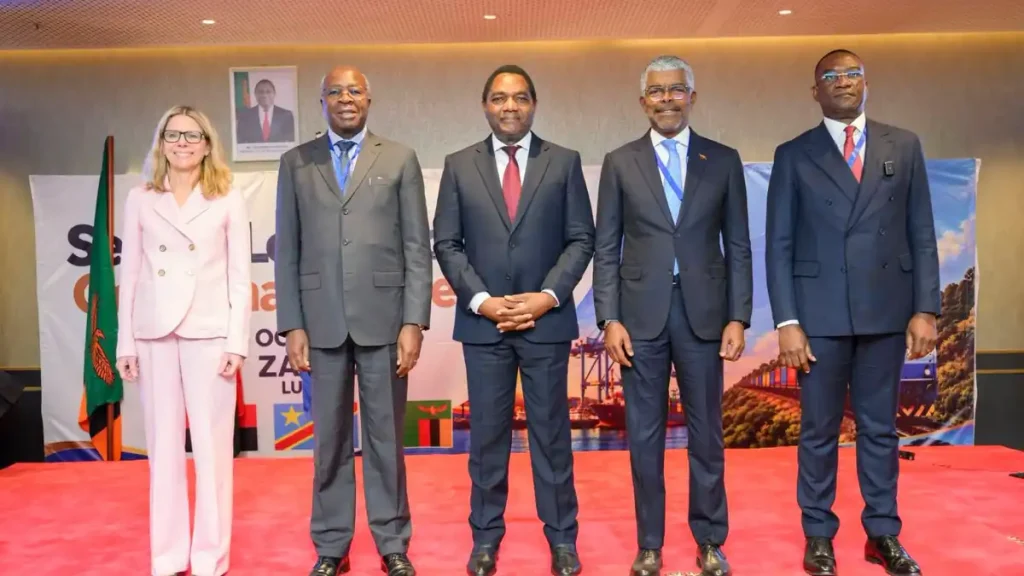
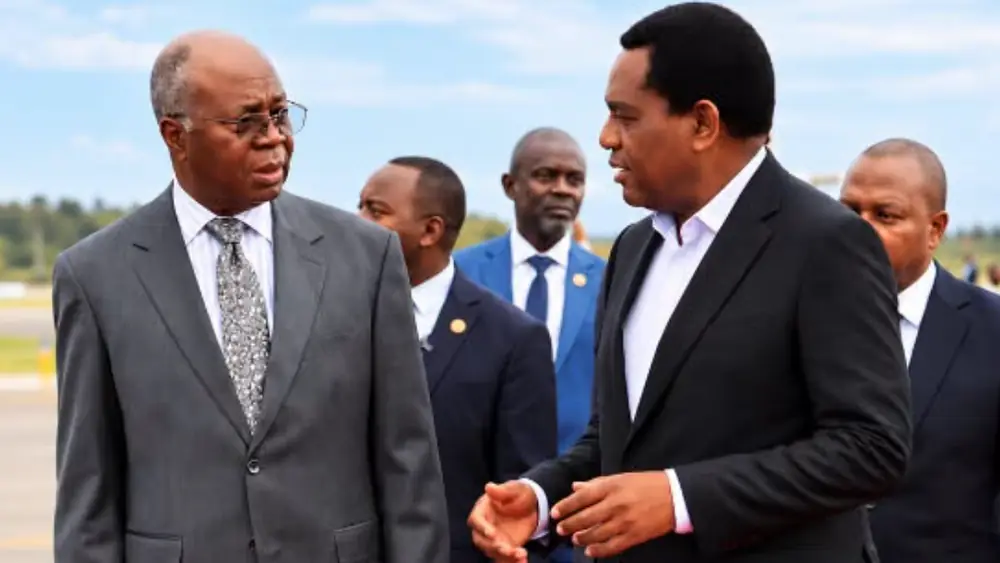
President Hakainde Hichilema is back in Lusaka with US$2.14 billion in signed memoranda from the United Arab Emirates. Finance Minister Dr Situmbeko Musokotwane, among the officials who met him on the tarmac, has already named the harder job: turning paper into projects, exports and jobs.
KEY TAKEAWAYS
- President Hichilema returned to Kenneth Kaunda International Airport on 1 October 2026 after a two-day working visit to Abu Dhabi, his first foreign trip since re-election in August.
- Zambian and Emirati parties signed memoranda of understanding (MoUs) worth US$2.14 billion at a Zambia-UAE business forum on 29 September; government says more commitments could be finalised.
- Dr Musokotwane said the economic ministries must now convert the agreements into “bankable projects, increased production, stronger exports, expanding businesses, more jobs, and higher incomes.”
- An MoU is a statement of intent, not committed capital. The figures to track are financial close, construction starts, export earnings and formal jobs, not the headline total.
- Both governments still want a Comprehensive Economic Partnership Agreement (CEPA) to lower barriers on goods, services and investment.
Zambia’s Treasury has set itself a measurable test for the United Arab Emirates trip: the US$2.14 billion in memoranda signed in Abu Dhabi will count only when they become financed projects that produce, export and hire. That was the message from Finance and National Planning Minister Dr Situmbeko Musokotwane after he joined other government officials in welcoming President Hakainde Hichilema home on Thursday afternoon.
“For us in the economic sector, the next task is to convert these agreements and investor commitments into bankable projects, increased production, stronger exports, expanding businesses, more jobs, and higher incomes for our people,” Dr Musokotwane said in a statement. The Grow Zambia Agenda, he added, should “ultimately be measured by the opportunities it creates and the tangible improvements it delivers in the lives of ordinary Zambians.”
It is an unusually specific yardstick for a welcome-home message, and it puts the burden of proof on the ministries he leads alongside the Zambia Development Agency and line ministries in mining, energy and agriculture.
What came back from Abu Dhabi?
The President held talks with UAE President Sheikh Mohamed bin Zayed Al Nahyan at the Presidential Palace on 29 September, addressed a Zambia-UAE business and investment forum, met Emirati investors and spoke to Zambians living in the Gulf state. We covered his arrival and the visit programme, his meeting with Mopani co-owner IRH and the bilateral talks as they happened.
Dr Musokotwane listed the sectors the engagements covered: energy, mining and mineral value addition, agriculture, infrastructure, transport and logistics, healthcare and the digital economy. Lusaka Times reported on the President’s return that the US$2.14 billion figure could rise, with further investments expected to be finalised after the trip. Neither government has yet published a project-by-project breakdown of the memoranda.
| Item | Figure or status | Source |
|---|---|---|
| MoUs signed at Abu Dhabi business forum | US$2.14 billion | Lusaka Times, Zambian Observer (29 Sept 2026) |
| Zambia-UAE non-oil trade, 2025 | US$3.4 billion, up 64.5% on 2024 | UAE Ministry of Foreign Trade, via WAM (Feb 2026) |
| IRH stake in Mopani Copper Mines | 51%, deal valued at US$1.1 billion (2024) | IRH, ZCCM-IH |
| Comprehensive Economic Partnership Agreement | Under negotiation | State House, UAE officials |
| Project-level breakdown of the MoUs | Not yet published | None available at time of writing |
Why is an MoU not yet an investment?
A memorandum of understanding records that two parties intend to do business. It rarely commits money, sets a price or fixes a construction date. Between the signature and a working mine, farm or power plant sit feasibility studies, environmental approvals, land, licences, offtake or power purchase agreements, and finally the loan and equity documents that bring a project to financial close.
Each step can take months, and some take years. Energy projects need a buyer for the power, which in Zambia usually means ZESCO, and a tariff that the Energy Regulation Board will approve. Mining projects need licences from the Ministry of Mines and, from 2026, plans that meet the local content rules the President raised with IRH in Abu Dhabi. Agriculture projects need secure land and water rights.
Dr Musokotwane’s phrase “bankable projects” is the right test. A project is bankable when lenders will finance it: the revenue is predictable, the risks are allocated and the paperwork is complete. Until then, the US$2.14 billion is a pipeline, not a capital inflow.
How will Zambians know if the deals are working?
The headline number will not tell you. Four indicators will:
- Financial close. How many of the memoranda turn into signed financing agreements within 12 to 24 months, and for how much.
- Foreign direct investment inflows. The Bank of Zambia’s balance of payments data will show whether Emirati capital actually arrives.
- Exports. Zambia Statistics Agency trade figures will show whether new production reaches regional and Gulf markets, beyond copper and gold.
- Formal jobs. Employment registered with NAPSA and the Ministry of Labour in the sectors named in the agreements.
Government could make that tracking easier by publishing the list of signed memoranda, with the counterpart, sector and indicative value of each, and reporting progress against it every quarter. The Zambia Development Agency already records investment pledges; a public tracker would let investors, lenders and citizens see which projects are moving.
The trade figure that does not match
There is a smaller story inside the bigger one. Lusaka Times noted during the visit that UAE records show higher imports from Zambia than Zambia reports as exports to the UAE, and that gold accounts for most of the gap. Mismatched trade data between two partners is common, often because of timing, valuation or goods routed through third countries. But where gold is involved, the difference can also point to metal leaving Zambia outside the formal, taxed channel.
A CEPA, or any closer customs cooperation that comes with it, gives both governments a reason to reconcile those figures. For the Treasury, that matters: gold that is recorded is gold that pays royalties and brings foreign exchange through the banking system.
What it means for business, investors and households
For Zambian businesses
The sectors in the memoranda are where supply contracts will appear first: construction, transport and logistics, engineering services, agro-processing and healthcare supplies. Under the local content law, large investors in mining in particular must buy a rising share of goods and services from Zambian-owned firms. Companies that are registered, compliant and visible will be better placed when procurement starts.
For investors
The UAE is now one of Zambia’s larger capital partners, and the Mopani transaction gives Abu Dhabi a direct stake in the Copperbelt’s performance. The questions to watch are whether the CEPA is concluded and on what terms, and whether the policy stability Dr Musokotwane has stressed since his reappointment holds through the 2027 budget cycle.
For households
Nothing changes in a household budget because an MoU was signed. Change comes when a project hires workers, buys from local suppliers and pays taxes. That is the measure the minister set, and it is the one this publication will apply as the agreements move, or fail to move, over the next two years.
The bottom line
The Abu Dhabi trip delivered intent worth US$2.14 billion and kept trade negotiations alive. Whether it delivers growth depends on work that starts now in Lusaka: project preparation, approvals, financing and honest reporting of what reaches financial close. Dr Musokotwane closed his statement on that point: “The work of turning these opportunities into results continues.”
More on Zambia’s economic diplomacy: Economic Diplomacy and Zambia in the Global Economy (hub). Related: Hichilema Tours Zayed National Museum, Points to UAE’s Lesson; Musokotwane Pivots Zambia Toward Export-Led Growth; Mapping the Copper FDI Pipeline; Beyond Copper: How Economic Diplomacy Can Drive Diversification; Hichilema’s Second Term: What It Means for Zambia’s Economy.
Supplying the sectors in these agreements? List your business in The Zambian Economist Directory so investors and procurement teams can find you. Get the weekly economic briefing in your inbox: subscribe to The Ledger.
WARNING! All rights reserved. This material and all other digital content on this website may not be reproduced, published, broadcast, rewritten, or redistributed, in whole or in part, without the prior express permission of The Zambian Economist. Where permission is granted, the content must be clearly credited to “The Zambian Economist,” with “www.zambianeconomist.com” prominently displayed.
WhatsApp: +260775574228 | Email: info@zambianeconomist.com
© 2026 The Zambian Economist.