
Cabinet has set the direction for Zambia’s 2027 budget: faster growth and investment in people, financed through stronger revenue collection while keeping borrowing under control.
Key takeaways
- The approved Budget Policy Concept Paper will guide the 2027 Annual Budget and the 2027-2029 Medium-Term Budget Plan.
- Cabinet wants growth that creates jobs, single-digit inflation, a stable exchange rate and reserves above three months of import cover.
- Stronger tax compliance and a broader tax base are intended to help reduce deficits while supporting human capital development.
- The announcement sets priorities but does not specify new tax rates, ministry allocations or a numerical deficit target.
Cabinet has approved the Budget Policy Concept Paper to guide Zambia’s 2027 budget and the 2027-2029 Medium-Term Budget Plan, placing economic growth and human capital development at the centre of its spending priorities.
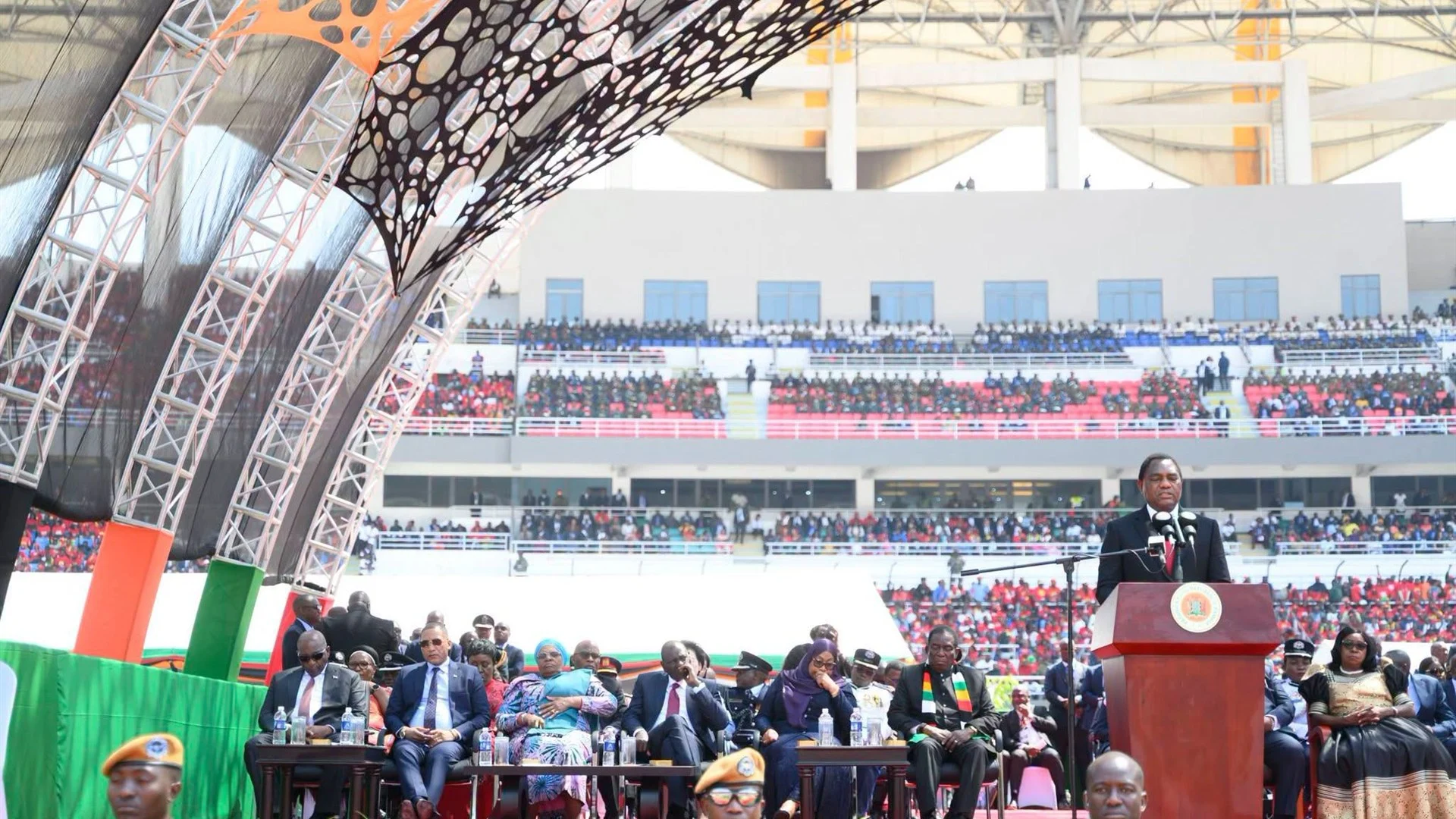
According to the Cabinet Office statement, the decisions were taken at the first Cabinet meeting of President Hakainde Hichilema’s second term. The policy is intended to advance the Grow Zambia Agenda and improve living standards through growth across the economy.
The difficult part will be paying for that ambition. Cabinet has also committed to reducing budget deficits and maintaining debt sustainability, putting domestic revenue collection at the centre of the funding strategy.
What are Zambia’s 2027 budget priorities?
The macroeconomic objectives include higher growth that can withstand shocks and create employment, inflation in single digits and exchange rate stability. Government also intends to keep international reserves above three months of import cover.
Human capital development remains a central priority. The announcement does not give allocations for education, health or skills programmes, so the scale of the commitment will become clearer when detailed spending proposals are published.
The policy direction follows Finance Minister Situmbeko Musokotwane’s call to move from stabilisation towards production and investment. Cabinet’s decision brings that growth agenda into the budget preparation process.
Does this mean higher taxes?
The announcement does not specify new tax rates. Cabinet’s stated approach is to broaden the tax base, improve compliance through digital systems and make tax administration more efficient.
Broadening the base can mean collecting revenue from economic activity that is currently outside effective taxation. The eventual measures will determine which businesses and households face a change in their obligations. It would be premature to read this statement as an increase in PAYE, VAT or any particular levy.
For smaller firms, the practical issue is how digital compliance works in daily trading: the time needed to keep records, the reliability of systems and the cost of meeting requirements. Better collection can help fund services, but implementation will determine whether it also reduces the administrative burden on businesses already paying their taxes.
Our Zambia tax hub explains the existing framework. The 2027 policy announcement should be read separately from rules already in force.
Why fiscal discipline still matters
Government plans to pursue concessional and climate-related financing while increasing domestic revenue mobilisation. Concessional loans generally offer more favourable terms than commercial borrowing, but they still create repayment obligations. Climate finance can include loans as well as grants; the terms of each agreement matter.
The backdrop is Zambia’s continuing debt repair. In its January 2026 programme review, the IMF assessed public debt as sustainable but still at high risk of distress. It made further improvement conditional on continued fiscal consolidation.
By its 14 May staff statement, the Fund was warning of renewed fiscal pressure and weaker revenue collection. It projected a 2026 primary surplus of 1.1% of GDP, down from 3.8% at the earlier review. Those were projections published in May, not final outcomes. A primary balance excludes interest payments and should not be confused with the overall budget balance.
That history explains the constraint facing the Treasury: additional spending commitments need credible revenue or affordable financing behind them. A growth agenda without a funding plan would put the stability it depends on at risk.
What the targets mean for households and businesses
Single-digit inflation does not mean prices fall
Lower inflation means prices rise more slowly. It does not, by itself, reverse earlier increases in the cost of food, transport or rent. For households, the more useful test is whether earnings and access to public services improve alongside price stability.
Reserves provide a buffer, not a fixed kwacha rate
Import cover expresses reserves in months of imports. Keeping reserves above three months would provide a cushion against external shocks, but the target is not a guarantee that the exchange rate will remain unchanged.
For context, the IMF’s May statement reported reserves equivalent to 4.4 months of prospective imports. Cabinet’s threshold should therefore be understood as a minimum objective, rather than evidence that reserves have fallen to three months. Comparisons also depend on the import measure and reporting date used.
Importers and manufacturers will be watching whether currency stability makes input costs easier to plan. Investors will need the detailed budget to assess sector incentives, public investment commitments and the government’s borrowing requirements.
Climate resilience enters the spending process
Cabinet has directed that climate-resilient projects be integrated into planning and budgeting, covering adaptation, mitigation and environmental sustainability.
For Zambia, the budget implications extend to electricity supply and agriculture. Projects that reduce exposure to drought or flooding could help limit future emergency spending and production losses. The announcement does not name projects or assign funding, however, so it creates no confirmed contract pipeline for suppliers.
What to watch in the budget documents
The next test is the detail: revenue measures, ministry allocations and the borrowing plan. These will show how government intends to fund human capital development while narrowing the deficit, and which climate projects receive actual resources.
Cabinet has called on public service employees and citizens to support the Grow Zambia Agenda. Its credibility will ultimately rest on funded programmes, published results and improvements people can see in their incomes and services.
Explore our Business & Economy hub and Macroeconomy & Policy coverage. Related: Hichilema’s first four ministerial appointments.
For more reporting, subscribe to The Ledger. Find events, read about the publication or contact us.
WARNING! All rights reserved. This material and all other digital content on this website may not be reproduced, published, broadcast, rewritten, or redistributed, in whole or in part, without the prior express permission of The Zambian Economist. Where permission is granted, the content must be clearly credited to “The Zambian Economist,” with “www.zambianeconomist.com” prominently displayed.
WhatsApp: +260775574228 | Email: info@zambianeconomist.com
© 2026 The Zambian Economist.
Work With The Zambian Economist
Update: Musokotwane Pivots Zambia Toward Export-Led Growth as Jobs and Investment Take Centre Stage, from his 20 September ZNBC Sunday Interview.
Related: Acting Auditor General Malaila Calls for Prudent Budgeting to Protect Core Audit Work.
Related: Zambia’s 2027 Budget: K271.9 Billion to Spend, but Only K6.9 Billion Left for Other Programmes