The reserved seats for women, youths and persons with disabilities are a welcome step. The rules Parliament wrote to fill them deserve far closer scrutiny.
Guest analysis by Lewis Chingi, who writes from Kitwe. Edited and published by The Zambian Economist.
- The Constitution of Zambia (Amendment) Act No. 13 of 2025 added 40 seats to the National Assembly: 20 for women, 15 for youths and 5 for persons with disabilities, all filled through proportional representation.
- The Electoral Process (Amendment) Act No. 12 of 2026 set the rules, and they were used for the first time in the August 2026 general election.
- Kitwe analyst Lewis Chingi, who supports the seats themselves, argues the machinery weakens the promise: parties without a presidential candidate get nothing, votes for independent presidential candidates disappear from the calculation, and party lists are drawn up only after the results are known.
- Only two parties qualified for reserved seats in 2026, and the party that won the presidency collected most of them on top of its constituency seats.
- He proposes seven reforms, including prepublished party lists, counting every valid vote, and replacing recall “at any time” with defined grounds and a fair process.
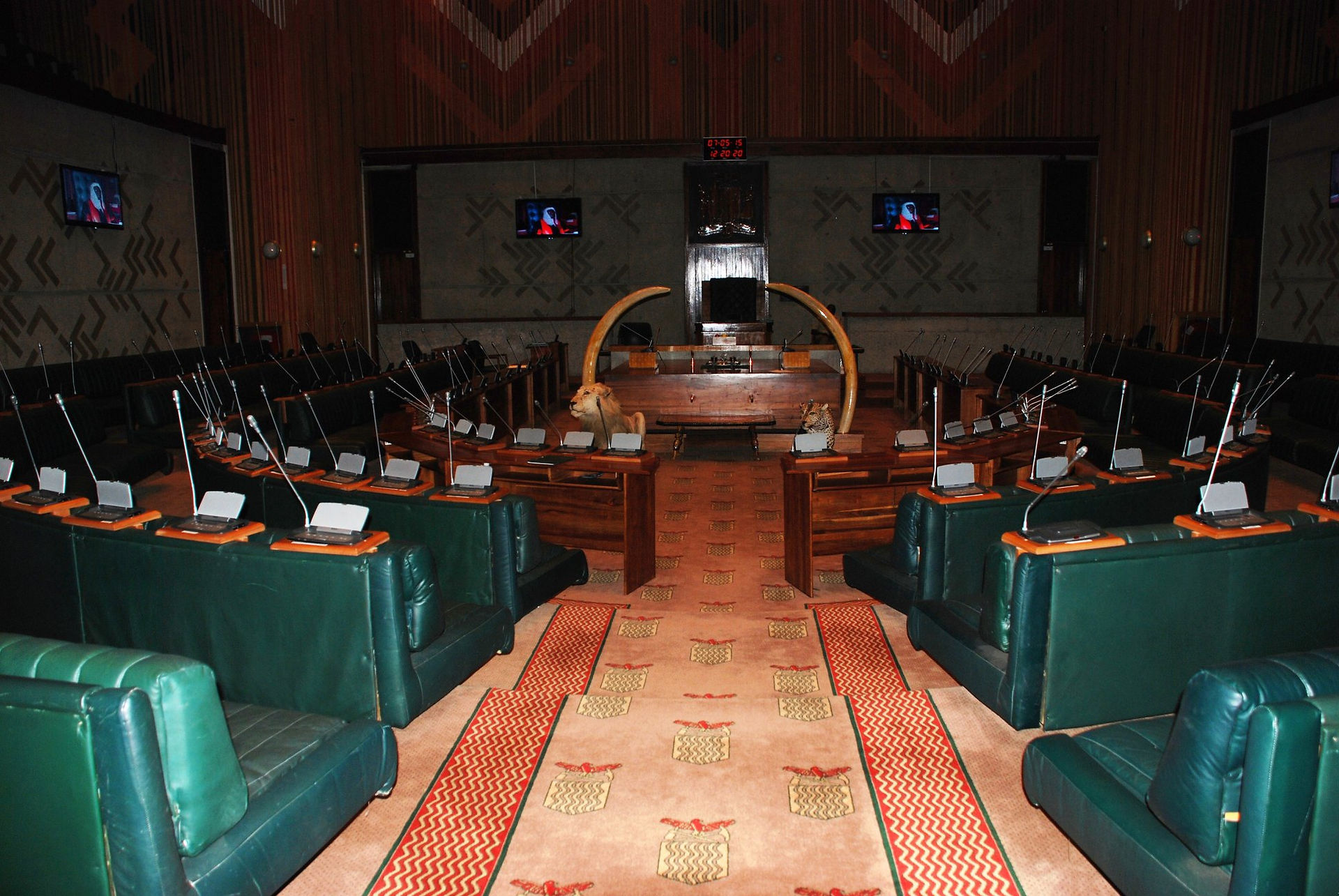
In December 2025, the Constitution of Zambia (Amendment) Act No. 13 of 2025 created 40 new seats in the National Assembly: 20 for women, 15 for youths and 5 for persons with disabilities, all filled through proportional representation. In May 2026, Parliament passed the Electoral Process (Amendment) Act No. 12 of 2026 to put that promise into practice, and the system was used for the first time in the August 2026 general election.
“I support the aim. These groups have been under-represented in our Parliament for too long and guaranteeing them a place is a step forward,” Chingi writes. “But I have read the new Act closely, and I am concerned that the detailed rules undermine the very purpose the seats were created to serve. A good idea can be weakened by its machinery.”
No presidential candidate, no seats
Under section 36A of the Act, a party can only receive proportional representation seats if it fields a candidate for President. A party that is strong in one region but has no realistic presidential hopeful must either put up a token candidate simply to qualify or give up any share of the 40 seats. The rule pushes small parties into presidential races they cannot win and punishes those that choose to concentrate on Parliament.
Votes that count for nothing
When the seats are calculated, the Act counts only the votes of presidential candidates whose parties qualify. Votes cast for an independent presidential candidate are removed from the calculation altogether. Those voters’ choices count for nothing in the allocation, and the parties share the seats among themselves as if those votes had never been cast. Article 47(4) of the Constitution speaks of seats distributed in proportion to the “total number of valid votes received by a presidential candidate.” It is at least arguable that an Act which shrinks that total departs from the constitutional formula. “So, I dare ask, does it remain constitutional?” Chingi writes.
A barrier small parties cannot climb
To win a seat in any category, a party must reach a full quota of votes in that category. Because there are only five seats for persons with disabilities, the quota for those seats is one fifth of the counted vote. A party with 19 per cent of the vote receives no disability seat at all, and the leftover seats flow to the largest parties. The fewer the seats in a category, the higher the barrier. This is a threshold in all but name, and it is nowhere stated plainly.
The winner takes more
Because the seats follow the presidential vote and ignore constituency results, the party that wins the presidency also collects most of the proportional seats, on top of the constituency seats it has already won. Rather than balancing Parliament, the system can make a large majority larger. In 2026, only two parties qualified for any proportional representation seats at all.
Voting for names you cannot see
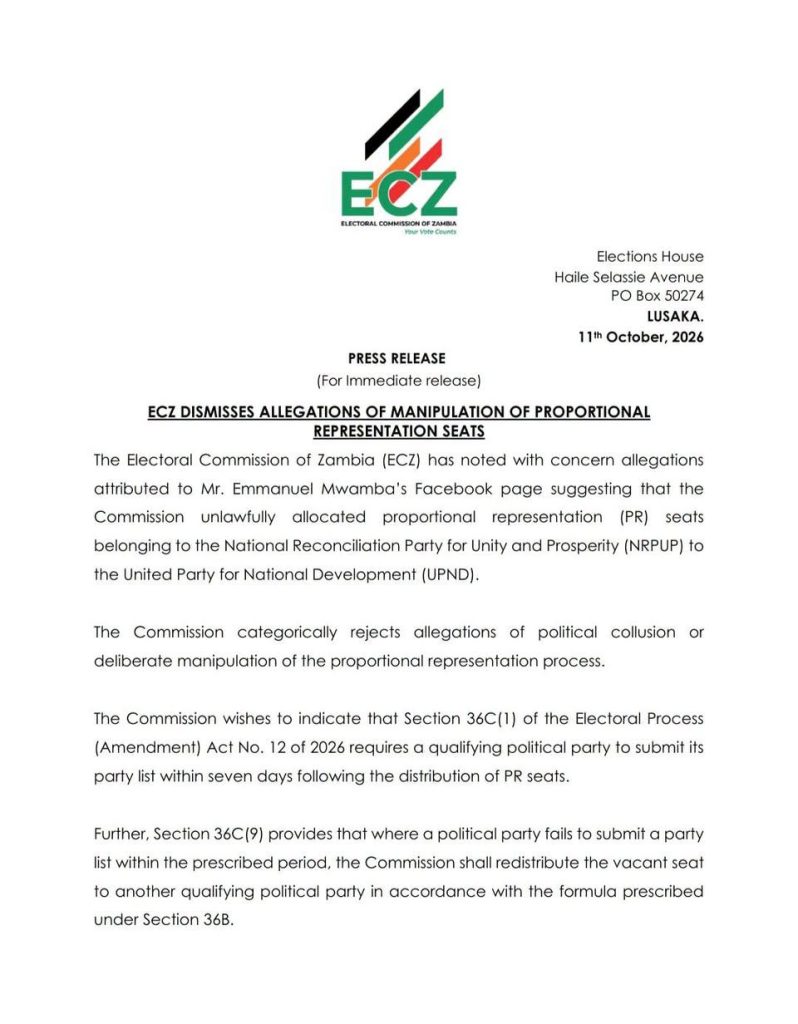
Parties submit their lists after the election, within seven days of the seats being shared out. Voters therefore choose a presidential candidate without knowing which women, youths or persons with disabilities that vote will send to Parliament. The names are decided by party leaders once the results are known. In a democracy, voters should know whom they are electing before they vote, not after.
Seats in the gift of party leaders
Party lists must be signed by the party president and secretary-general. Nothing in the Act requires internal party elections or any open selection process. There is a real risk that seats meant to empower women, youths and persons with disabilities become rewards for loyalty to those at the top of the party.
An MP who can be removed at any time
Section 36H(2) allows a party to recall its proportional representation MP “at any time” during the term of Parliament. An MP who disagrees with party leaders, or votes according to conscience, can simply be replaced. The irony is hard to miss: the people these seats were designed to empower are the MPs with the least security in the House. Article 72 of the Constitution sets out the grounds on which an MP’s seat falls vacant, and whether an ordinary Act of Parliament can add a new ground of its own is a question that may yet need to be answered by the courts.
Youth, but only under thirty
Candidates for youth seats must remain youths “for the entire duration” of the term. With the youth age limit at 35 and a five-year term, anyone over about 30 at the time of the election is effectively excluded. A young person of 32, by any ordinary measure still a youth, cannot be listed.
Disability seats behind paperwork
Candidates for disability seats must hold a certificate of registration under the Persons with Disabilities Act. Those who have never registered, often people in rural areas with the least access to public services, cannot be nominated at all.
A formula written backwards
Step three of the formula in the Act instructs the Commission to divide the quota by the number of votes received. That is the wrong way round: the worked example printed in the same Act divides the votes by the quota, which is the correct method. A court would most likely follow the example, but a written error in the law of elections invites disputes, especially after a close result.
What the Act gets right
In fairness, the system has defenders, and their arguments deserve hearing. For the first time, 40 seats are guaranteed for groups that have historically struggled to win constituency elections. Tying the seats to the presidential vote rewards parties with national reach rather than purely regional bases. A single national vote total is quick to calculate and difficult to manipulate. And recall powers prevent an MP from taking a seat on a party’s ticket and then abandoning that party. These are real benefits. The question is whether they justify the costs.
What should change
- Require parties to publish their lists before the election, so that voters know whom they are electing.
- Count every valid vote in the allocation, or state clearly in the Constitution how votes for independent candidates are to be treated.
- Remove the full-quota barrier and allow all qualifying parties to compete for remaining seats by their largest remainders.
- Replace recall “at any time” with defined grounds and a fair process, so that reserved-seat MPs can serve with independence.
- Test youth eligibility at the date of nomination, not across the whole five-year term.
- Correct the wording of the formula so that the law says what its own example shows.
- Consider, through a future constitutional amendment, letting parties qualify by their national parliamentary vote rather than only through a presidential candidate. Because Article 47(4) fixes the presidential measure in the Constitution itself, this change would require Parliament to act under Article 79.
“Representation is not only a matter of numbers. It is about whether those who sit in Parliament are chosen openly, can speak freely, and answer the people they represent,” Chingi concludes. “The 40 seats reserved can become a lasting achievement for our democracy, but only if the rules that fill them are as fair as the idea behind them.”
WARNING! All rights reserved. This material and all other digital content on this website may not be reproduced, published, broadcast, rewritten, or redistributed, in whole or in part, without the prior express permission of The Zambian Economist. Where permission is granted, the content must be clearly credited to “The Zambian Economist,” with “www.zambianeconomist.com” prominently displayed.
WhatsApp: +260775574228 | Email: info@zambianeconomist.com © 2026 The Zambian Economist.
Work With The Zambian Economist: Advertise With Us | List With Us | Submit an Article