Zambia’s tourism operators know exactly what can go wrong. Very few have planned for it. A new University of Zambia study sets out a national model to close that gap.
KEY TAKEAWAYS
- A survey of 137 tourism stakeholders found high awareness of crisis risk (4.58 out of 5) but weak preparedness (2.98), a gap of 1.60 points.
- Only 23% of domestic private operators and 12% of community-based tourism organisations have a formal crisis plan.
- Early warning systems scored lowest of all governance measures, and 87% of qualitative respondents named institutional fragmentation as the main problem.
- The proposed Zambia Crisis Management and Resilience Model (Z-CMRM) has five components, rolled out in three phases over seven years, anchored by a National Tourism Crisis Coordination Centre.
Ask anyone running a lodge in Livingstone or a camp in South Luangwa what could sink their business, and they will give you a list without pausing. Drought. Load-shedding. A pandemic. A currency shock that doubles the cost of imported supplies overnight. Ask the same person to show you a written crisis plan, and in most cases there is nothing to show.
That contradiction sits at the centre of research my colleagues Norman Kachamba, Chaste Nsama and I have published in Science Mundi. We call it the awareness and preparedness paradox, and it explains a great deal about why Zambia’s tourism sector was hit so hard in 2020 and why it remains exposed today.
What COVID-19 exposed
The pandemic was the most severe test the sector has faced in recent memory. International arrivals fell by 75% in 2020. Revenue losses were estimated at around US$800 million, and about 80% of tourism jobs were put at risk, according to World Bank and World Travel and Tourism Council figures cited in the study.
The damage was made worse by gaps that existed before the virus arrived. There were no established channels linking the Ministry of Tourism, the Zambia Tourism Agency, the Disaster Management and Mitigation Unit and tourism businesses, so the first weeks were an information vacuum. Enterprises had no financial buffer. Safety rules differed from one operator to the next, which confused visitors. Few businesses had continuity plans, so restarting was slow. And weak digital infrastructure left Zambian operators behind competitors in better-connected markets.
What 137 stakeholders told us
We surveyed and interviewed 137 people across government institutions, private operators, community organisations, NGOs and tourists in Livingstone, Lusaka, South Luangwa National Park and Kafue National Park.
The numbers tell a consistent story. Crisis awareness averaged 4.58 on a five-point scale. Support for resilience building averaged 3.97. But actual preparedness capacity averaged just 2.98, and the quality of policy and governance 2.88.
The weakest individual scores point to where the work needs to start. Availability of early warning systems scored 2.52. Simulation drills scored 2.11, financial reserves 2.24 and insurance coverage 2.28. Only 23% of domestic private operators had a formal crisis plan. Among community-based tourism organisations, the figure was 12%.
The qualitative evidence explains why. Eighty-seven per cent of respondents identified fragmentation between institutions as the main structural challenge. Each organisation prepares, or fails to prepare, on its own.
Tourists notice. Seventy-three per cent said information about crisis preparedness affects whether they would return to a destination. Visitors also want what the sector says it values: 84% prefer operators that support local communities, and 79% prefer those with a clear environmental commitment.
A model built for Zambian conditions
Most tourism crisis frameworks were designed in Europe, North America, Australia and East Asia. They assume clear institutional mandates, deep budgets and a single dominant risk. Zambia has none of these. Our risks compound one another: climate shocks, energy insecurity, disease and economic volatility can arrive together. Institutions are stretched. Community-based tourism carries economic and conservation weight that commercial models rarely account for.
The Zambia Crisis Management and Resilience Model (Z-CMRM) is built around five linked components.
Information and early warning. A national tourism crisis dashboard would draw on data the country already collects: the Zambia Meteorological Department for climate risk, ZESCO and the Energy Regulation Board for power supply, the Ministry of Health for disease outbreaks and the Bank of Zambia for macroeconomic indicators. A low-bandwidth mobile and SMS alert system would issue three levels of message: early warning, threat and all clear.
Preparedness and capacity. Crisis planning would become a regulatory requirement, scaled to the size of the business. A small lodge with fewer than 20 beds would keep a simple plan, while large operators would meet international standards and face Zambia Tourism Agency audit. A Tourism Crisis Resilience Fund, a pooled insurance scheme and an emergency credit facility would address the weak reserves and insurance cover the survey found.
Response and coordination. A National Tourism Crisis Coordination Centre, set up by statutory instrument, would give the sector the permanent coordinating body it lacks. Its board would bring together the Ministry of Tourism, the Zambia Tourism Agency, the Disaster Management and Mitigation Unit, private operators, community organisations and independent experts. Standard response protocols would cover natural disasters, pandemics, energy crises and economic shocks.
Recovery and business continuity. Enterprise plans would include staff reactivation, supplier management and cash flow measures. At destination level, a ready-made recovery marketing playbook would let Zambia tell source markets quickly and credibly that it is safe and open.
Mitigation and long-term resilience. A share of tourism revenue would go to a Tourism Conservation Endowment Fund for habitat, wildlife corridors and climate adaptation. A renewable energy programme would aim for 80% of registered tourism businesses to have primary or backup solar and battery capacity within ten years, a direct answer to the disruption load-shedding causes. A dedicated programme for community-based tourism would aim to raise its crisis-plan rate from 12% to 70% within five years.
Seven years, three phases
The model does not try to do everything at once. In years one and two, the focus is institutional: establish the coordination centre, draft the planning regulations, capitalise the resilience fund and launch a first early warning system. Years two to four build capacity, with targets of at least 60% of private operators holding formal plans, 30% using renewable energy and 70% of staff trained. Years four to seven integrate tourism into national disaster management planning and bring the preparedness and governance scores up to the levels the sector already says it wants.
Progress would be tracked with the same survey instrument used in the study, so the 1.60-point awareness and preparedness gap becomes a number that can be measured every year.
What government should do now
We make five recommendations. The Ministry of Tourism should adopt the Z-CMRM as the national tourism crisis management framework through a ministerial directive or Cabinet memorandum. The Ministry of Finance should provide budget lines for the first phase, with co-financing sought from the African Development Bank, UNDP and bilateral partners. The Zambia Tourism Agency should treat the coordination centre as its first institutional reform priority. The Ministry should commission a legislative review to make crisis planning mandatory and create the conservation endowment. And development partners working on tourism and disaster management should align their programmes with one national framework rather than funding parallel efforts.
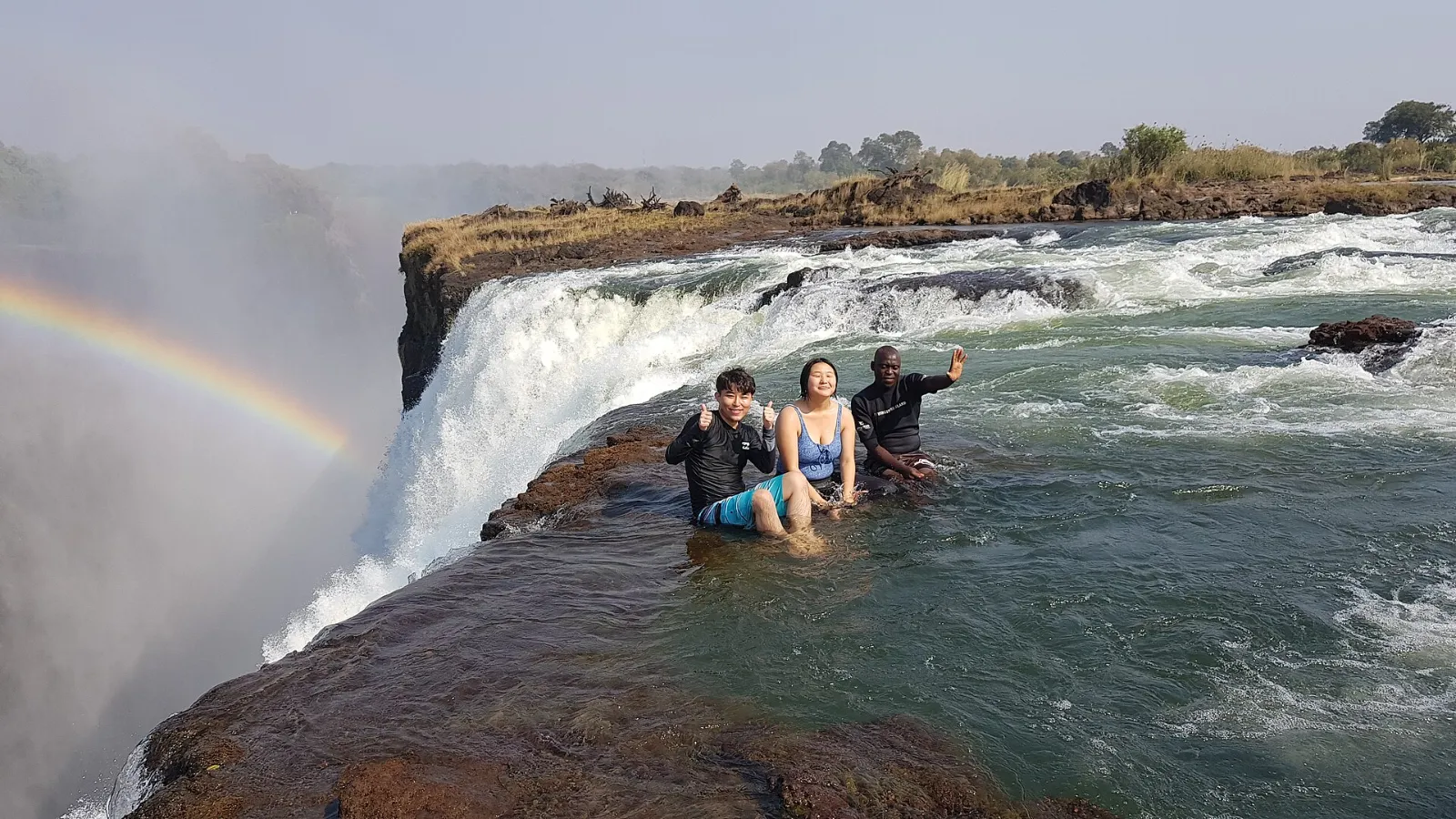
Zambia’s tourism assets are not going anywhere. The Victoria Falls, the Luangwa and the Kafue will still draw visitors after the next drought or power crisis. The question is whether the businesses and communities that depend on them will still be standing when the visitors come back. The evidence says most are not yet ready. The model shows how they could be.
Related coverage: Lusaka Mayor Takes City Tourism Pitch to Global Summit in Busan | Kangombe Returns to Energy, Water and Tourism Committee | Super El Niño Makes African Cities Sweat

Dr Bruce Ernest is a researcher at the University of Zambia. This article is based on Ernest, B., Kachamba, N. and Nsama, C. (2026), “The Zambia crisis management and resilience model (Z-CMRM): Developing and validating a context-specific framework for sustainable tourism resilience”, Science Mundi, 6(1), 269 to 276. https://doi.org/10.51867/scimundi.6.1.24
WARNING! All rights reserved. This material and all other digital content on this website may not be reproduced, published, broadcast, rewritten, or redistributed, in whole or in part, without the prior express permission of The Zambian Economist. Where permission is granted, the content must be clearly credited to “The Zambian Economist,” with “www.zambianeconomist.com” prominently displayed.
WhatsApp: +260775574228 | Email: info@zambianeconomist.com
© 2026 The Zambian Economist.