President Hichilema’s second-term programme promises 3 million tonnes of copper, 10 million tonnes of maize and 10,000 megawatts of electricity by 2031, in an effort to more than double the size of the economy. The arithmetic is demanding, and an IMF staff-level agreement announced on 9 October now sets the fiscal boundaries within which the agenda has to be delivered.
KEY TAKEAWAYS
- The Grow Zambia Agenda is President Hakainde Hichilema’s plan to more than double the size of Zambia’s economy by 2031, built on eight production targets compressed into the code 10-10-5-3-3-1-1-1.
- The IMF announced a staff-level agreement on 9 October 2026 for a new three-year credit facility worth about US$1.47 billion, saying the programme builds on the agenda while requiring a primary surplus of 3 percent of GDP by 2029.
- Copper, the agenda’s revenue engine, must climb from 890,346 tonnes in 2025 to 3 million tonnes by 2031. Output in the first half of 2026 grew 0.45 percent.
- Agriculture is the closest to target: maize output is forecast at a record 4.9 million tonnes this season against a 10 million tonne goal.
- Finance Minister Situmbeko Musokotwane has set the agenda’s own test: whether growth translates into jobs and household income, not headline tonnage.
By The Zambian Economist Analyst | 9 October 2026
Zambia’s economy has grown at an average of 5.2 percent between 2021 and 2024, inflation has fallen back inside the Bank of Zambia’s 6 to 8 percent band, and a new IMF programme is on the table. The question the Grow Zambia Agenda tries to answer is what the country does with that stability. Announced in full at President Hakainde Hichilema’s second-term inauguration on 1 September 2026, the agenda sets eight production targets with a single deadline: 2031, by which point government wants the economy to be more than twice its current size, with an estimated additional US$65 billion in annual output.
What the Grow Zambia Agenda actually is
The Ministry of Finance first set out the framework at a strategic visioning briefing on 17 September 2025, when Finance Minister Situmbeko Musokotwane presented the production code that governs the whole programme: 10-10-5-3-3-1-1-1. Each number is a target. President Hichilema repeated the same numbers at the official opening of Parliament this week, a speech we examined here.
- 10 million tonnes of maize
- 10,000 megawatts of installed electricity
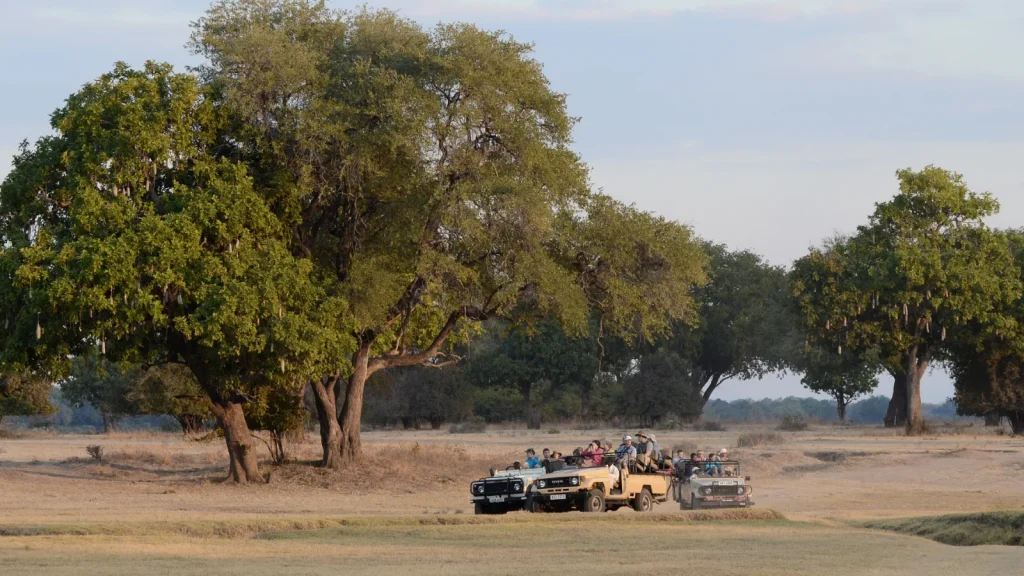
- 5 million tourist arrivals a year
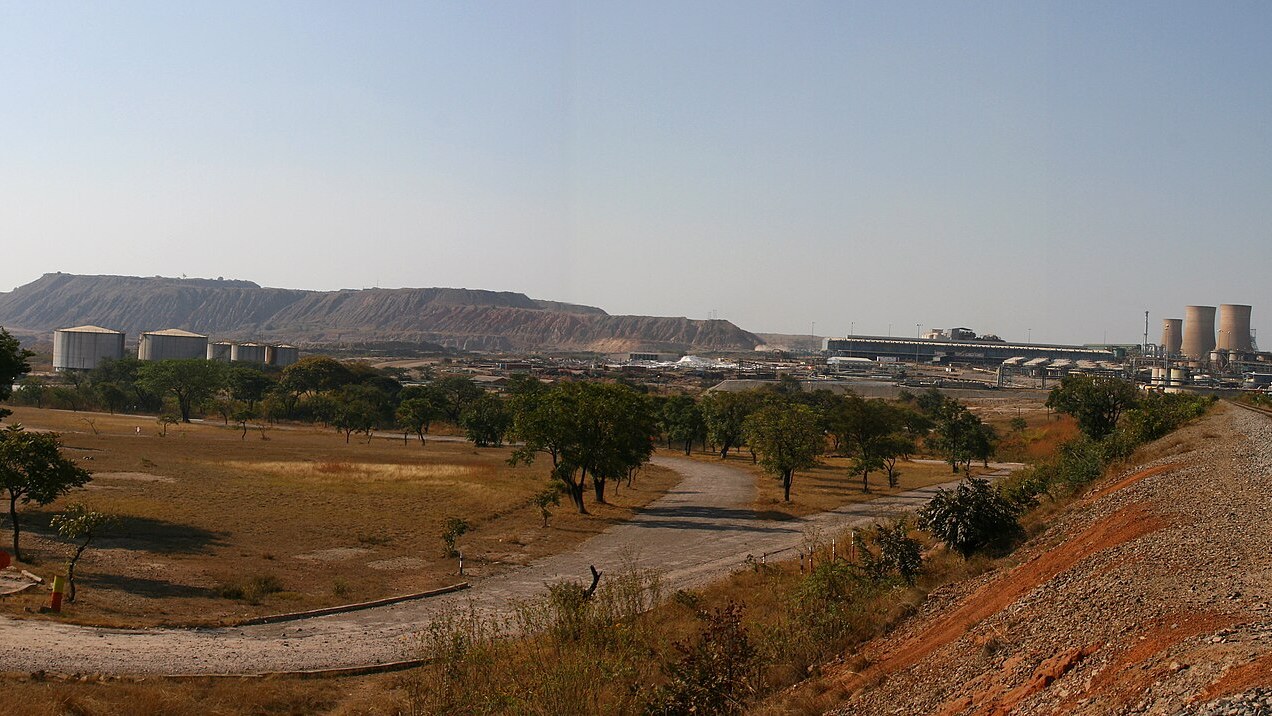
- 3 million tonnes of copper a year
- 3 million tonnes of soya beans
- 1 million tonnes of wheat
- 1 million tonnes of sugar
- US$1 billion in beef export earnings
The targets sit inside a US$21 billion investment drive covering mining, agriculture, tourism and renewable energy between 2025 and 2030, and a set of growth projections the Ministry of Finance presented to creditors in late September: 6.0 percent in 2027, 7.5 percent in 2028 and 7.1 percent in 2029, according to Reuters. The through-line is export-led growth. Musokotwane told a post-budget forum that the ultimate test of the agenda is whether it delivers jobs and stronger household incomes, a formulation the IMF has since repeated almost word for word.
The eight targets against today’s numbers
| Target | 2031 goal | Latest actual | Gap |
|---|---|---|---|
| Maize | 10 million tonnes | 4.94 million tonnes forecast, 2025/26 season (Ministry of Agriculture) | Just over half |
| Electricity | 10,000 MW installed | 3,986 MW, mid-2025 (US Intl Trade Administration) | 2.5 times current capacity |
| Tourist arrivals | 5 million a year | 2.3 million in 2025 (Zambia Tourism Authority) | 2.2 million more visitors |
| Copper | 3 million tonnes | 890,346 tonnes in 2025 (Ministry of Mines) | 3.4 times current output |
| Soya beans | 3 million tonnes | Roughly 400,000 tonnes in recent seasons | Steep, from a small base |
| Wheat | 1 million tonnes | Roughly 300,000 tonnes | About three times |
| Sugar | 1 million tonnes | Roughly 450,000 tonnes | More than double |
| Beef exports | US$1 billion a year | Under US$50 million | Twenty-fold increase |
Baselines for soya, wheat and sugar are order-of-magnitude figures drawn from Ministry of Agriculture reporting; the maize, copper, power and tourism figures are as cited.
Why the IMF deal matters to the agenda
On 9 October 2026, the IMF announced a staff-level agreement with Zambia on a new Extended Credit Facility worth about US$1.472 billion, or SDR 1,076 million, over three years. The agreement, which still needs Executive Board approval, replaces the 38-month, US$1.3 billion programme that closed with its sixth review in January 2026.
Two parts of the IMF statement bear directly on the Grow Zambia Agenda. First, the Fund said the authorities, building on the agenda, are committed to ensuring growth translates into better jobs and higher incomes, which locks Musokotwane’s own test into the programme’s language. Second, the fiscal path is tight: from 2027, government will gradually raise the primary surplus to 3 percent of GDP by 2029, mainly through stronger domestic revenue mobilisation. In plain terms, the agenda has to be delivered while the budget runs a surplus, not on borrowed money.
The macro backdrop is more favourable than at any point since 2021. The IMF projects real GDP growth of 5.6 percent in 2026, supported by agriculture, mining and exports. Inflation has fallen to 6.1 percent, inside the Bank of Zambia’s target band for the first time in four years. The new facility is also, in part, a repair job: Ecofin Agency reported that it aims to fix an election-year budget that drifted off track in 2026.
Copper: the engine with the biggest gap
Zambia produced 890,346 tonnes of copper in 2025, up 8 percent from 825,513 tonnes in 2024 but short of the government’s one million tonne goal for the year. Output was worth more than US$11 billion. The 2031 target of 3 million tonnes requires output to grow at roughly 22 percent a year for five consecutive years. In the first half of 2026, production of 447,182 tonnes was up 0.45 percent on the same period a year earlier.
The constraints are not mysterious. The Zambia Institute for Policy Analysis and Research, in an assessment of the 3 million tonne goal, identifies the energy deficit as the most pressing constraint; President Hichilema himself has said the country needs about 8,000 megawatts of reliable power to sustain 3 million tonnes of copper. Reuters reported in March that government is courting global investors, including from the United States, to triple output. Transparency International Zambia has warned that expansion at this speed needs capable regulators and transparent licensing decisions to avoid repeating the governance failures that have historically shadowed Copperbelt mining.
Agriculture: the fast start and the anthrax problem
Agriculture is where the agenda can point to results already. The 2024/25 season produced 3,655,646 tonnes of maize, a rebound of about 140 percent from the drought-hit 1.5 million tonnes of 2023/24, according to ZamStats. The 2025/26 crop is forecast at 4.94 million tonnes, which would be a record and has allowed maize exports to resume. Reaching 10 million tonnes still means doubling a record harvest, which points to irrigation and yields rather than rainfall as the decisive variables. Wheat, sugar and soya follow the same logic.
The beef target faces a more immediate threat. The 2026 anthrax outbreak has spread through cattle districts, reaching a sector government is counting on for US$1 billion in annual beef exports. An industry expert quoted by News Diggers on 9 October called the target achievable, with an initial 20,000 tonnes worth about US$200 million as the realistic starting point. The European Union’s recent suspension of Namibian meat imports over foot-and-mouth disease shows how quickly disease can close the very markets the target depends on. We examined the economics of the outbreak here.
Power and tourism: the quieter targets
Zambia’s installed capacity stood at 3,985.86 megawatts in mid-2025, about 85 percent of it hydro, according to the US International Trade Administration. The 10,000 megawatt goal implies adding the equivalent of two Kariba North Banks and change, mostly from solar, wind and the delayed Batoka Gorge project. The 2024 load-shedding crisis, when low water levels at Kariba forced rationing that hit mining output, explains why the power target is as much about protecting the copper target as about electrifying new homes.
Tourism has the clearest trend line: arrivals rose from 554,290 in 2021 to 2.3 million in 2025, and the sector targets 5 million arrivals with US$1 billion in receipts by 2031. That roughly requires doubling arrivals again while raising spending per visitor, which depends on airport capacity at Kenneth Kaunda International, visa policy and lodge investment in Livingstone and the national parks.
What it means for ordinary Zambians
The agenda’s connection to household finances runs through three channels. Jobs: each production target implies hiring, from mine shafts to feedlots, though critics including opposition politicians and civil society have pressed whether these will be jobs that pay formal wages or expanded informal piecework. Prices: a bigger maize and wheat harvest steadies mealie-meal prices, and 10,000 megawatts would end the load-shedding that inflated the cost of doing business in 2024. The exchange rate: more copper and agro exports mean more dollars flowing into the market, which supports the kwacha and, with it, the price of fuel and imported goods.
There is also the tax question. The IMF programme requires a primary surplus built on domestic revenue, which keeps pressure on the Zambia Revenue Authority to collect more from a base that includes a large informal sector. Growth that widens the formal economy would make that arithmetic easier; growth that does not will keep the burden on existing payers. The exchange-rate channel is already visible: copper dollars are the main reason the kwacha has held much of its ground this year, as we analysed here.
Business and investor implications
For businesses, the agenda signals where government attention and public procurement will concentrate over the next five years: agriculture inputs and offtake, power generation and transmission, tourism infrastructure and beef value chains. Suppliers and contractors who position in those lanes are more likely to see policy support and donor co-financing. SMEs should also watch the enterprise support architecture, including schemes such as the MSME graduation programme we covered here.
For investors, the IMF facility reduces balance-of-payments risk and signals exchange-rate discipline through 2029, which matters for anyone repatriating dividends. The copper push needs an estimated US$21 billion of investment across the economy, and government has shown it will court foreign capital to get there. The trade-off is tighter fiscal policy, which limits domestic demand-led plays, and a mining tax regime that must stay predictable if the 3 million tonne target is to be bankable.
Policy implications
The agenda’s credibility rests on execution capacity more than on ambition. Three things will decide it. Power: without at least 8,000 reliable megawatts, the copper target fails and drags the export math with it. Animal health: veterinary containment of anthrax and foot-and-mouth determines whether the beef target survives contact with EU-grade sanitary standards. Fiscal discipline: delivering investment-led growth while running a 3 percent primary surplus means every kwacha of the US$21 billion must largely come from private and concessional sources, not the budget. The 2027 budget, which we analysed here, is the first full test of whether allocations follow the agenda’s own metrics.
Conclusion
The Grow Zambia Agenda is the most quantified economic programme any Zambian government has published: eight numbers, one deadline and an explicit promise to more than double the economy by 2031. The IMF’s endorsement on 9 October, worth about US$1.47 billion, gives it a safety net but also a referee. Maize and tourism are trending in the right direction. Copper, power and beef require transformations, not increments. Musokotwane’s test is the one to hold the programme to: not whether the tonnes are produced, but whether the average Zambian household can feel the difference by the end of the decade.
WARNING! All rights reserved. This material and all other digital content on this website may not be reproduced, published, broadcast, rewritten, or redistributed, in whole or in part, without the prior express permission of The Zambian Economist. Where permission is granted, the content must be clearly credited to “The Zambian Economist,” with “www.zambianeconomist.com” prominently displayed.
WhatsApp: +260775574228 | Email: info@zambianeconomist.com © 2026 The Zambian Economist.
Work With The Zambian Economist: Advertise With Us · List With Us · Submit an Article
Sources
- IMF press release, staff-level agreement on a new ECF, 9 October 2026
- Ministry of Finance and National Planning, Grow Zambia production code briefing
- ZamStats, agricultural production statistics
- ZIPAR, Striking while the iron’s hot: tripling copper output by 2031
- Reuters, Zambia aims to lift economic growth above 7%, 28 September 2026
- News Diggers, US$1bn beef export target achievable, 9 October 2026
- US International Trade Administration, Zambia Energy Country Commercial Guide
Related: Zambia@62: A Self-Funded Independence Week for an Economy Told to Do More With Less.
Related: Our Independence, Our Shared Responsibility: Zambia at 62, on community service and the follow-up needed after Independence Week.