
Key takeaways
- Mines Minister Brenda Tambatamba told the Makutano Mining forum in Kinshasa that African countries should agree common standards for mining and mineral processing, and share information on investment opportunities.
- She urged governments to use the African Continental Free Trade Area to harmonise trade rules and cut tariffs on mineral products traded within Africa.
- Intra-African trade was about US$213.8 billion in 2025, roughly a seventh of Africa’s US$1.5 trillion in merchandise trade, according to Afreximbank.
- The clearest test of her call is next door: the DRC-Zambia battery initiative, signed in 2022, still faces unreliable power, border bottlenecks and a dispute over where a joint precursor plant should go.
- Tambatamba, appointed in October, was standing in for President Hakainde Hichilema at the forum, which DRC President Félix Tshisekedi opened on 23 November.
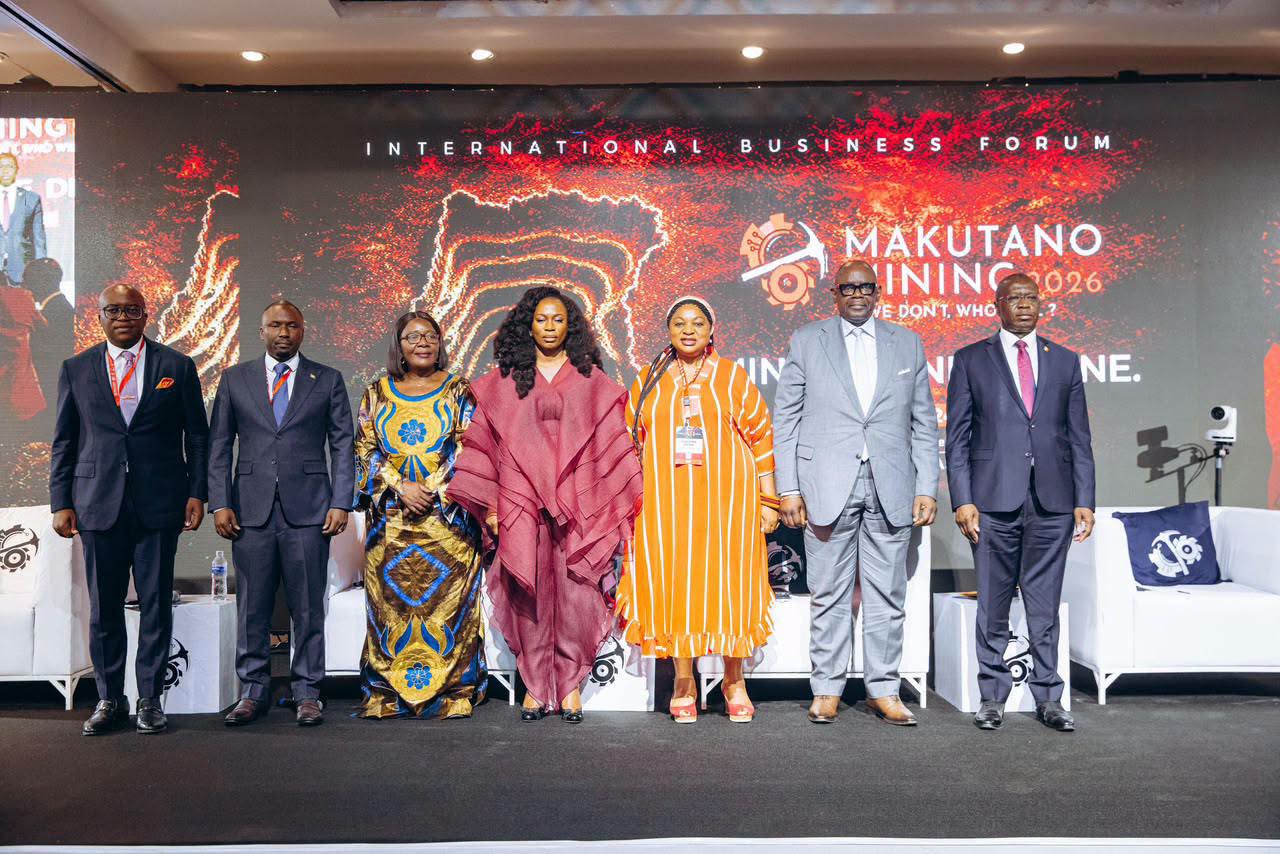
Zambia wants Africa to set common rules for how its minerals are mined and processed, and to trade more of the results among its own members. Mines and Minerals Development Minister Brenda Tambatamba made that case on Wednesday at a ministerial plenary in Kinshasa titled “Can Africa Build Its Own Mining Value Chains?”
She was representing President Hakainde Hichilema at Makutano Mining 2026, a pan-African forum on critical minerals that runs in the Congolese capital until 25 November. The question in the session title is a live one for Zambia. Its own plan to build a battery value chain with the Democratic Republic of Congo is four years old and has yet to produce a working plant.
What Tambatamba asked for
The minister’s remarks, as released by her ministry, made four requests of African governments:
- Common standards for mining and mineral processing across countries.
- Shared information on investment opportunities, so investors see a regional pipeline rather than one country at a time.
- Use of the AfCFTA to harmonise trade policy, reduce tariffs and grow intra-African trade in mineral products.
- Sustainable mining and stronger governance, so that mineral wealth turns into lasting benefits for citizens.
She framed critical minerals as Africa’s chance to benefit from the global energy transition while speeding up its own industrialisation, provided countries work together. Tambatamba moved to the mines portfolio in Hichilema’s post-election reshuffle on 28 October, Reuters reported, and was sworn in at State House. She was previously Labour Minister and, before politics, a sustainability manager at Barrick’s Lumwana copper mine.
Why Kinshasa, and why now
Makutano, a Congolese business network founded in 2015, holds an annual pan-African forum. This year’s 12th edition is the first given over entirely to mining, focused on local processing and the financing of mining projects. Organisers said the programme centres on cobalt, copper, lithium and coltan.
Tshisekedi opened the forum on Monday with a call for more local processing and regional value chains under the AfCFTA. Zambia and the DRC share the Central African Copperbelt, and the DRC alone mines most of the world’s cobalt. Any regional value chain in battery minerals starts with these two countries.
The test case: the DRC-Zambia battery plan
The two governments signed an agreement in April 2022 to build a battery value chain across their borders, and have since designated special economic zones at Musompo in the DRC’s Lualaba province and at Ndola on the Copperbelt. Afreximbank and the UN Economic Commission for Africa signed a framework agreement to back the zones.
Progress has been uneven. The DRC’s cabinet approved the 900-hectare Musompo zone as a priority project in February 2026. It is meant to make nickel-manganese-cobalt precursor powders for battery cathodes, at a construction cost of over US$200 million, with about US$2 billion in private investment targeted. The two countries have worked since 2023 on a joint precursor plant, originally sized at about 100,000 tonnes a year, but where it should be built is still disputed.
An October 2026 assessment by the Intergovernmental Forum on Mining, hosted by IISD, found both countries held back by unreliable electricity and logistics bottlenecks, especially at their shared border. It also found that neither country has all the minerals, industrial capability or market size to build a full battery chain alone. Its recommendations track Tambatamba’s speech closely: simpler and more predictable rules in both zones, better power and border logistics, more industrial skills, and wider cooperation across southern Africa.
What the AfCFTA can and cannot do
The free trade area can lower tariffs on a cathode precursor shipped from Ndola to a battery maker in another African country. It cannot supply the power, rail or border crossings that make the shipment cheap. Africa’s merchandise trade reached about US$1.5 trillion in 2025, and intra-African trade about US$213.8 billion, up 5.5% on the year, according to Afreximbank’s African Trade Report 2026. That is roughly 14% of the total, so most African minerals still leave the continent as raw or semi-processed exports.
For Zambia, the arithmetic of value addition is stark. The country produced 890,346 tonnes of copper in 2025 and is chasing three million tonnes by 2031 under the Grow Zambia Agenda. Most of that metal is exported as cathode or concentrate. Each step it moves up the chain, from cathode to rod, wire, precursor or battery material, keeps more of the price and the jobs at home.
What it means for business and households
For investors, common standards and a shared regional pipeline would cut the cost of due diligence in two countries at once, and a working AfCFTA tariff schedule for mineral products would make a regional processing plant easier to finance. The practical signals to watch are a decision on the joint precursor plant’s location, a power supply deal for the Ndola zone, and faster clearance at the Kasumbalesa border post.
For ordinary Zambians the payoff is jobs. Musompo alone is projected to create 25,000 direct jobs on the DRC side. A comparable zone at Ndola would mean factory and technical work on the Copperbelt that mining, which is capital-heavy, does not provide at the same scale.
Questions readers are asking
What is the Makutano Mining Forum?
Makutano Mining 2026 is a pan-African forum on mining industrialisation and financing, held in Kinshasa from 22 to 25 November 2026 under the patronage of DRC President Félix Tshisekedi. It is the 12th annual forum of the Makutano business network and the first dedicated to mining.
What is the DRC-Zambia battery initiative?
It is a 2022 agreement between the two countries to build battery value chains together, centred on special economic zones at Musompo in the DRC and Ndola in Zambia. The aim is to process copper, cobalt and other minerals into battery precursors instead of exporting raw ore.
What did Tambatamba ask African countries to do?
She asked them to agree common standards for mining and mineral processing, share information on investment opportunities, use the AfCFTA to harmonise trade policy and cut tariffs on mineral products, and strengthen governance so mineral wealth benefits citizens.
What to watch
Speeches calling for African value chains are common; plants are rare. The useful measure of this week in Kinshasa will be whether Lusaka and Kinshasa settle the precursor plant’s location and publish a timetable for the Ndola and Musompo zones in 2027. That would show the cooperation Tambatamba described moving from the forum stage to a construction site.
Related: Seizing the Critical Minerals Moment Is Africa’s Path to Industrialisation · Hichilema Calls for Value Addition · Zambia’s Mining Revolution Must Begin With Local Businesses · Musokotwane Presses KoBold on Mingomba · Zambia Lobito Railway Update · Zambia Economic Dashboard
WARNING! All rights reserved. This material and all other digital content on this website may not be reproduced, published, broadcast, rewritten, or redistributed, in whole or in part, without the prior express permission of The Zambian Economist. Where permission is granted, the content must be clearly credited to “The Zambian Economist,” with “www.zambianeconomist.com” prominently displayed.
WhatsApp: +260775574228 | Email: info@zambianeconomist.com
© 2026 The Zambian Economist.
Featured image: Ministry of Mines and Minerals Development.