Grow Zambia Agenda: Which of the Eight 2031 Targets Can Zambia Hit?
Dr Bruce Ernest scores the Grow Zambia Agenda against its own numbers. Tourism looks achievable and electricity could come close; copper, soya, wheat, beef exports and a real doubling of GDP look unlikely by 2031.
ZE
The Zambian Economist Analyst24 Nov 2026 · 11 min read
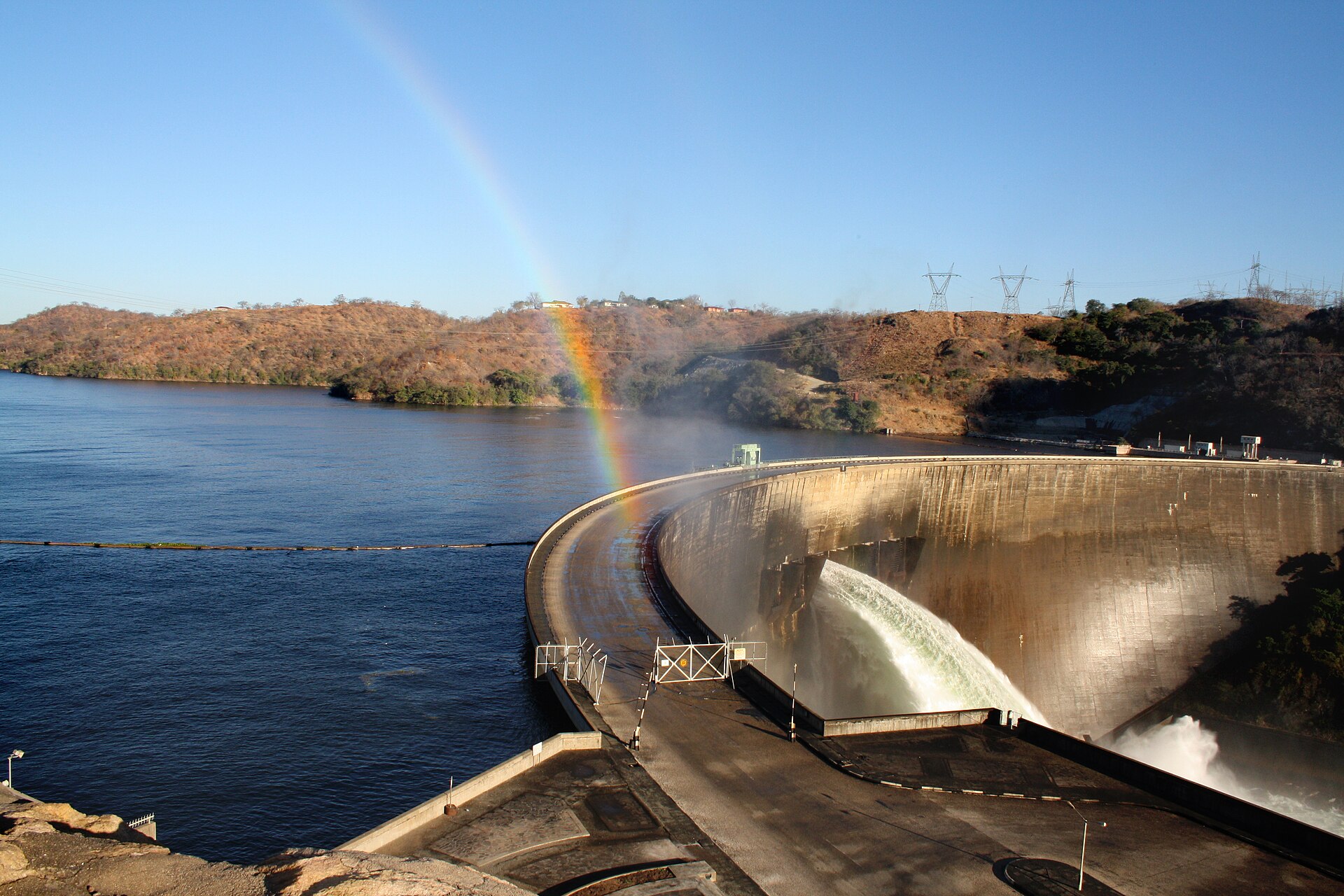
Kariba Dam on the Zambezi. Hydropower made up about 84% of Zambia's installed capacity, so power and farming face the same droughts. Photo: Manfidza / Wikimedia Commons, CC BY-SA 4.0.
Research Analysis
Guest contributor · Business and development consultant
Feasibility ratings are the author’s professional judgement, based on published baselines.
By Dr Bruce Ernest 24 November 2026 | Macroeconomy & Policy
Key takeaways
The Grow Zambia Agenda sets eight production targets for 2031, summarised as “10-10-5-3-3-1-1-1”, and aims to more than double the economy relative to 2021.
Tourism is the target most likely to be met. Electricity could come close, with 7,000 to 8,500 MW plausible against a 10,000 MW goal.
Copper, soya beans, wheat and beef exports are unlikely to be met in full. Copper alone would need about 22% growth a year from 890,346 tonnes in 2025.
Doubling real GDP from its 2021 level would take 9 to 10% growth a year from 2027, against a 2027 Budget projection of about 4.9%.
The Agenda has no published baselines, no definition of “doubling” and no targets for jobs, poverty or prices.
Of the eight targets at the heart of President Hakainde Hichilema’s Grow Zambia Agenda, only one, five million tourist arrivals a year, looks likely to be met by 2031 on current evidence. Electricity capacity could come close. Maize and sugar are possible in part. Copper, soya beans, wheat, beef exports and a real doubling of the economy are unlikely to be reached in full.
The President set out the Agenda at the opening of the Fourteenth National Assembly on 9 October 2026 as the framework for his second term, and the 2027 Budget was presented under the same banner. My assessment does not make the Agenda futile. It does mean its targets should be read as direction, not as forecasts.
8headline production targets
2031deadline, end of the second term
9-10%real growth a year needed to double GDP
3.4×rise in copper output the target implies
What the Agenda promises
The Agenda’s stated aim is to more than double the size of the economy relative to 2021, when the UPND took office. Its eight targets are memorable by design: 10 million tonnes of maize, 10,000 megawatts of generating capacity, 5 million international tourists, 3 million tonnes each of copper and soya beans, 1 million tonnes each of wheat and sugar, and US$1 billion a year in beef exports. They sit under five pillars.
Growing the economyConnecting the nationImproving living standardsA delivery-oriented public sectorFinancing the future
Financing leans on the private sector through public-private partnerships, joint ventures, bonds and capital-market instruments. The Agenda also follows five years of repair: an IMF Extended Credit Facility completed in January 2026, external debt restructured under the G20 Common Framework, single-digit inflation by mid-2026 and a credit rating upgrade. The African Development Bank estimates public debt fell from 101% to 87.6% of GDP, though it still rates the risk of debt distress as high.
The 2031 scorecard
To test each target, I compared it with the latest published baseline, calculated the compound annual growth rate needed to reach it by 2031, and weighed that against recent performance, the investment pipeline and known constraints.
Moderate-HighModerateLow-ModerateLow
Tourism
5m arrivals
from 2.3-2.5m (2025)
Multiple needed2.0-2.2×
Growth a year14-16%
Moderate-High
Electricity
10,000 MW
from 4,722 MW (Oct 2026)
Multiple needed2.1×
Growth a year≈16%
Moderate
Maize
10m tonnes
from 4.94m t (2025/26)
Multiple needed2.0×
Growth a year≈15%
Low-Moderate
Sugar
1m tonnes
from ≈0.45m t
Multiple needed2.2×
Growth a year≈17%
Low-Moderate
Copper
3m tonnes
from 890,346 t (2025)
Multiple needed3.4×
Growth a year≈22%
Low
Soya beans
3m tonnes
from ≈0.77m t (2024/25)
Multiple needed3.9×
Growth a year≈31%
Low
Wheat
1m tonnes
from 0.13-0.25m t
Multiple needed4-8×
Growth a year32-50%
Low
Beef exports
US$1bn a year
from No baseline published
Multiple neededn/a
Growth a yearn/a
Low
Real GDP
2× the 2021 level
from ≈1.27× by 2026
Multiple needed1.6× more
Growth a year9-10% real
Low
Targets: Presidential address, 9 October 2026. Baselines: ATTA, Solarquarter, Malawi24, USDA FAS, Reuters, FAO and IMF, as listed in the references. Multiples, growth rates and ratings are the author’s calculations and judgement.
Where the Agenda is strong
Clear and measurable. Eight numbers give Parliament, the media, investors and voters a scorecard. Diplomats are already using the formula to court foreign investors.
Built on stability, not crisis. It follows an IMF programme, debt restructuring, falling inflation and a rating upgrade. The government’s medium-term plan aims for growth of about 7%.
Aimed at production and exports. Five targets are in agriculture, which employs most Zambians, and one in tourism. Zambia returned to net maize exporter status in 2025/26.
Aligned with the energy transition. Global demand for copper is rising, and expansions such as Kansanshi and the restart of KCM’s Chingola “B” mine after 18 years are under way.
Power diversification has started. Installed capacity rose from about 3,100 MW in 2021 to 4,722 MW by October 2026, and solar passed 1,000 MW ahead of schedule.
A fresh mandate. Investors widely read the August re-election as policy continuity, and a pragmatic private-led financing model recognises the budget’s limits.
Where it is exposed
A credibility gap. Zambia missed its interim goal of 1 million tonnes of copper in 2025, and output in the first half of 2026 was only 0.45% higher than a year earlier.
Missing baselines and welfare goals. There is no definition of “doubling” (nominal dollars, constant kwacha or per capita), no jobs target in the address, and no targets for poverty, incomes or prices, which citizens rank as most urgent.
Thin fiscal space. The 2026 deficit reached 5.9% of GDP. The 2027 Budget raises VAT to 16.5% and adds a 39.5% top income tax rate, measures expected to raise about K10.8 billion.
One drought, many targets. Copper needs power, wheat needs irrigation, and maize, soya, sugar and hydropower all need rain. The 2024 drought hit several at once.
Where would the maize go? Ten million tonnes against consumption of about 2.8 million leaves a surplus of around seven million to export or process, and FRA overruns are already a source of fiscal slippage.
Governance and capacity. Commentators describe shrinking civic space since the election, and the capacity to prepare bankable PPPs is a known constraint. Long-term investors price both.
Target by target
Tourism: moderate to high
Arrivals rose from about 554,000 in 2021 to 2.2 million in 2024 and an estimated 2.3 million in 2025. Sustaining roughly 15% growth a year is demanding but consistent with that momentum, if air connectivity and accommodation keep pace. Officials say the target could be met before 2030.
Electricity: moderate
Reaching 10,000 MW means adding about 1,050 MW a year, against roughly 325 MW a year between 2021 and 2026. Solar and battery projects can be built fast, but megawatts of solar are not firm supply. Something like 7,000 to 8,500 MW by 2031 looks plausible. The full target needs faster private investment and tariff reform.
Maize and sugar: low to moderate
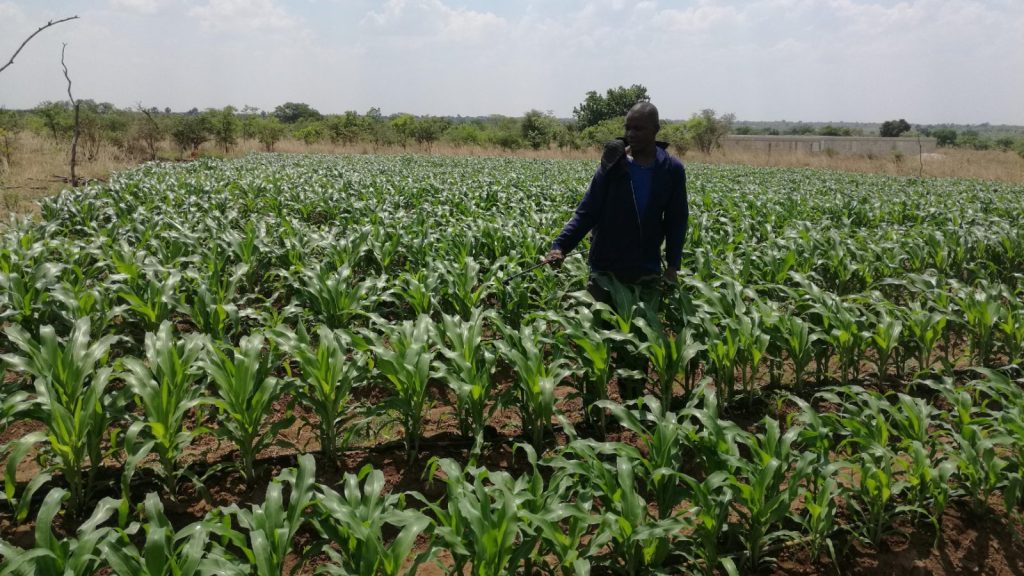
Maize: a record 4.94 million tonnes in 2025/26, half the 2031 target. File photo.
The 2025/26 maize crop of about 4.94 million tonnes was a record. Doubling it again means about 15% growth a year, through dry years as well as wet ones. Ten million tonnes in one exceptional season is conceivable; as a sustained norm by 2031, it is unlikely. Sugar would need to more than double from about 450,000 tonnes, and new estates take years from land to first cane. Output of 650,000 to 800,000 tonnes is more realistic unless major investments are committed in 2027 and 2028.
Copper: low
Brownfield revivals such as Luanshya help, but new mines take seven to ten years from discovery to production. File photo.
The Zambia Chamber of Mines estimates that existing assets and committed projects could take output to about 1.6 million tonnes before the end of the decade. Closing the remaining 1.4 million tonnes would need at least US$200 million a year in exploration and the discovery of new deposits. Three million tonnes in 2031 is very unlikely. Reaching 1.3 to 1.7 million tonnes would, in my view, still be a historic achievement.
Soya beans, wheat and beef: low
Soya output of about 760,000 to 770,000 tonnes would need to grow by about 31% a year, and the FAO notes the crop is held back by low yields and limited processing. Wheat starts from a low, volatile base and is grown almost entirely under irrigation, so it depends on reliable power. Beef exports have no published baseline; US$1 billion a year needs disease control, traceability and certified abattoirs that take years to build and to win recognition from importers.
Doubling the economy: low in real terms
Using IMF estimates, real GDP in 2026 is about 27% larger than in 2021. Doubling the 2021 level in real terms by 2031 would need growth of about 9 to 10% a year from 2027, well above the 2027 Budget projection of about 4.9%. Doubling in nominal dollar terms is easier, because dollar GDP moves with copper prices and the exchange rate. The government should say which measure it means.
What should happen next
Publish a results framework
Baselines, annual milestones, a defined GDP measure and a yearly progress report verified by ZamStats.
Add welfare targets
Formal jobs, rural incomes, poverty and food prices alongside output.
Treat energy as the master constraint
Cost-reflective tariffs, ZESCO balance-sheet reform, transmission and transparent IPP procurement.
Climate-proof agriculture
Irrigation, drought-tolerant seed, crop insurance and water storage.
Keep trade policy predictable
Open export policy for surplus crops, a narrower FRA role, storage and trade corridors.
Back exploration
A stable mining fiscal regime and a modern geological database and cadastre.
Build PPP capacity
A funded project preparation facility and transparent procurement.
Protect civic space
Open debate, independent media and predictable courts lower risk premiums.
The real test
Ambitious targets can mobilise investment and focus policy. The danger lies in treating aspirational goals as forecasts, which leads to misallocated resources and lost credibility when they are missed.
The real test is not whether Zambia hits “10-10-5-3-3-1-1-1” to the decimal point. It is whether, by 2031, the country has a more diversified economy, more reliable and affordable power, higher farm productivity, more formal jobs and less poverty. That will depend less on the targets than on sequencing, financing, institutional reform and transparency over the next five years.
Dr Bruce Ernest is a business and development consultant and a researcher at the University of Zambia. This article is adapted from his research paper “The Grow Zambia Agenda under the UPND Government: Merits, Demerits and the Feasibility of Achieving the 2031 Targets” (November 2026). Read his earlier analysis on tourism crisis preparedness and crisis governance.
References (62 sources)
African Development Bank (2026). Zambia economic outlook. Link
Afrobarometer (2025). Zambians dissatisfied with economy and country’s direction. Dispatch No. 957. Link
Ahram Online (26 Oct 2026). Zambia targets 3 million tonnes of copper output by 2031, invites Egyptian investors. Link
Al Jazeera (18 Aug 2026). Hichilema re-elected as Zambia president amid opposition concerns over vote. Link
Associated Press (18 Aug 2026). Zambia President Hakainde Hichilema is declared the winner of a troubled election. Link
ATTA (24 Mar 2026). Zambia sets sights on 3 million arrivals and $1 billion tourism industry by 2031. Link
ATTA (20 Oct 2026). Zambia sets target to double tourist arrivals to five million. Link
bdnews24/Reuters (18 Aug 2026). Zambia’s Hichilema re-elected though cost-of-living pressures dent his support. Link
Bertelsmann Stiftung (2026). BTI 2026 country report: Zambia. Link
Bloomberg (18 May 2026). Zambia seen reaping record corn harvest, bringing gains and risk. Link
Energía Estratégica (2026). Zambia aims for 10 GW of electricity capacity by 2031 and already exceeds 1 GW of installed solar. Link
Engineering News/Reuters (11 Mar 2026). Zambia seeking global investors to help triple copper output by 2031. Link
EWN (18 Aug 2026). Zambia records largest maize harvest, with estimated 4.9 million tonnes. Link
FAO (2026). The soybean value chain in Zambia. Link
FAO GIEWS (2025). Country brief: Zambia, 25 July 2025. Link
FAO GIEWS (2026). Country brief: Zambia, 30 April 2026. Link
Freight News (2026). Keeping the lights switched on. Link
Green Building Africa (2026). Zesco returns to profit. Link
Hichilema, H. (9 Oct 2026). Grow Zambia: An agenda for inclusive growth and opportunity for every Zambian. Address to the Fourteenth National Assembly. Link
International Energy Agency (2026). National 3 million tonnes copper production strategy by 2031. Link
IMF (2026a). Zambia: Sixth review under the Extended Credit Facility arrangement. Country Report No. 26/21. Link
IMF (14 May 2026). IMF staff concludes visit to Zambia. Press Release No. 26/150. Link
IMF (9 Oct 2026). IMF reaches staff-level agreement on a new Extended Credit Facility arrangement with Zambia. Link
Lusaka Times (12 Jun 2026). “It’s a growth manifesto”: HH unveils plan to double economy, cut cost of living. Link
Lusaka Times (30 Jun 2026). IMF says Zambia’s fiscal pressures have intensified. Link
Lusaka Times (21 Oct 2026). Targeted 10,000 megawatts of installed power generation by 2031 achievable. Link
Lusaka Times (11 Jun 2026). UPND unveils ambitious blueprint for jobs, growth and lower living costs. Link
Lusaka Times (25 Oct 2026). Zambia on track to achieve five million tourists target, Muhanga. Link
USDA FAS (2026). Zambia grain and feed annual. Link
World Bank (2022). Macro poverty outlook: Zambia. Link
World Bank (2026). Zambia Mission 300 national energy compact. Link
Zambian Observer (2025). Economic growth figures fail to match household realities, experts warn. Link
Zambian Observer (2026). The 2027 national budget: Zambia cannot build a growth economy on the strength of pronouncements alone. Link
Zawya/Reuters (2026). Zambia aims to lift economic growth to 7% over next three years. Link
WARNING! All rights reserved. This material and all other digital content on this website may not be reproduced, published, broadcast, rewritten, or redistributed, in whole or in part, without the prior express permission of The Zambian Economist. Where permission is granted, the content must be clearly credited to “The Zambian Economist,” with “www.zambianeconomist.com” prominently displayed.
The in-house analysis desk of The Zambian Economist, an independent publication based in Lusaka covering the Zambian economy, public finance, banking, mining, agriculture and governance. Every figure we publish is attributed to a named primary source and dated, and forecasts are labelled as forecasts. We analyse policies rather than personalities. Our approach is set out in our Editorial Standards and Corrections Policy. Contact: info@zambianeconomist.com.