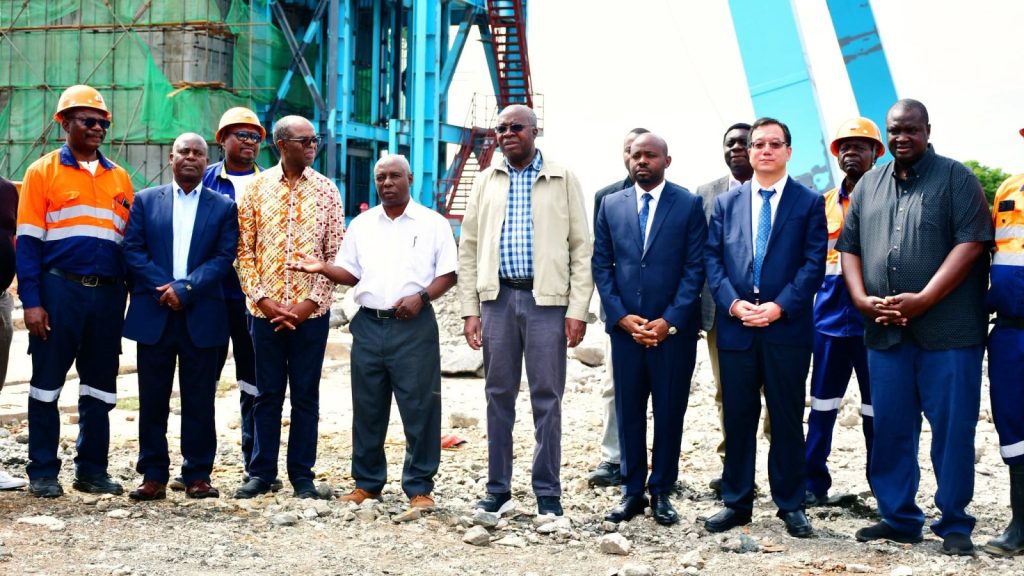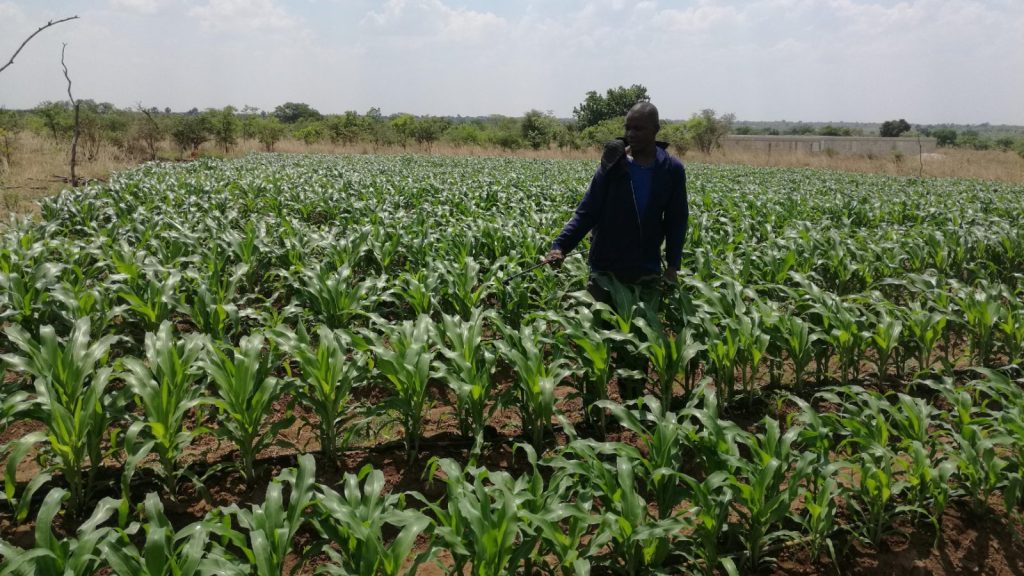
Speaking through his trade minister at the French Business Circle in Lusaka, the President set out the Grow Zambia production targets and told investors the next phase must be about processing what Zambia grows and mines, not just producing more of it.
KEY TAKEAWAYS
- President Hichilema, through Trade and Exports Minister Dr. Caroline Kaunda Katotobwe, told the French Business Circle in Lusaka on 10 November 2026 that Zambia must move from exporting raw materials to local processing.
- Agriculture, energy and mining were named as the three engines of the Grow Zambia Agenda.
- Targets restated: 10 million tonnes of maize, 3 million tonnes of soya beans, 1 million tonnes each of wheat and sugar, 10,000 MW of electricity and 3 million tonnes of copper a year.
- Maize output would need to roughly double, copper to treble and power capacity to more than double, so electricity supply will decide whether processing plants can follow.
- Investors were asked to turn conference partnerships into actual investment, exports and jobs.
President Hakainde Hichilema wants Zambia to stop selling its harvests and minerals in raw form and to process more of them at home. In a speech read on his behalf by Minister of Trade and Exports, Hon. Dr. Caroline Kaunda Katotobwe, at the French Business Circle in Lusaka on Tuesday, 10 November 2026, he said the country’s economic transformation must rest on three things: more production, industrialisation and value addition.
The message was aimed at a room of investors. The backdrop carried the logos of Barrick Lumwana, Rubis, Greenco and the Securities and Exchange Commission, among other sponsors. What the President asked of them was specific: turn conference talk into investment, exports and jobs.
What did President Hichilema say at the French Business Circle?
The President named agriculture, energy and mining as the main drivers of the Grow Zambia Agenda, the government’s production and investment programme for its second term. He called for a shift away from exporting raw materials towards local processing, and for wider market access, fewer trade barriers and stronger export development.
He then restated the production targets that now anchor government economic policy:
| Sector | Grow Zambia target | Where Zambia stands |
|---|---|---|
| Maize | 10 million tonnes | About 5 million tonnes in recent seasons |
| Soya beans | 3 million tonnes | A fraction of the target |
| Wheat | 1 million tonnes | Well below the target |
| Sugar | 1 million tonnes | Below the target |
| Electricity | 10,000 megawatts | Installed capacity under 4,000 MW |
| Copper | 3 million tonnes a year | Below 1 million tonnes a year |
Published reviews of the agenda place these targets on a 2031 horizon, which coincides with the end of the current presidential term. Several of them, including the copper goal, featured in earlier government plans; Grow Zambia brings them under one framework.
Why value addition matters for Zambia
Copper shows the problem most clearly. Zambia earns the bulk of its export income from the metal, yet most of it leaves the country as concentrate, anodes or cathodes. The cables, rods, tubes and components made from that copper are manufactured elsewhere, and the jobs, wages and taxes that come with fabrication stay there too.
Agriculture follows a similar pattern. In surplus years, Zambia sells unprocessed maize and soya beans into the region, often at low prices, and later imports processed food, cooking oil and animal feed. Each stage of processing that moves to Zambia keeps more of the final price at home.
The President’s argument is that output growth alone will not change this. A 10 million tonne maize harvest is more than the country can eat. Without milling, storage, feed manufacturing and export contracts, a bumper crop can push down the price farmers receive. The same logic applies to copper: tripling mine output adds export earnings, but it does not on its own create a manufacturing base.
Can Zambia reach 10,000 megawatts and 3 million tonnes of copper?
The power target sits underneath every other goal. Processing plants, smelters, irrigation schemes and refineries all need reliable electricity, and the 2024 drought showed how exposed the grid is to rainfall at Kariba and Kafue. Moving from under 4,000 MW to 10,000 MW means more than doubling capacity in roughly five years, with most of the new supply expected to come from solar, private generators and diversified sources rather than large hydro alone.
Copper faces a steeper climb. Production would need to roughly treble. That depends on new mines and expansions at sites such as Lumwana, Kansanshi and Konkola, on settled ownership questions, and on power supply to the mines. Ministry of Finance and Chamber of Mines figures will show over the next two to three years whether the trajectory is realistic.
What it means for business and investors
- Agro-processors: Milling, oilseed crushing, stockfeed, sugar refining and wheat flour are the most direct openings if the crop targets are met. Securing grain supply at stable prices will matter more than ever.
- Energy investors: The 10,000 MW goal creates demand for independent power producers, solar developers, transmission builders and storage providers. The commercial test is whether tariffs and offtake agreements with ZESCO can be relied on.
- Mining supply chains: Higher copper output will lift demand for local contractors, transport, fuel and engineering services, which is where Zambian SMEs have the clearest route in.
- Exporters: The call to remove trade barriers and improve market access points to SADC, COMESA and the African Continental Free Trade Area as the markets for processed goods.
What it means for ordinary Zambians
For households, the measure of success is jobs and prices. Local processing creates factory work, which mining and raw crop exports tend not to. More domestic milling and oil pressing should also make food prices less dependent on imports and on movements in the kwacha.
The risk is the reverse. If production rises without storage, transport and buyers, farmers carry the loss through lower farm-gate prices. If power supply lags, new factories will either not open or will run below capacity.
The test ahead
The President closed by urging delegates to convert the conference into investment, exports, jobs and better livelihoods. That is also the yardstick against which the Grow Zambia Agenda will be judged. Annual production data from the Zambia Statistics Agency, export figures from the Bank of Zambia and new generation capacity on the grid will show, year by year, whether the targets are moving from speeches into the economy.
What government has not yet set out in detail is the path: yearly milestones, financing for each sector and the institutions responsible for delivery. Investors in the room at the French Business Circle will be looking for that before they commit capital.
Related: The Formation Zambia Has Drawn for Growth.
Related: Musokotwane Pivots Zambia Toward Export-Led Growth as Jobs and Investment Take Centre Stage.
Related: Growing Zambians, Not Just Zambia: Putting Citizens at the Centre of the Grow Zambia Agenda.
Related: Thirty Ministries, Eight Targets: What Zambia Should Demand in Return.
Related: Seizing the Critical Minerals Moment Is Africa’s Path to Industrialisation.
Related: Hichilema Urges Farmers to Plant Despite El Niño as Grow Zambia Tour Opens in Choma.
Related: Matambo Meets French Delegation to Deepen Water and Sanitation Cooperation.
WARNING! All rights reserved. This material and all other digital content on this website may not be reproduced, published, broadcast, rewritten, or redistributed, in whole or in part, without the prior express permission of The Zambian Economist. Where permission is granted, the content must be clearly credited to “The Zambian Economist,” with “www.zambianeconomist.com” prominently displayed.
WhatsApp: +260775574228 | Email: info@zambianeconomist.com
© 2026 The Zambian Economist.
Work With The Zambian Economist
Related: Chinese Elevator Firm Plans ¥5 Million Plant in Zambia