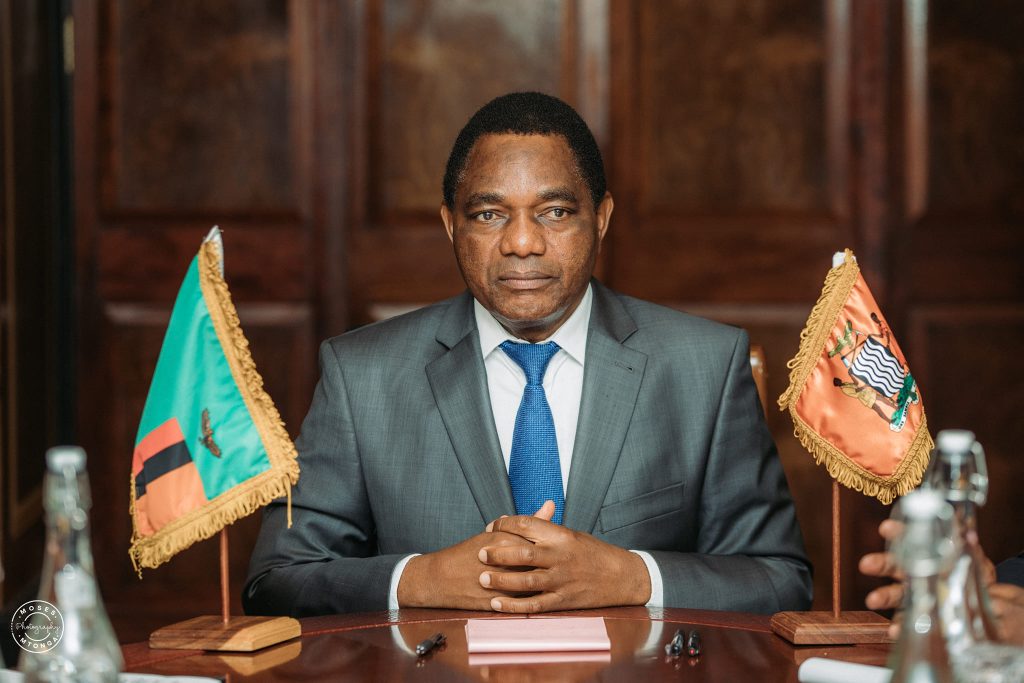

President Hakainde Hichilema used his second inaugural address, delivered at National Heroes Stadium on Tuesday, 1 September 2026, to pledge equal treatment for Zambians who voted against him and to frame his second term around economic growth rather than the stabilisation work of his first. He spoke minutes after taking the oath of office before Chief Justice Mumba Malila.
By The Zambian Economist Analyst | Lusaka | 1 September 2026
Key Takeaways
- Speaking at National Heroes Stadium after taking the oath for a second term, Hichilema pledged to serve all Zambians “on an equal basis, without discrimination,” regardless of how they voted on 13 August.
- He described his first term as “restoring stability and laying the foundation,” and named jobs, household income and community-level progress as the measure of the second.
- He called on citizens to “produce more of what we consume” and “grow what we export,” language that points toward import substitution and export diversification beyond copper.
- He told international partners Zambia remains “a peaceful, democratic and sovereign nation,” a line aimed at investors after foreign wire services described the 13 August vote as disputed and opposition leader Brian Mundubile was charged with treason.
- The address carried no new tax, spending or policy announcement. That detail is due from the cabinet in the coming days and the 2027 budget cycle.
Vice-President Mutale Nalumango was sworn in at the same ceremony. Thousands filled the stadium where Hichilema first took office in August 2021, and the day had been declared a public holiday. Five sitting African presidents and senior envoys from China, the United States and the United Arab Emirates attended, a guest list we set out in full in our report on the oath ceremony.
What did Hichilema promise in his second inaugural address?
He promised equal treatment for citizens regardless of how they voted, a shift in focus from macroeconomic stabilisation to economic growth and jobs, and a call for citizens to produce, export and invest rather than rely on government or imports. He made no new policy, tax or spending announcement.

The full address
The text below is the address as delivered.
Fellow citizens,
Today, before Almighty God and the people of Zambia, we humbly took the oath of office to serve our Republic for a second term.
We receive this responsibility with gratitude and a clear understanding that leadership is not a prize, but a sacred duty to serve.
To those who voted for us, we thank you for your trust and confidence. To those who did not vote for us, we respect your democratic choice. We will serve you on an equal basis, without discrimination, because you are our fellow citizens and an equal part of this great Republic.
We are all Zambians, entitled to the same dignity, opportunities and service from our Government.
Our political choices may differ, but our country and our destiny are one. The elections are behind us; the work of building Zambia continues.
Our first term was about restoring stability and laying the foundation. The next chapter is about growing our economy, creating jobs and opportunities, strengthening our communities and ensuring that progress reaches every household.
But Government cannot build Zambia alone. Every citizen has a role. We must work hard and smart, produce more of what we consume, grow what we export, support enterprise and investment, and build a culture of productivity and self-reliance. Zambia must increasingly stand on the strength of its own people and resources.
To our friends and partners across the world, Zambia remains a peaceful, democratic and sovereign nation. A reliable partner committed to stability, trade and investment.
To every Zambian, our pledge is simple. We will serve you. We will listen. We will work. And we will remain focused on delivering a more prosperous, united and resilient Zambia.
With confidence in ourselves and faith in one another, let us get to work.
One Zambia, One Nation, One People.
May Almighty God continue to bless our beloved Motherland.
Hakainde Hichilema
President of the Republic of Zambia
‘We are all Zambians’: the reconciliation line
The address opened with a direct message to the roughly two in five voters who backed someone else on 13 August: “we respect your democratic choice” and will serve “on an equal basis, without discrimination.” That line carries more weight this year than it would after a routine election. The Electoral Commission of Zambia declared Hichilema the winner with 2,965,326 votes, 60.49% against 1,856,217 for NRPUP’s Brian Mundubile, but Mundubile disputed the count, alleging irregularities including military-controlled tallying in Mufulira and missing result forms in North-Western Province. The ECZ rejected the claims.
Mundubile and his running mate, Makebu Zulu, went into hiding after the vote and were later arrested. Both are held at Mukobeko Maximum Security Prison, part of a treason docket that has grown to 18 people aligned to the NRPUP leadership. Six parliamentary results are also before the Lusaka High Court. Set against that backdrop, a president opening his second term by promising equal treatment to those who voted against him is a specific answer to a specific question hanging over the count, not a routine courtesy line.
From stabilisation to growth
Hichilema described his first term as “restoring stability and laying the foundation,” and cast the second around “growing our economy, creating jobs and opportunities.” The claim has a data trail behind it. Debt restructuring under the G20 Common Framework is largely complete, inflation has cooled toward 6.2% from the double digits of 2021 and 2022, and foreign reserves have been rebuilt after years of decline.
What the stabilisation did not fix sits on the other side of the ledger: load-shedding remains part of daily life, poverty levels are still high by regional standards, and food and transport costs still dominate household budgets. By naming jobs and household income as the standard for his second term, Hichilema set a test that a return to 6% GDP growth alone will not satisfy if it does not show up in pay packets and power bills.
‘Produce more, export more’: the self-reliance line
The most concrete instruction in the speech was aimed at citizens rather than ministers: “produce more of what we consume, grow what we export, support enterprise and investment, and build a culture of productivity and self-reliance.” Read plainly, that is a call for import substitution in agriculture and light manufacturing, and for export diversification away from a copper price Zambia does not control.
It also lands on ground the government has already started to prepare. We mapped the productivity gap this call is aimed at in Zambia’s Productivity Opportunity Base, which found that higher living standards depend on producing more value from every worker, hectare and unit of capital, not simply on attracting more foreign capital. Whether the line translates into financing for smallholder farmers and agro-processors, or stays a rhetorical flourish, will show up in the 2027 budget rather than in this speech.
The line aimed at markets, not voters
One sentence in the address was addressed past the stadium entirely: “To our friends and partners across the world, Zambia remains a peaceful, democratic and sovereign nation. A reliable partner committed to stability, trade and investment.” International wire services covering the inauguration, including the Associated Press, described the second term as beginning “after a disputed vote and opposition arrests.” That framing is the one Hichilema was speaking against.
The turnout in the stadium’s VIP section did some of the same work. Tanzania’s Samia Suluhu Hassan, Kenya’s William Ruto, Namibia’s Netumbo Nandi-Ndaitwah, Zimbabwe’s Emmerson Mnangagwa and Botswana’s Duma Boko all attended in person, alongside a vice-president-level envoy from China and senior representatives from the United States and the United Arab Emirates. Regional heads of state showing up in Lusaka is a form of endorsement that a speech alone cannot manufacture, even if it does not settle the dispute over the count.
What the address did not say
Inaugural addresses are not budget speeches, and this one kept to that convention. There was no mention of tax measures, subsidy policy, mining fiscal terms or an IMF programme review, and no cabinet names. That detail was always going to come later, and our assessment of the cabinet decision ahead points to selective continuity, with the clearest changes likely in the portfolios carrying the most strain: energy, agriculture spending and public service delivery.
| Item | Detail |
|---|---|
| Event | Second inaugural address, President Hakainde Hichilema |
| Date | Tuesday, 1 September 2026, declared a public holiday |
| Venue | National Heroes Stadium, Lusaka |
| Delivered after | Oath of office administered by Chief Justice Mumba Malila |
| Vice-President | Mutale Nalumango, sworn in at the same ceremony |
| Electoral mandate | 2,965,326 votes, 60.49% (ECZ declared result, 13 August 2026 election) |
| Core themes | Equal treatment for all citizens, growth and jobs, productivity and self-reliance, investor reassurance |
Business, investor and policy implications
- For business: the productivity and export language points toward agro-processing, manufacturing and mining value addition as the sectors most likely to see policy attention in the coming budget cycle.
- For investors: the reassurance to “friends and partners” is a statement of intent, not a policy change. Markets pricing Zambian risk will look past it to the cabinet appointments, the 2027-2031 Medium-Term Revenue Strategy and the outcome of the outstanding election petitions.
- For policy watchers: a unity message delivered while an opposition leader faces treason charges sets an early marker for how the government intends to handle post-election reconciliation. Whether it is followed by legal or political steps, rather than words alone, will be the test.
The address ran a few minutes. The term it opened runs to 2031, and the cabinet Hichilema names in the coming days will say more about his second-term priorities than Tuesday’s speech did.
Related reading
- Hichilema Takes the Oath as His Second Term Begins at National Heroes Stadium
- Zambia After the Oath: The Economic and Diplomatic Tests of Hichilema’s Second Term
- EAZ Should Offer Hichilema a Five-Year Economic Advisory Compact
- Hichilema’s Second Inauguration: Zambia Now Waits for the Cabinet That Will Define His Final Term
- Zambia’s Productivity Opportunity Base
- NRPUP Leaders Charged With Treason as Docket Rises to 18
- Six Parliamentary Seats Challenged Before the Lusaka High Court
- Zambia to Launch 2027-2031 Revenue Strategy Consultations on Thursday
- 2026 Zambia Election Results Dashboard
- The Economics of Zambia’s 2026 Election
WARNING! All rights reserved. This material and all other digital content on this website may not be reproduced, published, broadcast, rewritten, or redistributed, in whole or in part, without the prior express permission of The Zambian Economist. Where permission is granted, the content must be clearly credited to “The Zambian Economist,” with “www.zambianeconomist.com” prominently displayed.
WhatsApp: +260775574228 | Email: info@zambianeconomist.com
© 2026 The Zambian Economist.